
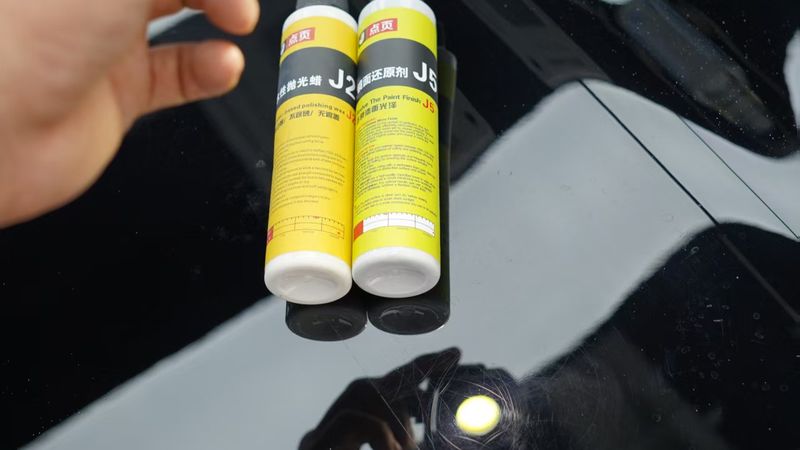
Bottom line first: The core difference between polishing compound and rubbing compound lies in cutting strength and application scenarios. Polishing compounds are medium-to-light cutting products designed for oxidation removal, fine scratch repair, and gloss enhancement. Rubbing compounds are high-cutting products specifically for deep scratch repair and heavy compounding. Simply put: use polishing compound for daily maintenance, rubbing compound for heavy restoration. They are not interchangeable.
1. Fundamental Differences in Composition
While both contain abrasive particles, the type, size, and carrier are entirely different.
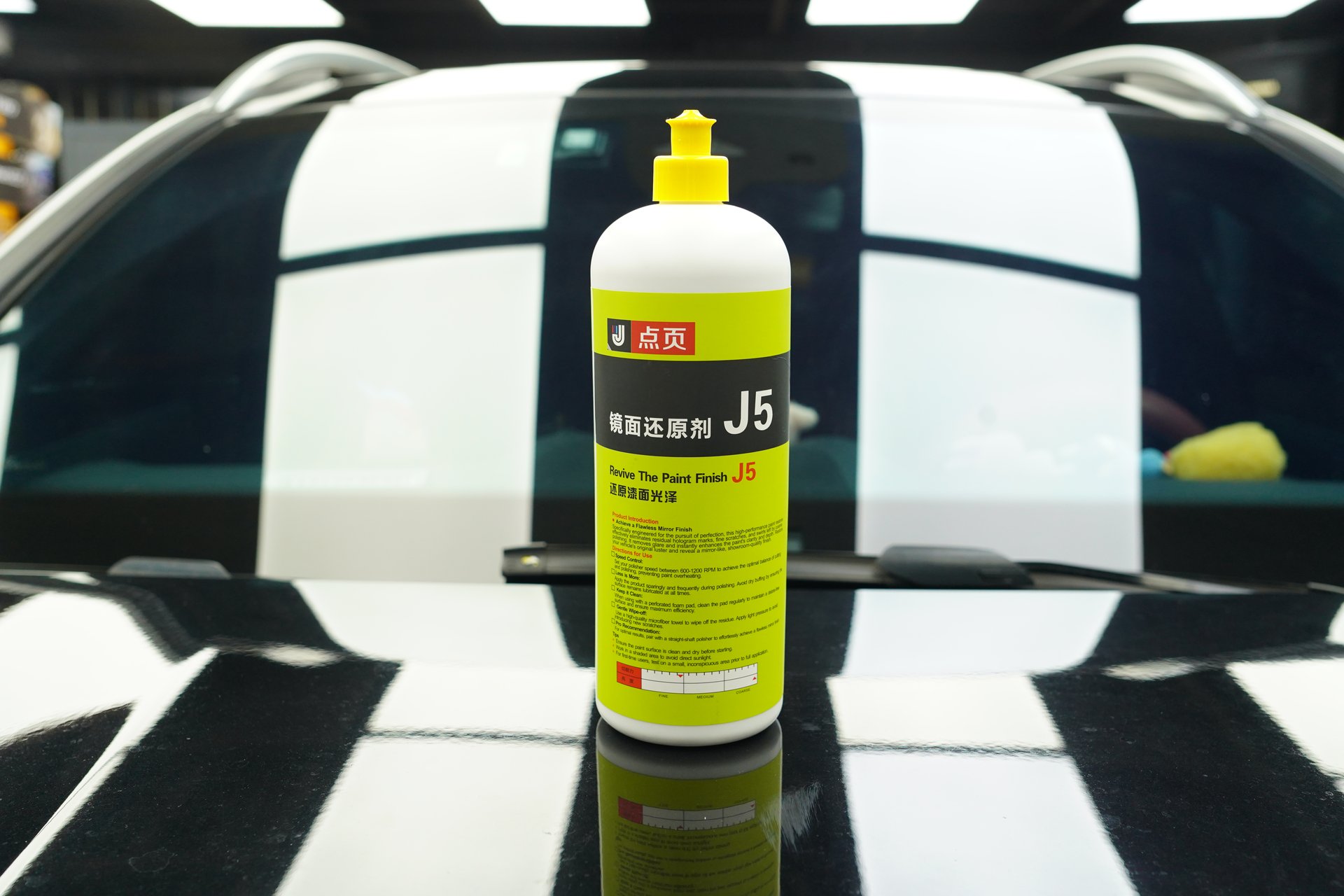
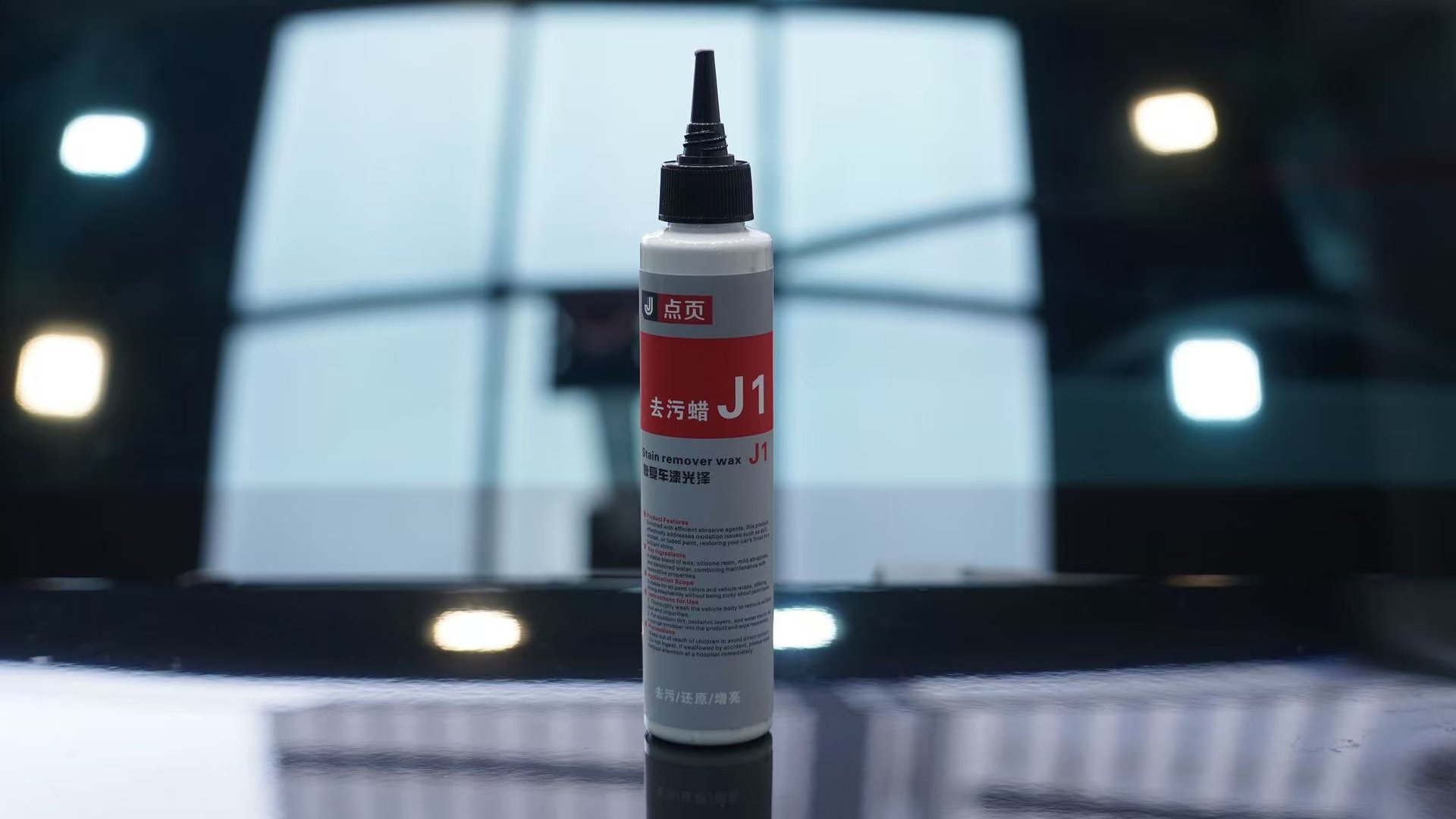
Polishing compound uses abrasive particles typically in the 1-10 micrometer range, primarily aluminum oxide or silicon oxide, suspended in water-based or oil-based emulsions with wax and silicone. Take J2 Water-Based Polishing Compound as an example: it uses nano-grade aluminum oxide abrasives in an eco-friendly water-based formula. Cutting is gentle but efficient, and it leaves no masking layer — revealing the paint’s true gloss.
Rubbing compound uses particles typically 20-50 micrometers, featuring high-hardness materials like silicon carbide or diamond powder, suspended in grease or paste bases. Its cutting force is 3-5 times that of polishing compound. Professional lab tests show that under identical conditions, heavy rubbing compound can remove 5-8 micrometers of material per hour, while medium polishing compound removes only 1-2 micrometers.
2. Cutting Power Comparison
| Product Type | Cutting Level | Abrasive Size | Scratch Depth | Post-Polish Gloss |
|---|---|---|---|---|
| Heavy Rubbing Compound | 8-10 | 30-50μm | Deep scratches (tactile) | Matte / orange peel |
| Medium Rubbing Compound | 5-7 | 15-30μm | Moderate scratches | Semi-matte |
| Medium Polish (J2 level) | 3-4 | 5-15μm | Swirl marks / hairline | 80-90% gloss |
| Fine Polish (J5 level) | 1-2 | 1-5μm | Buffer trails / holograms | 95%+ mirror |
3. Choosing the Right Product for the Situation
When to use polishing compound?
- Regular paint maintenance: polish every 3-6 months to remove oxidation and traffic film
- New car swirl marks: fine scratches from improper washing
- Gloss enhancement: boost shine without sacrificing clear coat
- Beginner practice: gentle cutting, low risk of burn-through
When to use rubbing compound?
- Heavy scratch repair: key marks, branch scrapes, post-accident paint leveling
- Severely oxidized paint: dull white appearance, rough to touch
- Paint leveling: orange peel, runs, and defects after repainting
- Professional restoration: used car reconditioning, vintage paint recovery
4. Three Common Mistakes Beginners Make
Mistake 1: Using rubbing compound for daily maintenance Many beginners try to solve everything with rubbing compound, resulting in excessive clear coat removal. OEM clear coat is typically only 40-60 micrometers thick — one heavy compounding pass can remove 5-10 micrometers. After 3-5 heavy compounding sessions, burn-through risk becomes real.
Mistake 2: Thinking polishing compound is just “wax” Many people hear “polishing wax” and assume it is a protective wax. In fact, polishing compound is fundamentally an abrasive product — its primary function is cutting, not protection. The professional workflow is: compounding (rubbing compound) → medium cutting (J2 Water-Based Polishing Compound) → finishing (J5 Mirror Glaze) → protection (ceramic coating / sealant / wax). See the tutorial page on our website for the complete process.
Mistake 3: Mixing tools and speeds Rubbing compound requires an RO (rotary) machine at 1500-2500 RPM to deliver its cutting power. Polishing compound works with a DA (dual action) machine at 1200-1800 RPM. Using DA with rubbing compound results in insufficient cutting; using RO at high speed with fine compound causes overheating.
5. Correct Product Matching
For most car owners and small detailing shops, we recommend:
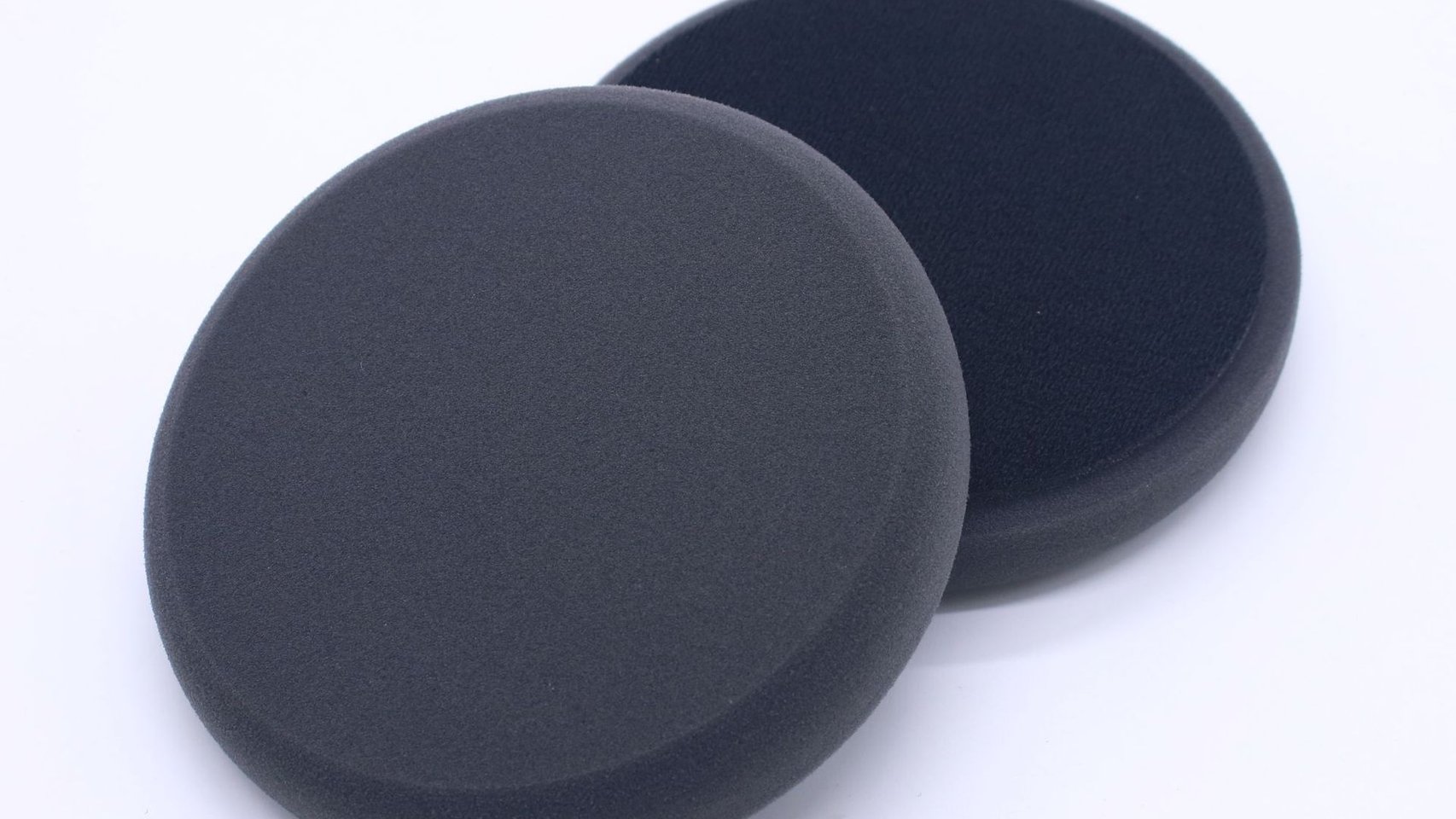
- Medium cutting: J2 Water-Based Polishing Compound + wool pad → handles 80% of common scratches and oxidation
- Fine finishing: J5 Mirror Glaze + foam pad → removes holograms, achieves mirror finish
- Extreme cases: Consider purchasing rubbing compound only for deep scratches
Real-world data: treating a full car with swirl marks using only J2 Water-Based Polishing Compound with a DA machine achieves 85% of the results of rubbing compound + fine polish, but with 60% less clear coat loss and 40% less application time. This is why more and more professional shops adopt a “medium-first, heavy as needed” strategy.
6. Summary
Neither product is inherently better — they serve different purposes. Remember this rule: if you can see it but cannot feel it, use polishing compound; if you can see it AND feel it, use rubbing compound.
For beginners, starting with polishing compound is the safer choice. Remember: clear coat is a non-renewable resource. Once removed, it cannot be replaced. Better conservative than aggressive. Visit our website FAQ section for more paint polishing knowledge.