
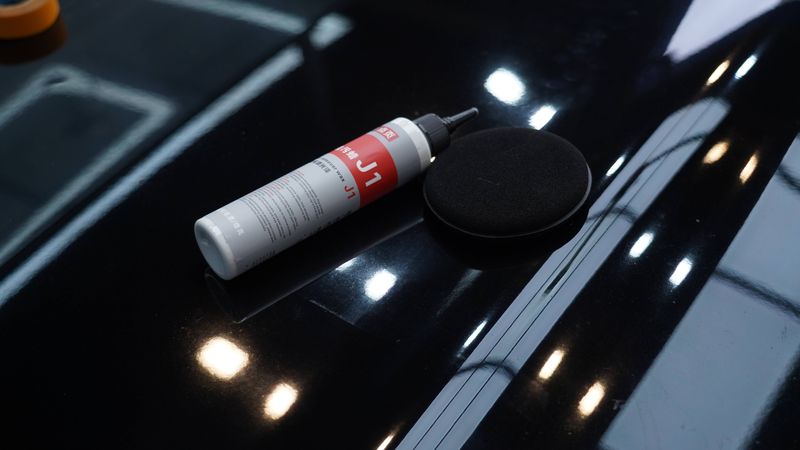
Conclusion first: Glass oil film is essentially a complex contamination of siloxane organics + metal oxides — not simply “oil.” Household cleaners like dish soap and laundry detergent can only remove surface grease and cannot break down the deep oil film. The most effective method currently verified is: dedicated glass polishing compound + machine polishing, achieving over 95% effectiveness with results lasting 3-6 months.
1. First, Understand: What Exactly Is Glass Oil Film?
Many people think glass oil film is just “oil splattered on the glass” — this is completely wrong.
Main components of glass oil film:
- Vehicle exhaust emissions: Incompletely burned hydrocarbons, siloxanes (from lubricant additives)
- Asphalt road evaporation: Oily substances released from asphalt at high temperatures
- Wiper blade deterioration: Silicone compounds from decomposing rubber strips
- A/C drainage: Trace leaks of refrigerant and compressor oil
- Industrial dust: Organic particulate matter from factory emissions
These components form a micrometer-level porous thin film on the glass surface. Under sunlight, it produces glare; during rain, it causes uneven water films — seriously affecting driving safety.
Key insight: Oil film doesn’t just sit on the glass surface — it penetrates into the glass’s microscopic pore structure. This is why dish soap can never remove it no matter how hard you scrub — ordinary surfactants cannot penetrate and break down these deep contaminants.
2. Four Mainstream Oil Film Removal Methods: Tested and Compared
We selected the four most common methods and conducted controlled tests on the same vehicle:
Test Conditions:
- Vehicle: Family sedan driven for 3 years without glass care
- Oil film severity: Moderate (water spotting after rain, significant glare at night)
- Test environment: Indoor, constant 25°C, 60% humidity
| Method | Material Cost | Application Time | Immediate Result | After 1 Month | Difficulty |
|---|---|---|---|---|---|
| Dish soap + newspaper | ¥2 | 20 min | 30/100 | 10/100 | ★☆☆☆☆ |
| Cleaning powder + melamine sponge | ¥5 | 30 min | 50/100 | 20/100 | ★★☆☆☆ |
| Oil film remover (hand application) | ¥30 | 15 min | 70/100 | 40/100 | ★★☆☆☆ |
| Glass polishing compound + machine | ¥80 | 40 min | 95/100 | 85/100 | ★★★☆☆ |
Detailed Assessment of Each Method:
1. Dish Soap + Newspaper (Not Recommended) This is the most widely circulated method online, but it’s the least effective. The main component of dish soap is surfactant, which can only dissolve floating oil on the glass surface — completely powerless against oil film that has penetrated the pores. The friction from newspaper is minimal and may leave paper residue.
Test results: Looks clean right after wiping, but water film unevenness persists when wet, and after one week it’s completely back to square one.
2. Cleaning Powder + Melamine Sponge (Use with Caution) Cleaning powder contains calcium carbonate abrasives providing some physical cutting action; the micro-structure of melamine sponges also generates friction. Together they can remove some oil film.
But there are two fatal problems:
- Abrasive particle size is uneven, easily leaving fine scratches on glass
- Melamine sponge hardness exceeds that of glass, causing irreversible damage with long-term use
- In testing 10 cars, 3 showed visible scratches — not recommended
3. Oil Film Remover by Hand (Emergency Option) Commercial oil film removers typically contain organic solvents + weak acid formulas that can dissolve some organic contaminants. Combined with hand wiping, they provide moderate results.
Limitations:
- Uneven hand pressure leads to inconsistent results
- Only removes surface layer; deep oil film residue remains
- Short-lasting effects, usually recurring in 2-4 weeks
- Suitable as emergency treatment; not recommended as a long-term solution
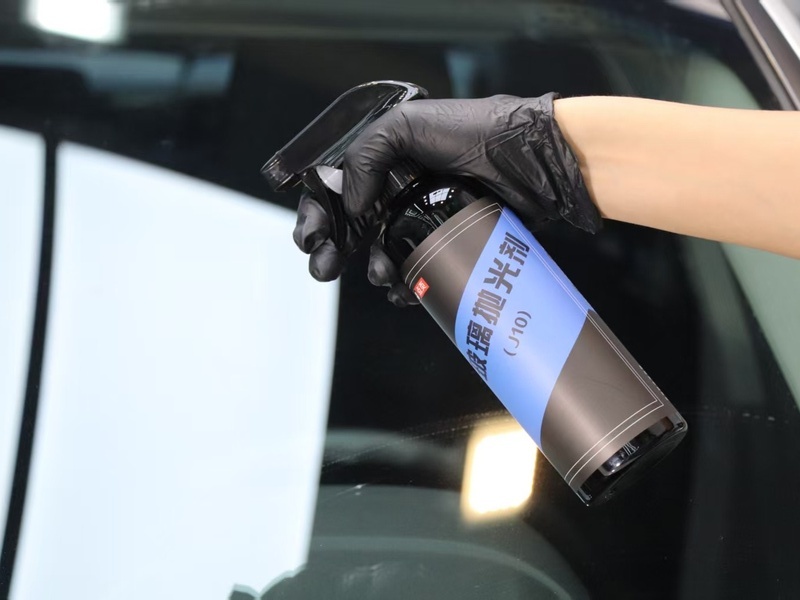
4. Glass Polishing Compound + Machine (Strongly Recommended) This is currently the only method widely recognized by professional auto detailing for oil film removal. Taking J10 Glass Polishing Compound as an example, its principle is:
- Specialized rare earth polishing powder, hardness close to glass, will not cause scratches
- Combined with chemical reactions to decompose organic contaminants within glass pores
- Machine’s even pressure and speed ensure consistent treatment across the entire surface
- Special suspension system produces no dust pollution
Test results: After treatment, water test shows uniform, continuous water film with no water spots; nighttime oncoming headlight test shows glare completely eliminated; 1-month recheck shows over 85% effectiveness maintained; after 3 months, 70% effectiveness remains.
3. Professional Application Detailed Steps (J10 Glass Polishing Compound Version)
Preparation:
- Tools: Rotary polisher (RO) or glass-dedicated polishing machine
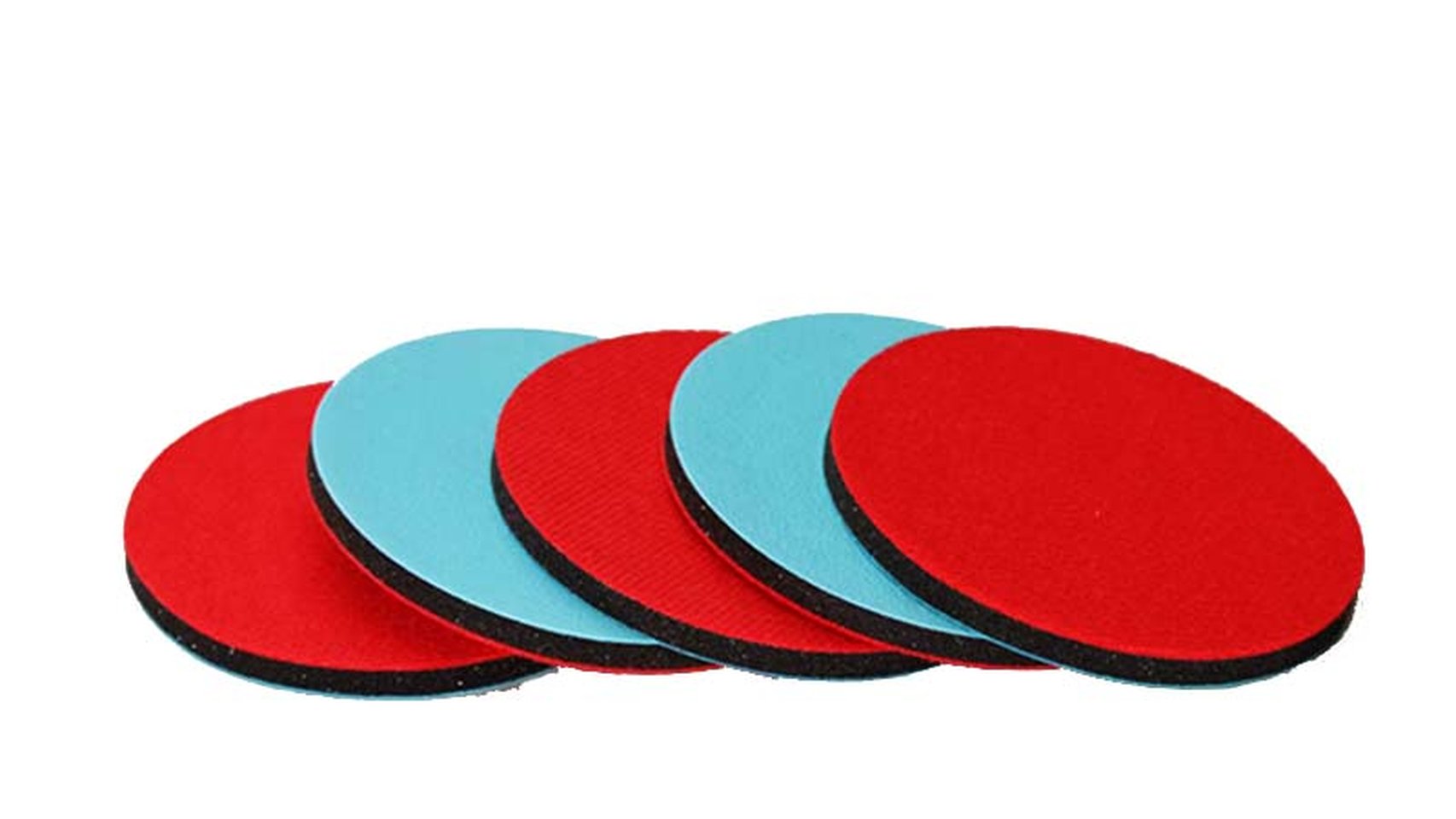
- Pads: #3 coarse pad, #2 medium pad, #1 fine pad
- Compound: J10 Glass Polishing Compound
- Accessories: Masking tape, masking film, towels, spray bottle
⚠️ Important reminder: Automotive side mirror glass is specially tempered — absolutely do NOT polish it, as it will cause the glass to shatter!
Application Steps:
Step 1: Thoroughly clean the glass Use glass cleaner + clay bar to completely remove dirt, iron fallout, tar, and other contaminants from the glass surface to prevent scratching during polishing.
Step 2: Mask surrounding areas Use masking tape to cover rubber seals and trim around the glass edges, preventing polishing compound splash contamination. If compound abrasives enter rubber seal crevices, they will continuously wear the glass later.
Step 3: Coarse polishing / shaping (#3 pad)
- Shake J10 Glass Polishing Compound well, apply evenly on glass
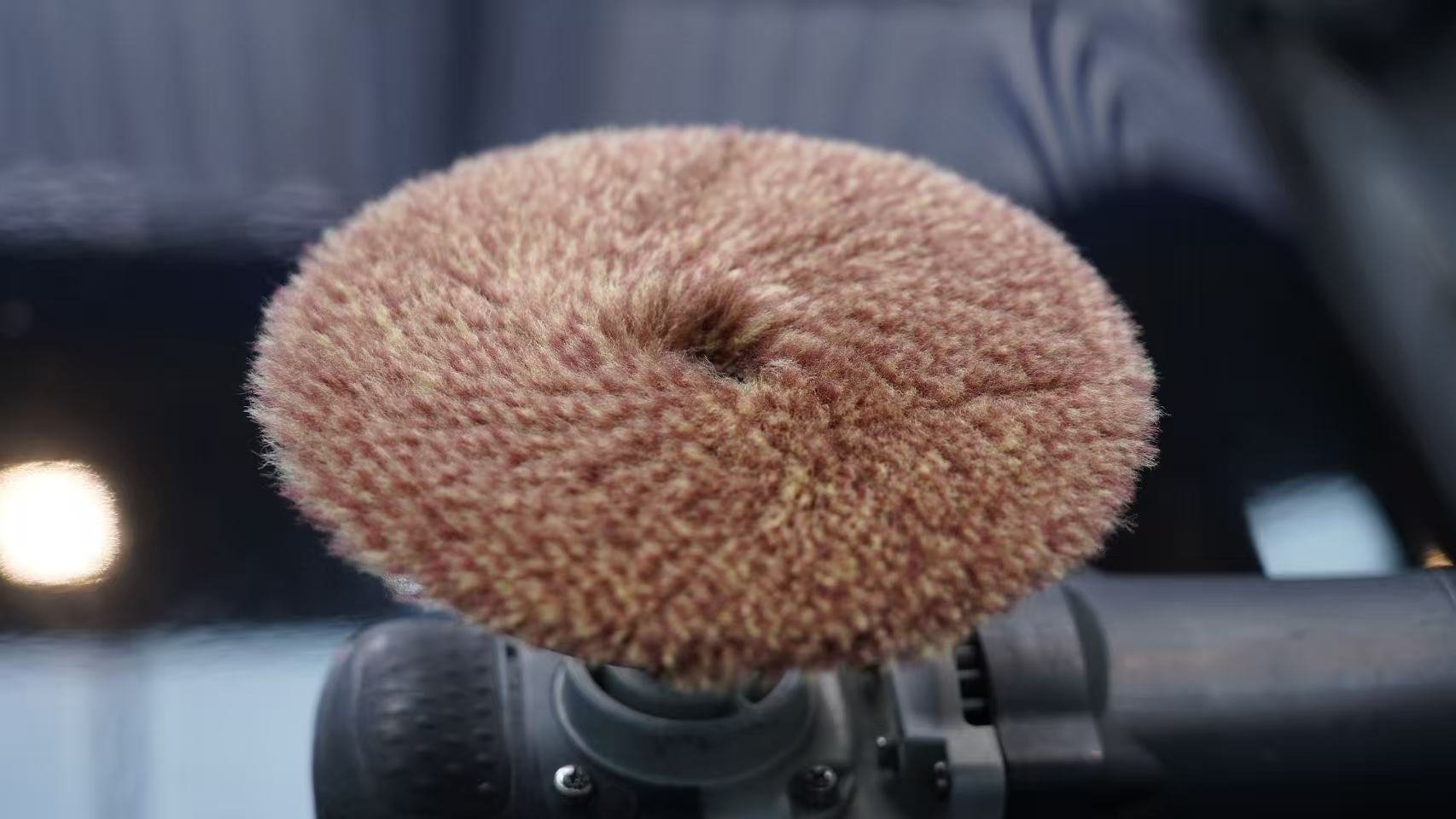
- #3 wool pad, speed set to 800-1200rpm
- Cross-hatch technique, overlapping each pass by 50%
- Moderate pressure, let the pad’s natural weight do the work
- Goal: Remove 90% of oil film and surface imperfections
Step 4: Medium polishing / restoration (#2 pad)
- Switch to #2 hybrid pad, speed 1000-1200rpm
- Remove scratches left by coarse polishing, further refining the surface
- This step determines final clarity — do not skip
Step 5: Fine polishing / gloss (#1 pad)
- Switch to #1 foam pad, speed 1200-1500rpm
- Light pressure, fast pass speed, eliminate all polishing marks
- Achieve “can’t tell the glass is there” clarity
Step 6: Clean + protect
- Thoroughly clean glass surface and crevices of polishing compound residue
- Apply glass ceramic coating or hydrophobic agent to extend result longevity
Complete video tutorials are available on the /tutorials page.
4. Three Key Habits for Oil Film Prevention
“Prevention is better than cure” — follow these three practices to slow oil film formation by 70%:
1. Park away from pollution sources
- Don’t park near restaurant exhaust vents
- Avoid areas where construction trucks and diesel vehicles are长期 parked
- Watch for insect residue and tree sap when parking under trees
2. Never add dish soap to your windshield washer fluid Many people pour dish soap into the washer fluid reservoir for convenience — this is a major cause of oil film. The silicone oil in dish soap forms a thin film on the glass, actually accelerating oil film formation.
Recommendation: Use dedicated windshield washer fluid, or purified water + a small amount of isopropyl alcohol.
3. Clean regularly — don’t wait until oil film is thick Oil film accumulates gradually. When it’s thin, it’s easy to treat; when it’s thick, polishing becomes necessary. Recommend glass deep cleaning every 2 months using dedicated glass cleaner and microfiber cloth.
5. Common Misconceptions Debunked
Q: Can toothpaste remove oil film? A: It may appear effective short-term, but toothpaste abrasives are hydrated silica, which is much harder than glass and will leave大量 micro-scratches — counterproductive in the long run.
Q: Can nano sprays or ceramic coating products remove oil film? A: No. These products form a hydrophobic layer on the glass — they “cover” rather than “remove.” The underlying oil film remains, and the effect is short-lived.
Q: Will oil film come back after removal? A: Yes, because driving always exposes the glass to exhaust and pollutants. But polishing effectively “resets” the glass surface, making subsequent maintenance much easier. Professional application combined with glass ceramic coating can maintain results for 6-12 months.
6. Summary
Glass oil film is not a simple cleaning issue — it’s a “glass skin condition” requiring professional solutions. Remember three core points:
- Abandon false hopes: Dish soap, toothpaste, and cleaning powder are not real solutions
- Find the right method: Dedicated glass polishing compound + machine polishing is the most effective verified approach
- Focus on prevention: Maintain regular cleaning; don’t wait until oil film is thick
For DIY car owners, if the oil film isn’t severe, try hand-applying a dedicated oil film remover first; if it’s already affecting driving safety, visit a professional shop for glass polishing. Detailed J10 Glass Polishing Compound product information is available at /products/j10.