
I. What Is Orange Peel Texture?
Orange peel refers to the uneven, bumpy texture on a car’s paint surface resembling an orange’s skin. It is especially noticeable under lighting and seriously affects the paint’s mirror finish and gloss.
According to industry statistics, over 60% of vehicles over 2 years old exhibit some degree of orange peel, with dark-colored vehicles (black, dark blue) showing the most visible impact.
II. Causes of Orange Peel
2.1 Factory-Origin Orange Peel
This is the most common cause, primarily from the painting process:
- Uneven paint application thickness, insufficient leveling time
- Improper temperature/humidity control in the spray booth
- Poor paint flow-out characteristics
- Improper baking temperature and duration
Note: Factory orange peel is generally uniform and not severely localized — it’s within normal production tolerances, not a quality defect.
2.2 Acquired Orange Peel
- Poor-quality repaints: Touch-up work with substandard technique, uneven spray, poor leveling
- Over-polishing: Multiple improper polishing sessions causing uneven paint thickness, forming new orange peel
- Paint aging/oxidation: Long-term sun exposure causes clear coat to age and shrink, creating textured surface
- Corrosion damage: Acid rain, bird droppings, and tree sap cause long-term corrosion leading to localized paint deformation
III. Orange Peel Grading Standards
Based on severity, three levels:
3.1 Light Orange Peel
- Only visible at specific angles under strong light
- Barely perceptible to touch
- Common on new or well-maintained vehicles
3.2 Moderate Orange Peel
- Clearly visible texture under normal lighting
- Slight texture detectable by touch
- Affects gloss and mirror finish
- Most common type — 80% of orange peel issues fall into this category
3.3 Severe Orange Peel
- Very visible under any lighting
- Strong texture felt by touch
- Seriously affects vehicle appearance and even resale value
- Usually caused by multiple improper repaints or severe aging
IV. Repair Solutions by Severity Level
4.1 Light Orange Peel: Mirror Restoration Method
No heavy polishing needed — fine finishing is sufficient:
- Thoroughly clean and decontaminate the paint
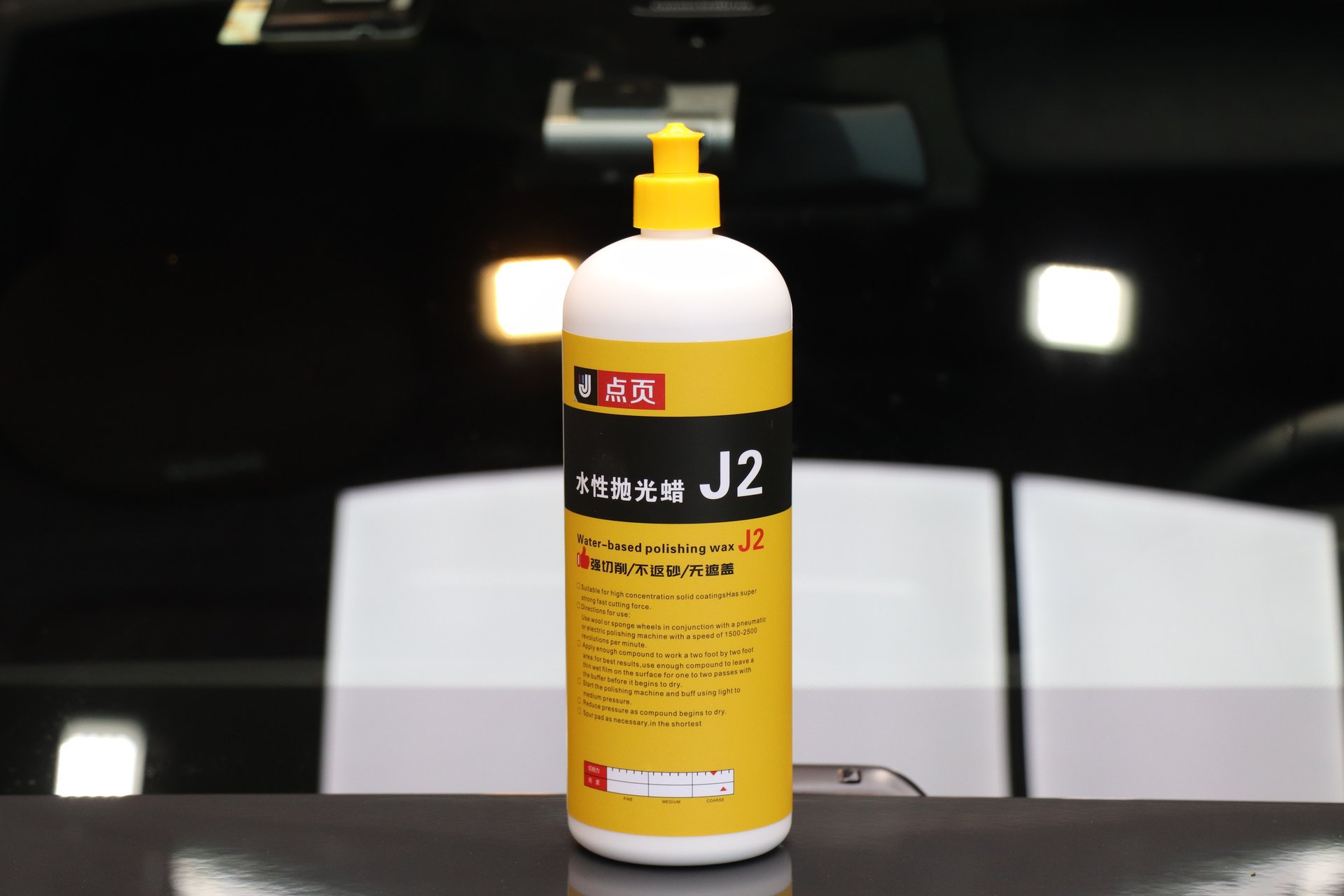
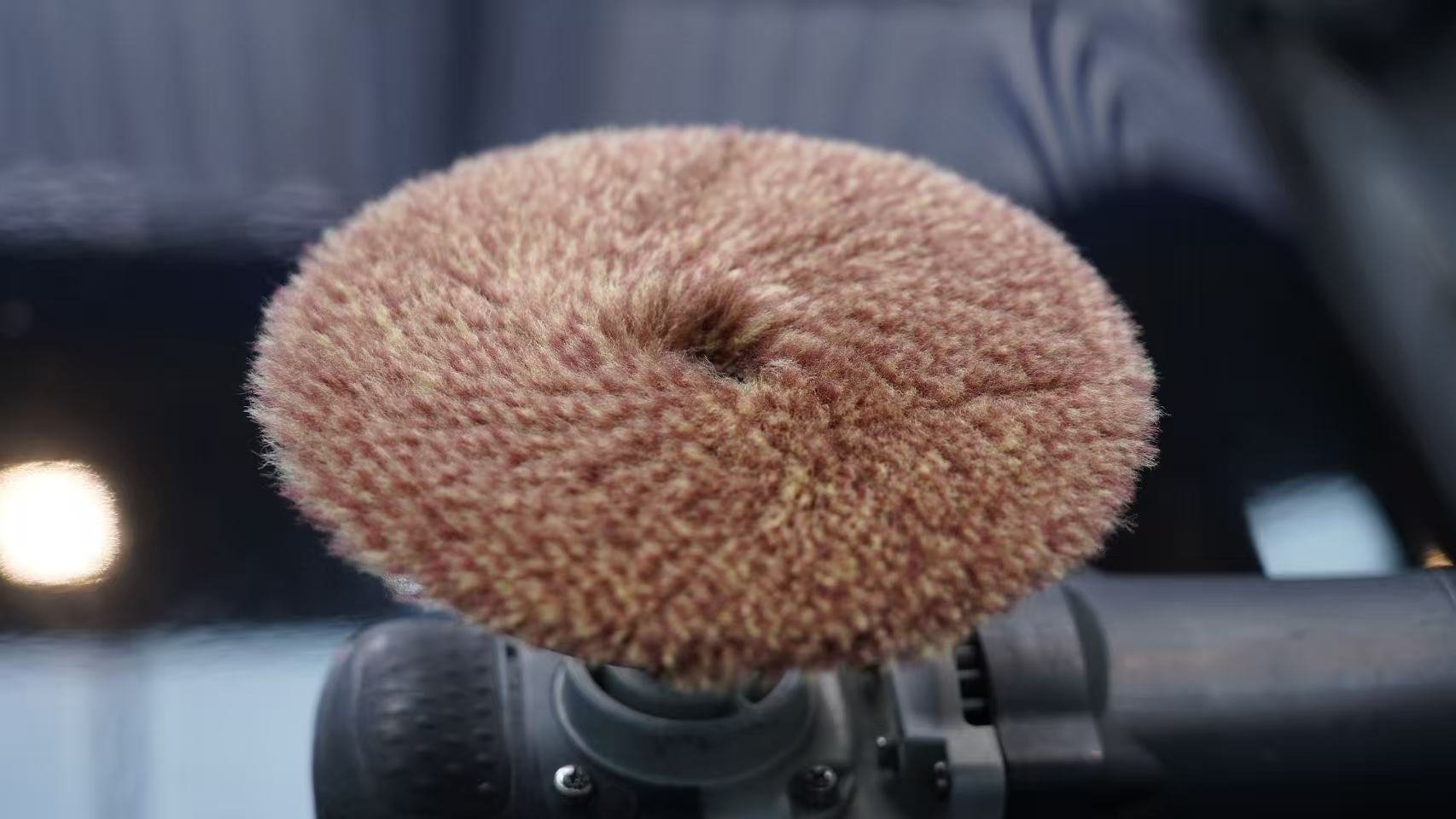
- Use short wool pad + J2 Polishing Wax
- Rotary at 1800-2000 RPM, light pressure, slow arm speed
- Two passes per area — don’t overwork
- Wipe down and inspect to confirm texture removal
Characteristics: Virtually no clear coat removal; results last 3-6 months per session; regular maintenance keeps paint in mirror condition long-term.
4.2 Moderate Orange Peel: Two-Stage Polishing
The most commonly used repair approach — effective with minimal damage:
- Stage 1: Cutting Correction
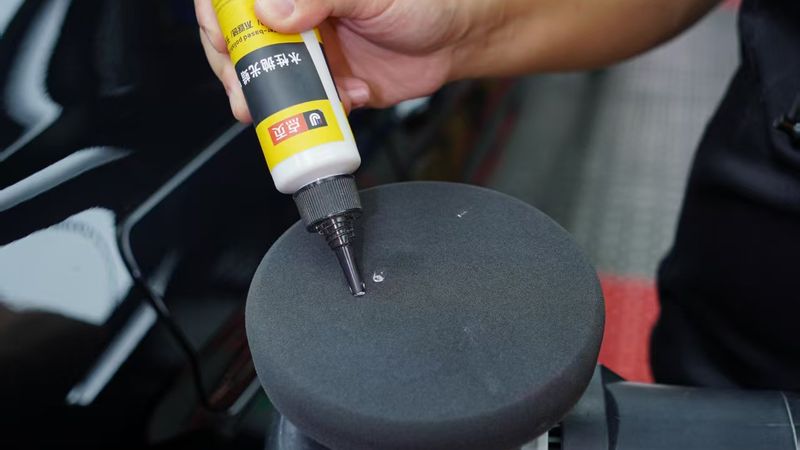
- Denim pad + J2 Water-Based Polishing Wax
- Rotary at 1500-1800 RPM, light pressure
- 3-4 passes per area to remove surface texture
- Stage 2: Mirror Finishing
- Switch to fresh fine foam pad + J5 Mirror Glaze Restorer
- 800-1000 RPM, light pressure
- Remove polishing micro-scratches, restore mirror finish
- Wipe down and inspect, then apply wax protection
Characteristics: Clear coat removal approximately 1-2 microns, equivalent to a standard polish; results last 1+ years.
4.3 Severe Orange Peel: Wet Sanding Method
Very severe cases require wet sanding before polishing:
- 2000-grit wet sandpaper with rubbing compound — hand-sand the high spots gently
- Sand until texture is mostly eliminated and surface is flat
- Follow the two-stage polishing method for moderate orange peel
- Must apply ceramic coating or film protection afterward to prevent texture recurrence
Note: This method removes significant clear coat (approximately 3-5 microns). Professional technician recommended — not for beginners.
V. Orange Peel Prevention
5.1 Daily Care Prevention
- Wax regularly every 2-3 months to keep paint lubricated and reduce oxidation
- Park in a garage when possible to reduce sun and rain exposure
- Remove bird droppings and tree sap promptly — don’t leave on paint
- Use two-bucket wash method to avoid new scratches that worsen texture
5.2 Avoiding Improper Practices
- Don’t polish the entire car too frequently — 1-2 times per year maximum
- For repaints, choose reputable shops with proper spray booths and processes
- Don’t use rough towels that cause scratches and localized wear
5.3 New Car Protection
- New cars can benefit from a fine mirror restoration to remove factory light orange peel
- Then apply ceramic coating or PPF to protect paint and delay aging and texture formation
VI. Common Misconceptions
Myth 1: Orange peel can only be fixed by repainting
Wrong! 90% of orange peel can be resolved through polishing and restoration — no repainting needed. Only extremely severe cases with damage to the base coat require paint.
Myth 2: Polishing makes orange peel worse
Wrong! Proper polishing only reduces orange peel. Only improper technique (excessive pressure, too-high RPM, wrong pad choice) worsens it.
Myth 3: Waxing can hide orange peel
Wrong! Wax only adds gloss — it cannot fix the physical texture. Light still reflects off the uneven surface; it just looks less obvious because of increased brightness.
Myth 4: Only dark cars get orange peel
Wrong! All colors develop orange peel — it’s just more visible on dark paint due to stronger light reflection. Light-colored cars have it too; it’s simply harder to see.
VII. Summary
Orange peel is an extremely common paint issue. No need for excessive anxiety, and don’t be easily upsold into repainting.
First determine your orange peel severity level, then choose the corresponding repair solution:
- Light: Short wool pad + J2
- Moderate: J2 polishing + denim pad
- Severe: Wet sanding + two-stage polishing
The most important thing is daily prevention — reduce sun exposure and corrosion, follow proper procedures, and you’ll maintain a mirror-finish paint surface long-term.