
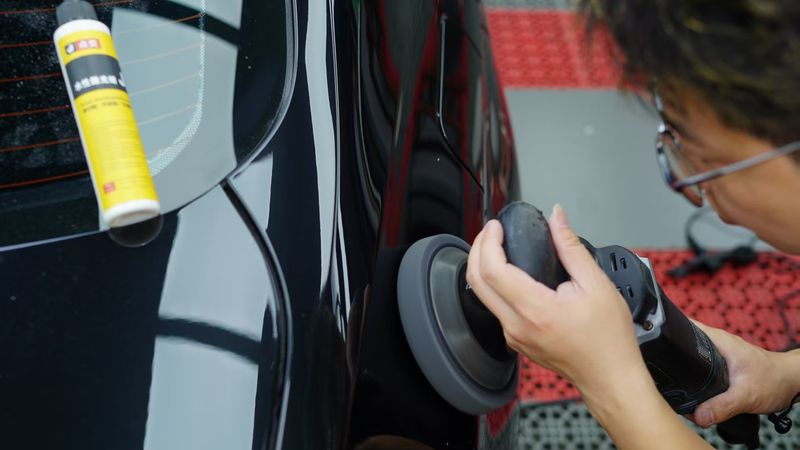
In auto detailing, the polisher is one of the most critical tools. Whether removing oxidation, repairing scratches, or achieving the final mirror finish, the polisher plays an irreplaceable role. However, faced with the overwhelming variety of polishers on the market, many car owners and practitioners struggle to choose. This article explains the core parameters from a professional perspective to help you make an informed purchase decision.
I. Basic Polisher Classification
Before diving into parameters, we must clarify the two fundamental types: DA polishers (Dual Action) and RO polishers (Rotary).
1.1 DA Polisher (Dual Action)
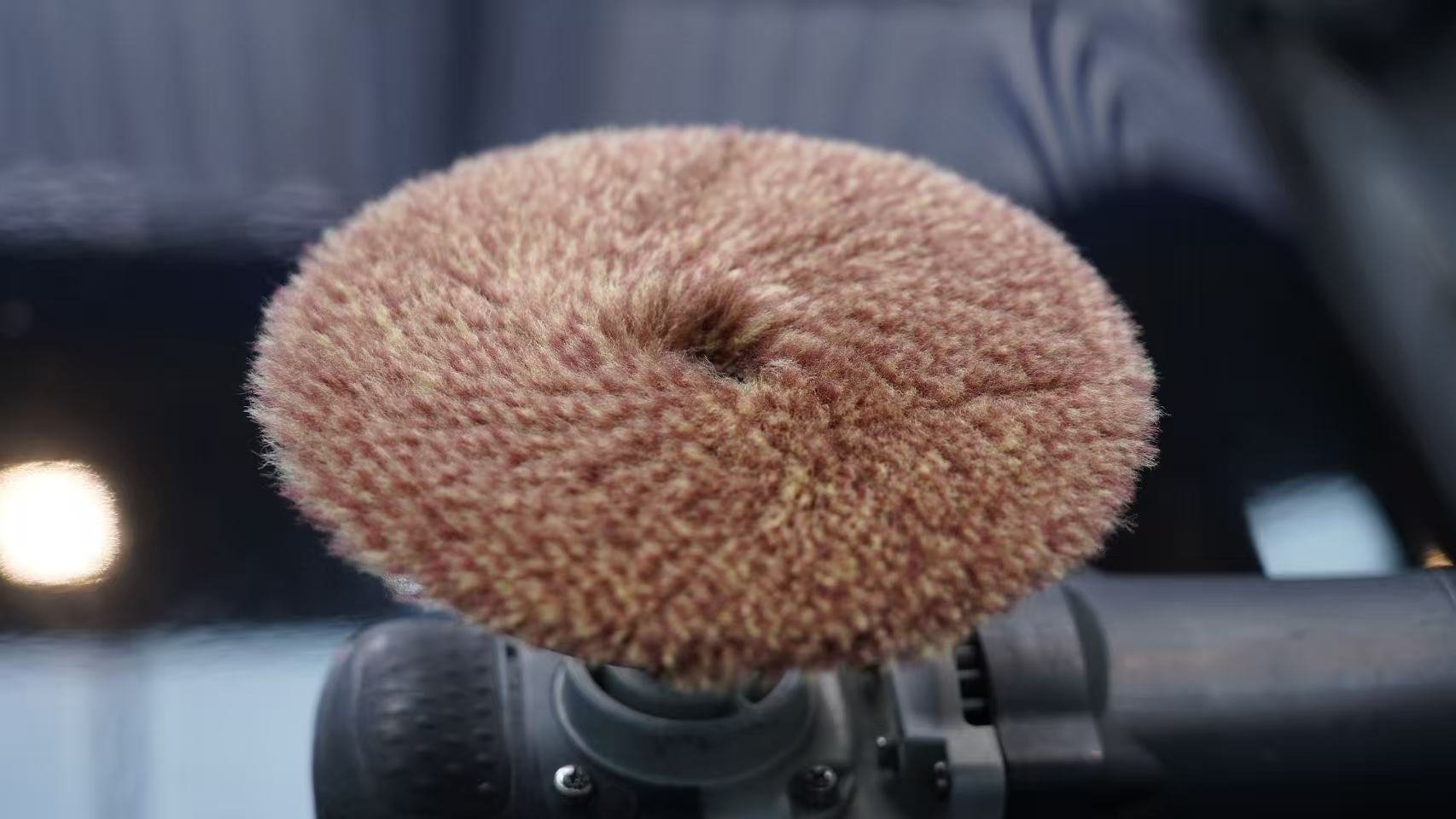
A DA polisher uses an eccentric mechanism to drive the backing plate in an orbital motion. Like an eccentric wheel, when the motor spins, the eccentric shaft transmits power to the pad, causing it to both rotate and oscillate simultaneously.
Key characteristics:
- Higher safety: Orbital motion distributes heat more evenly, reducing risk of paint overheating or burning
- High forgiveness: Safe for beginners; unlikely to create new scratches
- Moderate efficiency: Slower cutting speed, but sufficient for most daily care needs
- User-friendly: Requires minimal skill; ideal for DIY enthusiasts and beginners
DA polisher RPM range is typically 2,500-6,000 RPM, with the effective working range at 2,500-4,500 RPM. Due to its motion characteristics, DA polishers are best suited for light to moderate polishing.
1.2 RO Polisher (Rotary)
An RO polisher is a direct-drive rotary machine. The motor drives the backing plate in a high-speed circular motion through a spindle, with no eccentric buffering.
Key characteristics:
- Strong cutting power: Delivers aggressive cutting for deep scratches and severe oxidation
- High efficiency: High RPM provides significantly better polishing efficiency than DA
- High skill requirement: Requires extensive experience; otherwise risks paint damage
- Higher risk: Concentrated heat at high RPM can burn through paint if not careful
RO polisher RPM range is typically 1,000-3,000 RPM, with effective range at 1,500-2,500 RPM. Due to its high-risk nature, RO polishers are best for professional use.
II. RPM Parameters Explained
RPM is one of the most critical polisher parameters, directly determining polishing results and efficiency.
2.1 RPM Units & Meaning
RPM (Revolutions Per Minute) is the standard unit for polisher speed. Products are labeled in OPM (Oscillations Per Minute) or directly in RPM.
For DA polishers, due to the orbital motion, the actual pad trajectory is more complex than simple rotation. A DA rated at 4,500 RPM may have 2,500 rotations plus thousands of oscillations.
2.2 RPM vs. Cutting Power
Generally, higher RPM means more friction between pad and paint, yielding higher cutting efficiency. However, higher isn’t always better — different polishing stages require different speeds.
Low RPM (1,500-2,500):
- Stage: Fine finishing, final mirror treatment
- Scenario: New car light care, removing light swirl marks
- Advantage: Good heat control, low paint damage risk
- Pairing: J5 Mirror Glaze Restorer works best at low RPM
Medium RPM (2,500-3,500):
- Stage: Medium polishing, light oxidation removal
- Scenario: Daily care, general scratch repair
- Advantage: Balances efficiency and safety
- Recommended for: Most professional technicians
High RPM (3,500-5,000):
- Stage: Heavy cutting, deep scratch removal
- Scenario: Old car restoration, severe oxidation treatment
- Advantage: High cutting efficiency
- Risk warning: Caution required to avoid overheating
2.3 Variable Speed
Quality polishers feature variable speed control, allowing free RPM adjustment within the effective range. This is essential because different stages need different speeds:
- Start: Low RPM to spread the compound
- Cutting: Increase RPM based on scratch depth
- Finishing: Reduce RPM for final restoration
Choose polishers with variable speed triggers for real-time RPM adjustment rather than preset positions.
III. Orbit Throw Parameters Explained
Orbit throw is a DA polisher-specific parameter determining the backing plate’s travel diameter — a critical factor in polishing results.
3.1 Concept
Orbit throw is the distance from the eccentric shaft center to the main spindle center. When the motor rotates, the pad travels in a reciprocating path at this radius. For example, a 12mm throw DA has an actual pad travel diameter of approximately 24mm.
Throw size directly affects:
- Single-pass coverage area
- Heat distribution
- Cutting efficiency and results
3.2 Common Throw Specifications
DA polisher throws fall into these categories:
Small throw (3-5mm):
- Small orbit, low heat generation
- High precision, unlikely to cause new scratches
- Small coverage, lower efficiency
- Best for: Fine work, new car care
Medium throw (8-12mm):
- Balanced efficiency and safety
- Wide application range; mainstream choice
- Requires some skill
- Best for: Daily care, general scratch repair
- Recommended: First choice for most DIY and professionals
Large throw (15-21mm):
- Large orbit, high efficiency
- Large coverage, time-saving
- Harder to control, higher risk
- Best for: Rapid large-area paint treatment
3.3 Throw & Pad Matching
Throw selection must consider pad size:
| Throw | Recommended Pad Size | Application |
|---|---|---|
| 3-5mm | 3-4 inch | Fine work, corners |
| 8-12mm | 5-6 inch | Daily care, medium cutting |
| 15-21mm | 6-8 inch | Large-area rapid work |
Matching throw and pad size correctly maximizes efficiency. For a standard sedan’s panels, 8-12mm throw with 5-6 inch pads is the most common choice.
IV. Power Parameters Explained
Power measures the polisher’s motor performance, typically in watts (W).
4.1 Meaning
Power directly reflects the motor’s output capability. Higher power means more torque, and the polisher is less likely to stall under resistance.
4.2 Power vs. Performance
Low power (200-400W):
- Lightweight, energy-efficient
- Best for: Light work, DIY use
- Note: May stall under heavy load
Medium power (400-700W):
- Balanced performance and portability
- Best for: Professional daily use
- Recommended: Most professionals’ choice
High power (700-1200W+):
- Abundant power, resistant to stalling
- Best for: Heavy cutting, professional work
- Note: Heavier body increases operator fatigue
4.3 Torque Importance
Beyond power, torque is also crucial. Higher torque means better RPM maintenance under heavy load.
Professional polishers typically specify maximum or stall torque in their specs. For users working with harder paint or doing heavy cutting, choosing a higher-torque model provides better results.
V. DA vs. RO Detailed Comparison
5.1 Motion Comparison
| Dimension | DA Polisher | RO Polisher |
|---|---|---|
| Motion type | Orbital + oscillation | Pure rotary |
| Path pattern | Spiral | Single circle |
| Heat distribution | Even, dispersed | Localized, concentrated |
| Risk level | Relatively safe | Higher risk |
5.2 Cutting Efficiency
RO polishers, being pure rotary with no energy lost to oscillation, have significantly higher cutting efficiency at the same RPM. However, DA polishers can compensate by increasing throw.
In practice:
- For the same depth scratches, RO may need 1-2 passes vs. DA’s 3-4 passes
- But DA has lower per-pass risk and lower rework probability
5.3 User Suitability
DA is best for:
- Beginners
- DIY enthusiasts
- Users balancing efficiency and safety
- Those doing primarily daily care
RO is best for:
- Professional detailing technicians
- Users with extensive experience
- Professional work requiring deep scratch treatment
- Users pursuing maximum efficiency
5.4 Recommendations
For most users:
- Beginners: Start with DA; build experience gradually
- Professional growth: After mastering DA, add an RO for special cases
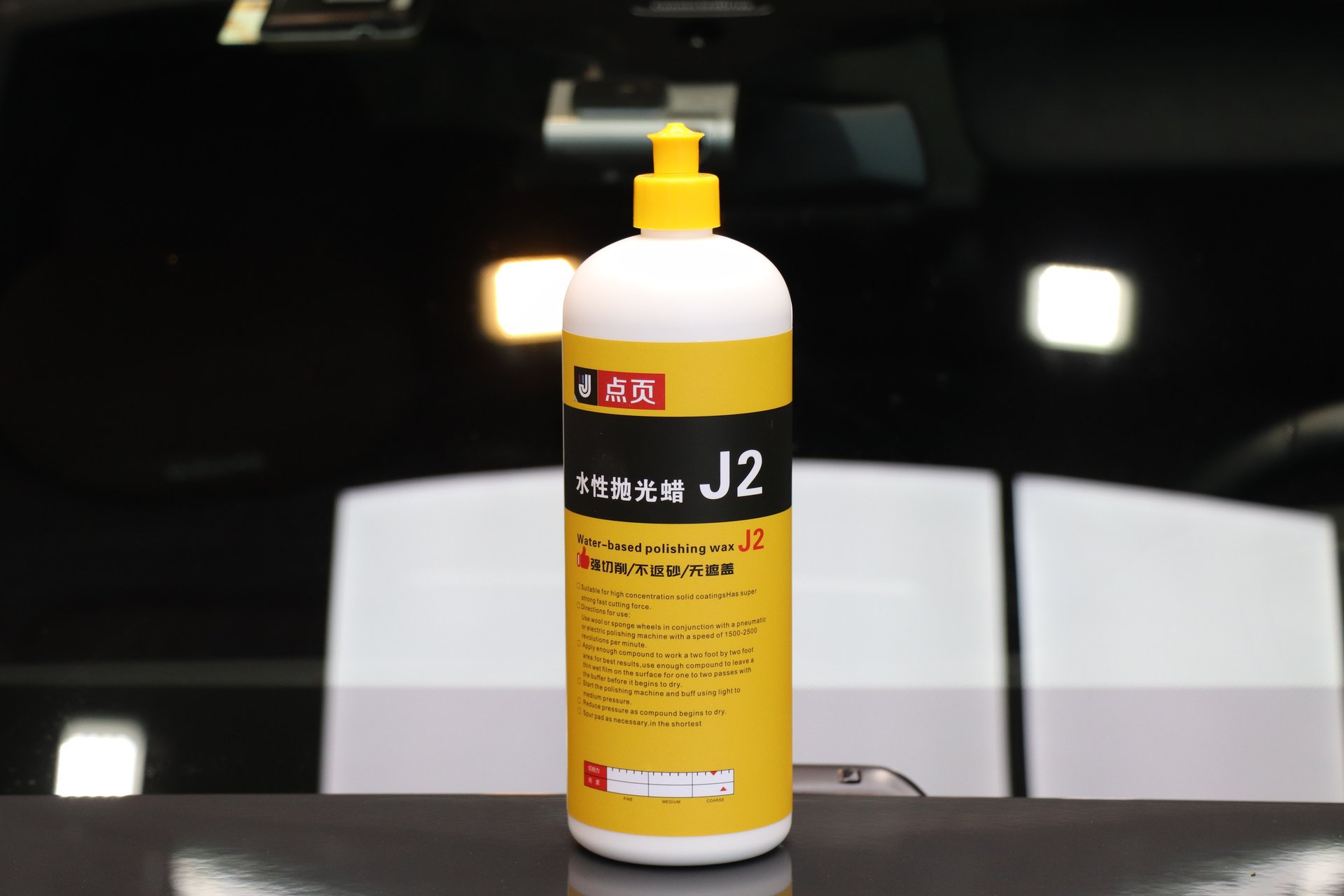
- Daily care: DA + J2 Water-Based Polishing Wax handles most needs
- Deep restoration: Consider RO with appropriate cutting compounds
VI. Beginner Purchase Recommendations
6.1 Entry-Level
For first-time polishers:
- Type: DA
- Throw: 8-12mm
- Power: 400-600W
- RPM range: 2,500-6,000
- Budget: $70-210
Entry-level products have limited performance but are sufficient for daily care with lower risk — great for learning.
6.2 Professional-Level
For those looking to advance:
- Type: DA + RO combination
- DA throw: 12-15mm
- RO RPM: 1,500-2,500 adjustable
- Power: 700W+
- Budget: $280-700
Professional equipment handles complex scenarios and improves efficiency.
6.3 Buying Tips
- Brand: Prefer well-known brands for quality and after-sales support
- Price traps: Too-cheap products may have false specs or quality issues
- Ergonomics: Test the grip; feel the weight and comfort
- Accessory compatibility: Confirm compatibility with your usual pads and accessories
- Cooling design: Good heat dissipation extends equipment life
VII. Proper Polishing Techniques
Good equipment requires proper technique. Here are practical tips.
7.1 Pre-Work Preparation
- Environment: Ensure a clean, dust-free workspace
- Paint cleaning: Thoroughly wash and dry the work area
- Masking: Protect non-polish areas with masking film
- Product prep: Select appropriate compound and pad
7.2 Operating Tips
- Low-speed start: Move the polisher slowly at first to spread the compound
- Overlap: Each pass should overlap the previous by ~50%
- Even pressure: Maintain consistent downward pressure; don’t dwell on one spot
- Monitor temperature: Stop when paint feels hot; let it cool
- Regular inspection: Periodically stop to check progress
7.3 Safety Precautions
- PPE: Wear safety glasses and mask
- Avoid edges: Don’t use high RPM on edges or ridges
- Time control: Max 30 seconds on the same spot
- Cord management: Keep the power cord away from the polishing area
- Equipment check: Regularly inspect the machine; repair issues promptly
VIII. FAQ
8.1 Can a DA replace an RO?
For most daily care and general scratch repair, a DA is fully capable. Only for deep scratches, severe oxidation, or maximum efficiency in professional settings would you need an RO. For most owners and shops, DA is the better choice.
8.2 Is bigger throw always better?
No. Larger throw = higher efficiency but also higher difficulty and risk. Beginners should start with medium throw (8-12mm) and progress as experience grows.
8.3 Is higher power always better?
More power means better performance reserve but also heavier weight and higher cost. Match power to your use case and physical capability. 400-700W balances performance and portability for most users.
8.4 Why are new scratches appearing during polishing?
Usually caused by improper technique:
- RPM too high
- Pad too hard
- Pressure too heavy
- Contaminants on the pad
- Paint not thoroughly cleaned before polishing
8.5 How to judge if paint temperature is too high?
Methods:
- Hold the back of your hand near the surface (don’t touch directly)
- Watch for discoloration or haze in the polishing area
- Note any burning smell
- Feel for increased polishing resistance
If signs of overheating appear, stop immediately and let the paint cool naturally before continuing.
IX. Summary
The polisher is the core tool of auto detailing. Choosing the right equipment requires considering multiple parameters. RPM determines efficiency and heat buildup; throw affects the motion path and coverage; power relates to performance reserve and stability.
For most users, a DA polisher is the safer, more practical choice. Paired with J2 Water-Based Polishing Wax for medium cutting or J5 Mirror Glaze Restorer for fine finishing, excellent results are achievable. As experience grows, exploring RO polishers can further expand your professional capabilities.
We hope this article helps you better understand polisher parameters and make the right decisions in purchasing and use. Remember: Tools are just the means — technique and experience matter most. Practice regularly, learn from each job, and you’ll master this craft to keep your vehicle looking its best.