
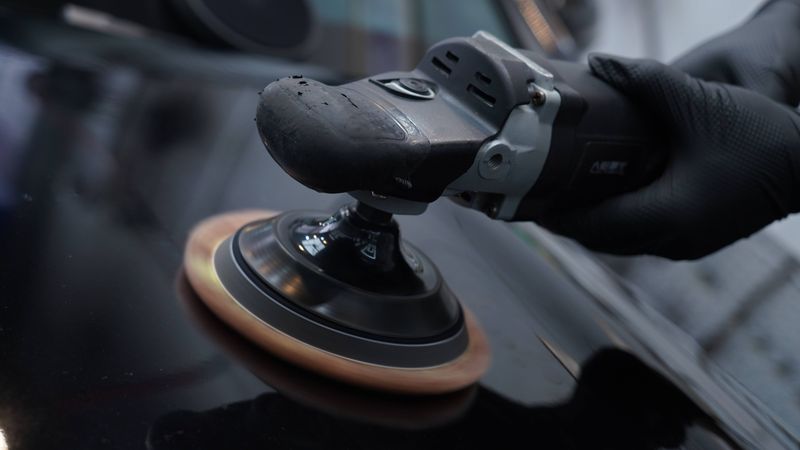
In automotive paint polishing, DA polishers (Dual Action) and RO polishers (Rotary) are the two most common machine types. For beginners entering auto detailing or professionals looking to upgrade equipment, choosing between the two is a frequent challenge. This article provides a comprehensive selection guide covering working principles, mechanical structure, pros/cons comparison, and applicable scenarios.
I. Basic Concepts
1.1 What Is a DA Polisher (Dual Action)?
DA stands for Dual Action Polisher, also known as an eccentric or oscillating polisher. Its working principle combines rotation with reciprocating oscillation, creating a complex motion path.
Motion characteristics:
- Primary rotation: Pad rotates around the central axis
- Secondary oscillation: Pad simultaneously performs reciprocating eccentric motion
- Path pattern: Random complex trajectory from motion overlap
- Orbit amplitude: Typically 8-15mm throw
This random motion path greatly reduces the risk of creating concentric circle marks (holograms/swirl marks). This is why DA polishers are so popular.
1.2 What Is an RO Polisher (Rotary)?
RO stands for Rotary Polisher, also called a single-rotation or disc polisher. The pad only performs a single-direction rotation.
Motion characteristics:
- Single rotation: Pad only rotates around the central axis
- Path pattern: Perfect concentric circles
- RPM range: Typically 1,000-3,000 rpm
- Cutting character: Direct, efficient, powerful
The simple motion delivers extremely high cutting efficiency, but the predictable circular pattern can leave visible concentric marks if operated incorrectly.
1.3 Visual Identification
DA features: Angled handle; wider body; visible eccentric bearing mechanism; noticeable vibration during operation.
RO features: In-line handle; slimmer body; pad directly connected to motor shaft; smoother operation at higher RPM.
II. Working Principles Deep Dive
2.1 DA Polisher
The core mechanism is an eccentric bearing system. The motor drives the spindle rotation, which through this special mechanism converts to combined rotation + oscillation.
Because motion is random (within limits), abrasive particles follow irregular paths on the paint. This means:
- No regular concentric circle marks even after repeated work
- Uniform diffuse reflection on the paint surface
- More natural final results
- Ideal for dark paint which is more hologm-sensitive
The DA design philosophy balances cutting efficiency with maximum safety. It’s forgiving — even dwelling slightly won’t cause serious damage. Heat distributes evenly, and the operator can easily control force and rhythm.
2.2 RO Polisher
The pad connects directly to the motor output shaft, meaning perfect concentric circle motion. All motor power converts directly to cutting force with no energy loss. This means higher effective cutting pressure per unit area, but heat concentrates in the contact zone.
The RO can be described as “high risk, high reward”:
- Expert technique achieves extremely high processing efficiency
- Errors can cause serious paint damage
- Concentric marks require subsequent fine finishing to remove
- High experience requirement
III. Comprehensive Pros & Cons Comparison
3.1 DA Advantages
Beginner-friendly: High error tolerance; won’t cause serious damage from dwell; easy to control; flat learning curve; low psychological burden.
Ideal for dark paint: Random trajectory minimizes hologm risk; minor marks are irregular and hard to detect; results in natural deep gloss.
Versatile: Can cut, finish, and even wax; different pads for different stages; wide speed range; some models allow mode switching.
Safety: Even mistakes are usually reversible; slow heat buildup reduces burn-through risk; less likely to cause deep paint damage; suitable for large panels.
3.2 DA Disadvantages
Lower cutting efficiency: Takes longer for the same work; may need more passes for heavy damage; efficiency disadvantage amplified in commercial settings.
Limited depth: Severe orange peel may need RO; deep scratch removal slower than RO; less effective on hard ceramic clear coats.
Higher machine cost: 1.5-2x the price of comparable RO; complex eccentric mechanism increases manufacturing costs.
3.3 RO Advantages
Extremely high cutting efficiency: 30-50% faster than DA for the same area; heavy damage processing can be 2x+ faster; critical for commercial throughput.
Deep processing capability: Handles severe oxidation, deep scratches, orange peel, and old coating removal.
Lower equipment cost: Simpler structure; lower failure rate; wider pad selection at lower prices; budget-friendly.
Professional recognition: Still mainstream in professional body shops and dealerships; essential for heavy restoration; some specific processes require RO.
3.4 RO Disadvantages
High skill requirement: Requires precise control of pressure, speed, and rhythm; dwell too long = burned paint; high hologm risk requiring follow-up; steep learning curve.
High risk: Mistakes can cause irreversible damage; burn-through and clear coat failure are common; beginners face a “ticking time bomb”; repair costs may exceed time savings.
Poor for dark paint: Concentric marks extremely visible on dark paint; even minor errors leave obvious marks; more effort needed for finishing; if finishing is incomplete, results may be worse than not treating at all.
Narrower application: Specializes in heavy treatment; DA is more practical for daily care; fine finishing unsuitable with RO; limited on sensitive areas.
3.5 Comparison Summary
| Dimension | DA Polisher | RO Polisher |
|---|---|---|
| Difficulty | Low | High |
| Cutting efficiency | Medium | Very high |
| Safety | High | Low |
| Hologm risk | Low | High |
| Dark paint suitability | Excellent | Poor |
| Equipment cost | Higher | Lower |
| Maintenance cost | Medium | Lower |
| Learning curve | Gentle | Steep |
| Best scenarios | Daily care, light-medium | Heavy restoration, professional |
| Recommended users | Beginners, dark cars, DIY | Professionals, experts, light cars |
IV. Application Scenario Analysis
4.1 DA Ideal Scenarios
- Daily care & light treatment: Removing wash marks, light oxidation, swirl marks, new car prep. DA takes 1-2 hours for full daily care — acceptable for non-professionals.
- Dark paint professional work: Random trajectory won’t leave visible circles; natural deep gloss.
- Beginner practice: High forgiveness allows experimenting with different pressures and speeds; mistakes won’t cause serious damage.
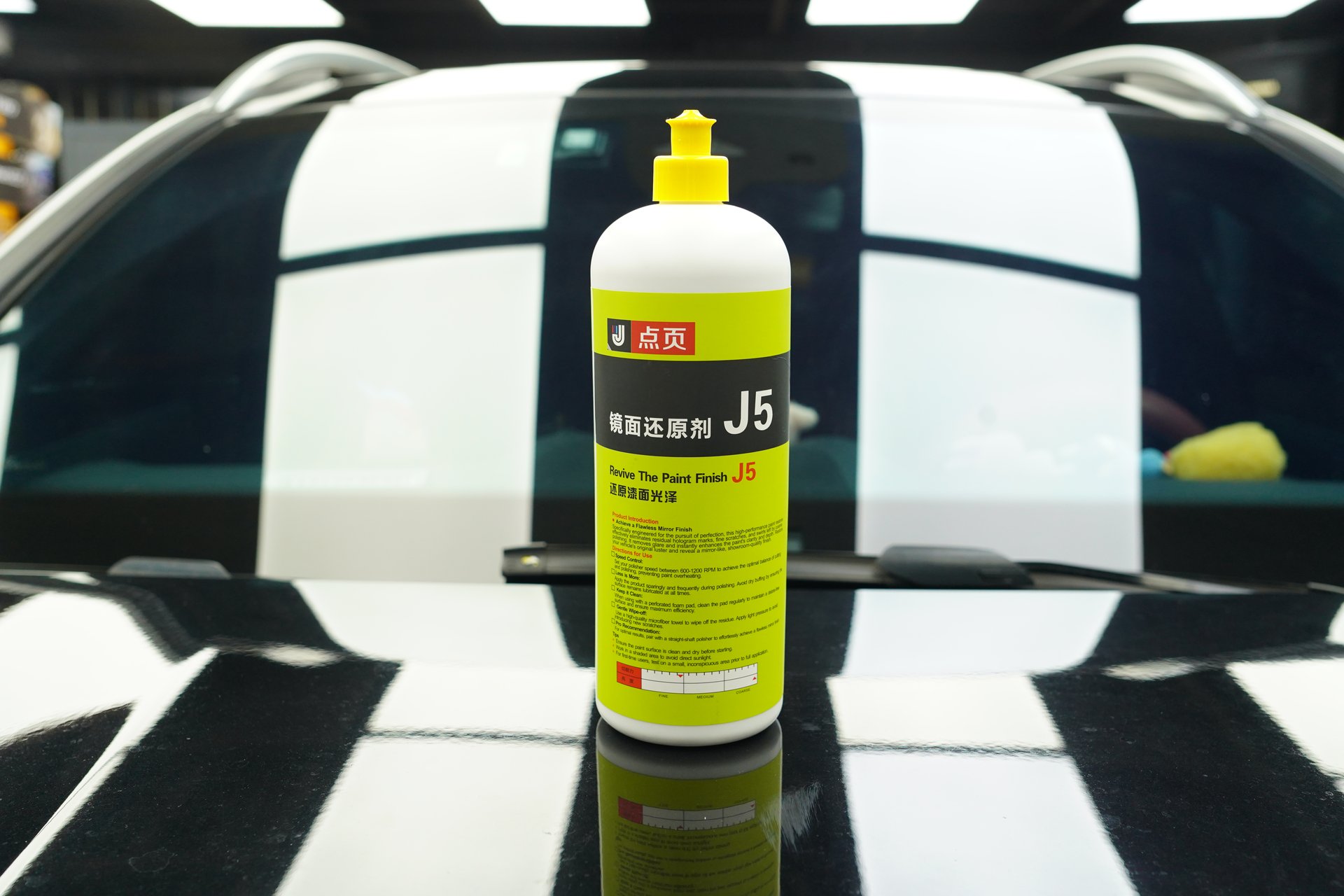
- Fine finishing: J5 + DA + soft pad = standard setup for mirror results.
4.2 RO Ideal Scenarios
- Heavy restoration: Full-car severe oxidation, years of scratches, severe orange peel, old coating removal. RO’s efficiency and cutting are irreplaceable.
- Professional body shops: Time is money; heavy work is the business; professional technicians keep risk controlled.
- Light-colored paint: White, silver, gray are less sensitive to hologms; leverage RO’s high efficiency.
- Specific process requirements: Some products specify RO; certain techniques require it; extreme cutting efficiency needed.
4.3 Combined Use Strategy
Many professionals own both machines:
Step 1: RO for rough cutting — Wool pad + heavy compound, rapid defect removal
Step 2: DA for medium treatment — Medium foam pad, remove RO’s concentric marks
Step 3: DA for finishing — J5 + soft pad, achieve final gloss
This combines RO’s raw efficiency with DA’s safety and finishing quality.
4.4 Entry User Recommendations
Phase 1: Buy DA first; learn basics; build experience and confidence
Phase 2: Try RO under experienced guidance; practice on scrap panels
Phase 3: Purchase RO only if commercial need or specific requirements arise
V. Purchase Guide
5.1 DA Selection Criteria
- Motor power: Entry 150-200W; Mid 200-350W; Professional 350W+. Mid-range is best for most.
- Throw: 5-8mm fine; 12-15mm balanced; 21mm+ large area. 12-15mm is the most versatile.
- Speed range: 4,000-8,000 rpm typical; wider range = more adaptable; variable speed dial preferred; soft-start feature reduces risk.
- Ergonomics: Weight distribution, grip comfort, cord length, vibration control.
5.2 RO Selection Criteria
- Power: Entry 500-700W; Mid 700-1000W; Pro 1000W+. Choose 700W+ for hard paint or heavy restoration.
- Speed control: Variable speed essential; clear speed display; smooth start/stop; overload protection.
- Heat management: Good cooling prevents motor overheating; continuous-duty rating matters; some high-end models have forced air cooling.
- Weight & balance: Affects fatigue during long sessions; good balance improves control.
5.3 Budget Recommendations
- Entry ($140-280): DA; reputable brand entry/mid model; sufficient for daily care
- Mid-range ($280-560): DA mid-high-end + entry RO; complementary use
- Professional ($560+): High-end DA + mid-high RO; multiple pad sizes; professional accessories
VI. Operating Techniques
6.1 DA Operation
- Clean and dry paint; select pad and compound; install pad securely
- Pre-apply compound to pad or paint (max 0.5m² area)
- Low speed (~1000rpm) to spread product evenly
- Increase to working RPM; 50% overlap cross-hatch pattern; 3-5 passes per area
- Wipe clean and inspect under good light
Pressure: 1-3kg (one-handed); let machine weight do the work.
Speed guide: Compound 1800-2500rpm; Medium 1500-1800rpm; Finishing 800-1200rpm.
6.2 RO Operation
- Ensure paint is clean; pad must be absolutely secure; test in inconspicuous area
- Never start at high speed; place machine on paint first, then start
- Pre-heat compound at starting position (10-15 seconds max)
- Maintain steady movement; never dwell; check temperature regularly
- Inspect after each panel
Pressure: 2-5kg; even pressure; machine should “slide” not “bounce.”
Speed guide: Compound 2000-3000rpm; Medium 1500-2000rpm. Never use RO for fine finishing.
Heat management: Check with back of hand constantly; stop when too hot; let cool; max 5 minutes continuous; stop immediately on discoloration or smoke.
6.3 General Safety
- Mask before polishing; extra care on edges; monitor paint constantly; stop on any anomaly
- Wear safety glasses and dust mask; remove jewelry; wear work clothes
- Well-ventilated area; avoid direct sunlight; paint temp 15-25°C ideal; keep workspace clean
VII. FAQ
7.1 Which Machine Should Beginners Buy First?
DA, without question. Higher forgiveness, lower risk, flatter learning curve. Master the basics with DA first, then consider RO.
7.2 Can DA Fully Replace RO?
For most users, yes. DA handles daily care and light-medium work. RO is only needed for: professional restoration business; severe paint damage; extreme efficiency requirements.
7.3 Can RO Only Be Used on Dark Paint?
Not exclusively, but DA is the safer choice for dark paint. RO on dark paint requires extensive experience and mandatory fine finishing afterward.
7.4 Is the Price Difference Large?
Comparable DA machines are typically more expensive due to the complex eccentric mechanism. But considering safety, versatility, and broader application, the premium is worthwhile.
7.5 Can I Skip DA and Only Buy RO?
Possible but not recommended. RO can’t do fine finishing well; unfriendly to beginners; high risk on dark paint; actually less efficient for daily care than DA.
7.6 What Consumables Are Needed?
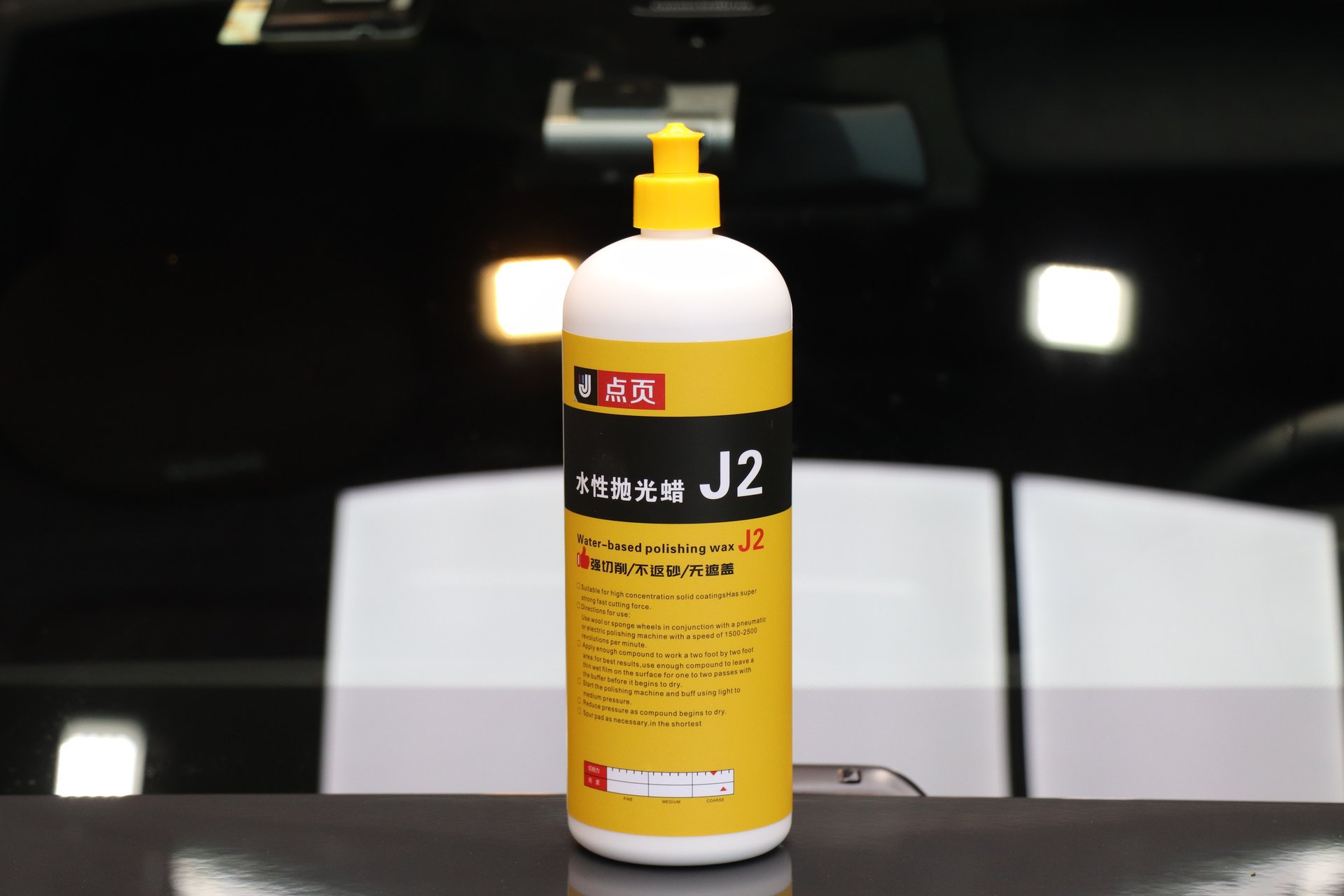
For DA: Wool pad (heavy cutting); medium foam (J2); soft foam (J5); microfiber (waxing/final shine)
For RO: Wool pad (heavy restoration); medium wool (medium treatment); foam pad (follow-up); RO generally not used for final fine finishing
VIII. Summary & Recommendations
8.1 Core Selection Principles
Answer these questions:
- Use scenario: Daily care → DA; Professional heavy → RO or combo
- Hologm tolerance: Perfectionist → DA; Acceptable marks → RO
- Skill level: Beginner → DA; Experienced → Consider RO
- Paint color: Dark → DA; Light → RO also works
8.2 Final Recommendations
For most users: A quality DA with J2+J5 compound set meets 99% of needs. DA’s ease of use, safety, and results make it the top choice for home and most professional scenarios.
For professionals: Own both DA and RO. RO for high-efficiency rough cutting; DA for hologm removal and finishing. This combo maximizes both efficiency and quality.
For undecided users: Start with DA. Through actual use, you’ll discover your needs and can decide later whether to add an RO. Don’t buy equipment for hypothetical requirements.
Remember: There’s no “best” machine — only the one that best fits your needs. We hope this guide helps you make the right choice for brilliant results.
Related product recommendations:
- J2 Water-Based Polishing Wax: Medium cutting, ideal for DA, handles common scratches and oxidation
- J5 Mirror Glaze Restorer: Fine finishing, paired with DA for perfect gloss results