
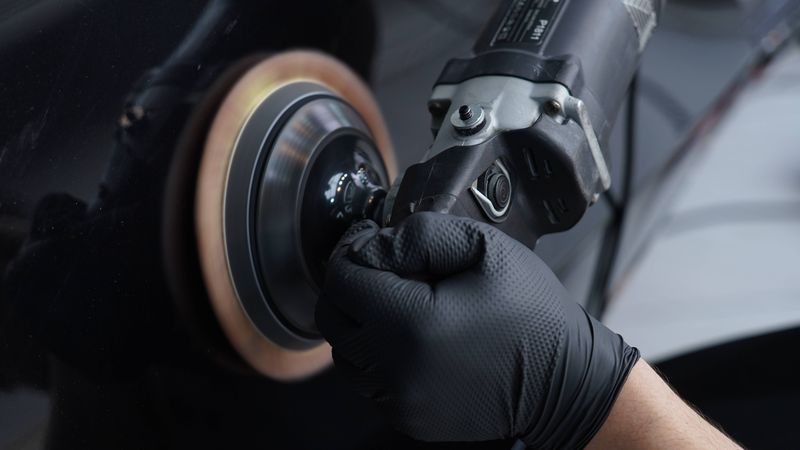
Introduction: Choosing the Right Machine Is the Prerequisite for Polishing Success
The choice of car polisher directly determines application results, operating experience, and paint safety. The most common beginner question is: DA or RO — which is better? Which should I buy?
The answer isn’t “which is better” but “which is right for you.” The two machines have completely different motion principles, operating characteristics, and use cases.
1. Kinematic Principles: The Essential Difference
1.1 DA Machine’s Dual Action Mechanism
DA stands for “Dual Action Polisher.” Its core mechanism: when the motor drives the main shaft rotation, the eccentric bearing system simultaneously produces two motions:
Primary rotation: The pad moves in a circular path around the center axis. Oscillation motion: The eccentric mechanism creates simultaneous reciprocating orbital motion, with orbit throw typically 8-21mm.
The vector superposition creates a complex random trajectory — a hypotrochoid.
Three key advantages of this random trajectory:
- Low hologram risk: Industry data shows DA-induced hologram rate is only 15-20% of RO.
- Fast heat dissipation: Random paths prevent particles from continuously working the same point.
- High forgiveness: Even lingering slightly too long, random trajectories分散 cutting marks.
1.2 RO Machine’s Single Rotation Mechanism
RO stands for “Rotary Polisher.” The pad connects directly to the motor output shaft, performing perfect concentric circular motion.
Two characteristics:
- Extremely high cutting efficiency: RO effective cutting force is approximately 1.8-2.2x that of DA.
- Equally high risk: Improper operation leaves obvious concentric holograms, with rapid heat buildup.
Industry data shows RO paint burn-through rate is 8-12x that of DA. In clear coat penetration accidents, RO accounts for over 90%.
1.3 Quantified Parameter Comparison
| Parameter | DA (Dual Action) | RO (Rotary) |
|---|---|---|
| Motion type | Compound (rotation + oscillation) | Single rotation |
| Cutting trajectory | Multi-directional cross (hypotrochoid) | Single direction (concentric) |
| Hologram risk | Low (~8%) | High (~65%) |
| Cutting efficiency | Medium | High |
| Forgiveness | High | Extremely low |
| Suitable users | Beginner to professional | Professional technicians |
2. Core Parameter Analysis
2.1 Orbit Throw: DA’s Key Parameter
Orbit throw determines the polisher’s motion characteristics and application scenarios:
- 8mm: ~16mm trajectory diameter
- 15mm: ~30mm trajectory diameter
- 21mm: ~42mm trajectory diameter
Beginner pass rates: 8-12mm >85%; 15mm ~70%; 21mm ~50%
Best beginner choice: 15mm orbit throw
2.2 Power and Torque
| Power Level | Suitable For | Processing Capacity |
|---|---|---|
| Entry (100-300W) | Occasional use | ~2-3 standard panels, light oxidation |
| Mid-range (300-500W) | DIY primary tool | ~6-8 standard panels |
| Professional (500W+) | High-frequency/professional | 12+ panels without significant drop |
3. Scenario Analysis
3.1 DA Machine Optimal Scenarios
Daily care and light treatment: Removing light wash marks, light oxidation, swirl marks, regular maintenance.
Dark paint professional treatment: Black, dark blue, dark red — these colors are extremely sensitive to holograms. DA’s random trajectory is the best choice.
Beginner skill building: Start with DA, accumulate 1-2 months experience before considering RO.
3.2 RO Machine Optimal Scenarios
Heavy restoration: Full-car heavy oxidation, years of accumulated severe scratches, orange peel correction.
Professional commercial operations: High-efficiency requirements (detailing shops) with professional technician operation.
3.3 Professional Strategy: DA + RO Combination
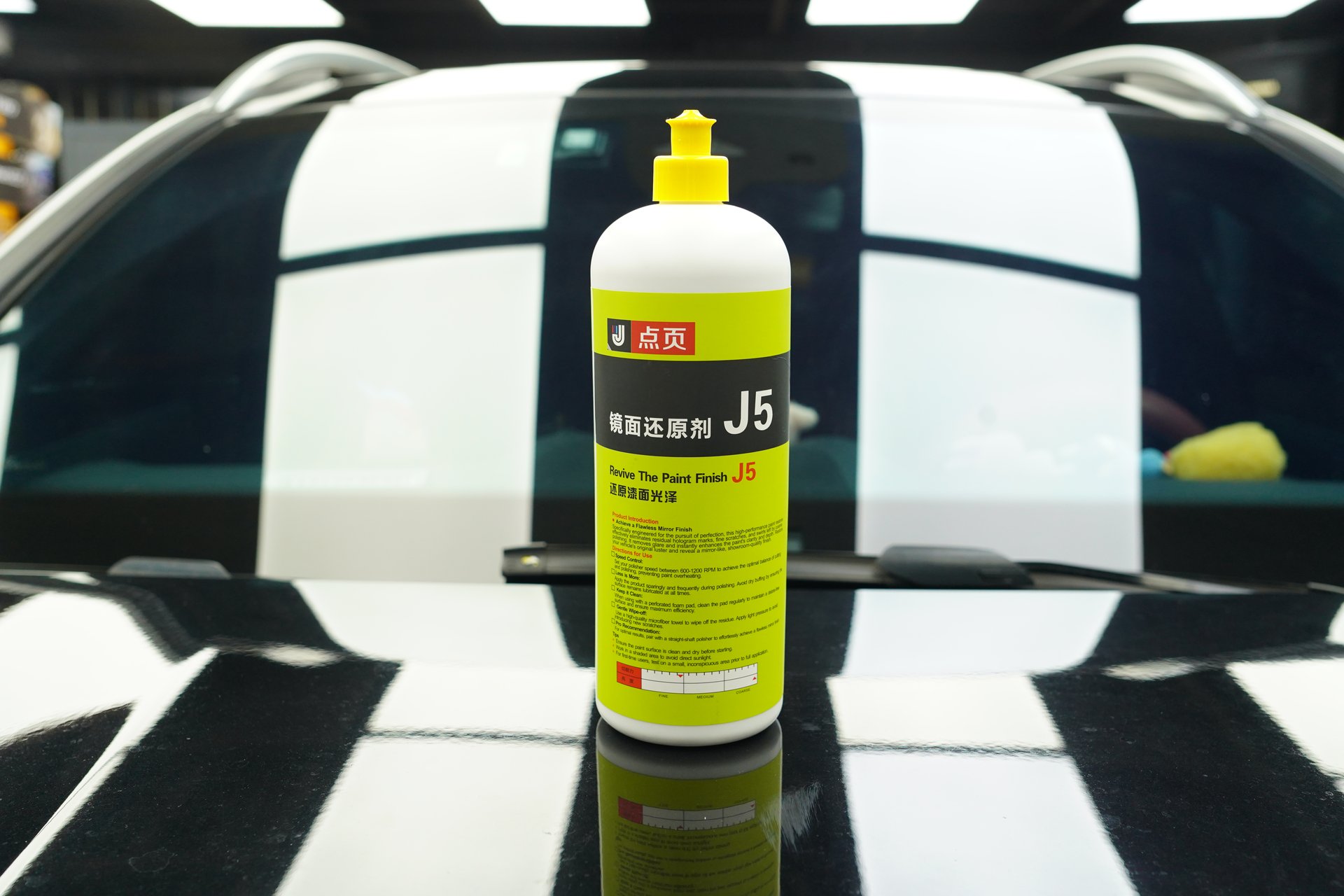
Phase 1: RO compounding — Fast bulk damage removal Phase 2: DA refining — Remove RO concentric marks, medium cutting Phase 3: DA + J5 finishing — J5 Mirror Finish Agent for final mirror effect
4. Beginner Purchase Recommendations
4.1 First Machine: DA, 15mm Orbit
This is the most validated beginner specification from extensive teaching experience.
Why not RO? Risk too high for beginners. They can’t judge the endpoint, risking holograms or paint burn-through.
Why not 8mm? Too slow, negatively affecting beginner experience.
4.2 Other Selection Criteria
- Prioritize ergonomics: Weight, balance, handle design matter for extended use
- Variable speed: Low speed for finishing, medium for oxidation removal
- Choose brands with after-sales support: Professional tool, avoid unbranded machines
5. Product and Tool Pairing Guide
5.1 DA + J2 + J5 Combination Plans
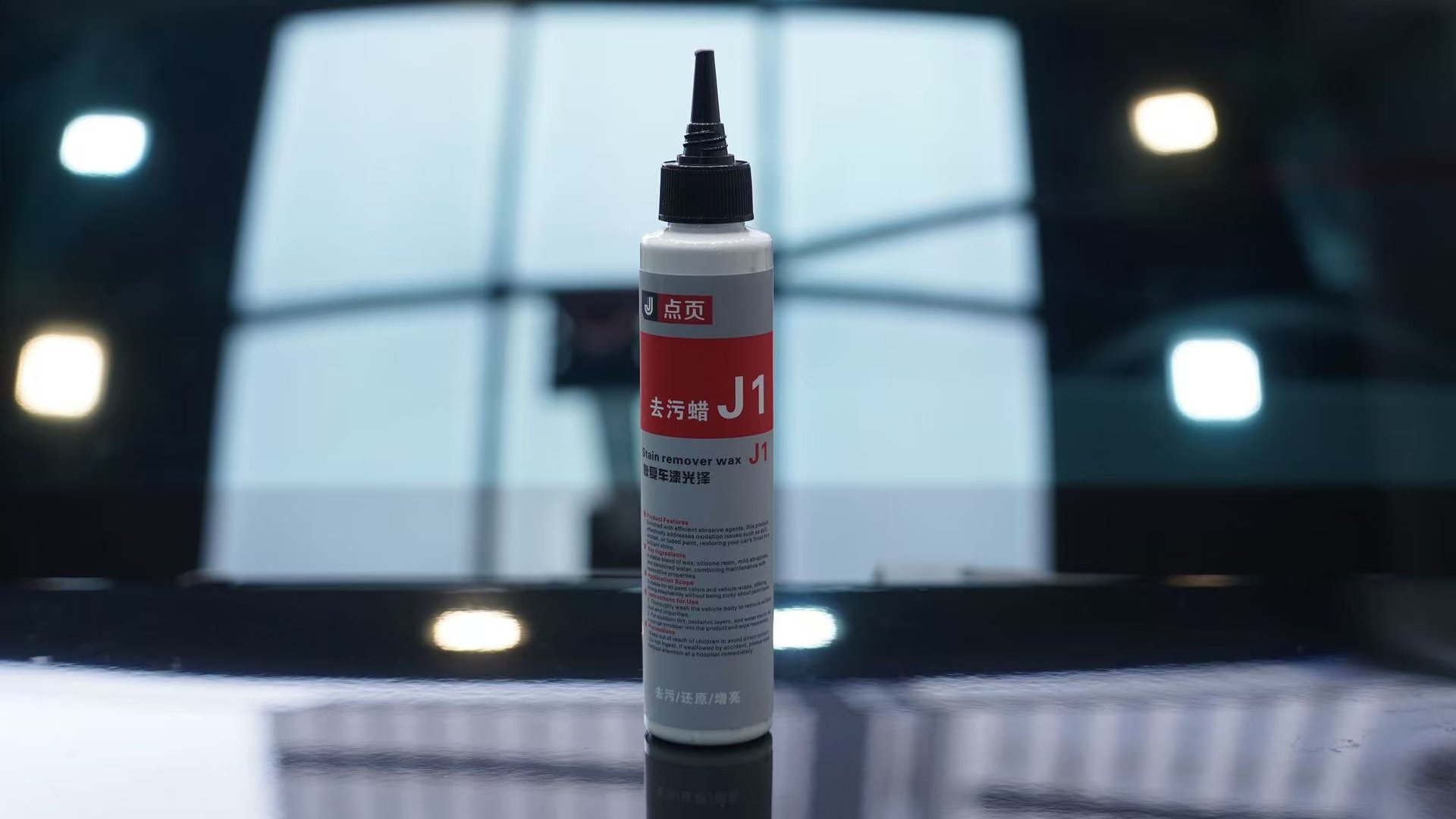
Plan A: Light maintenance — J1 All-in-One, hand application only
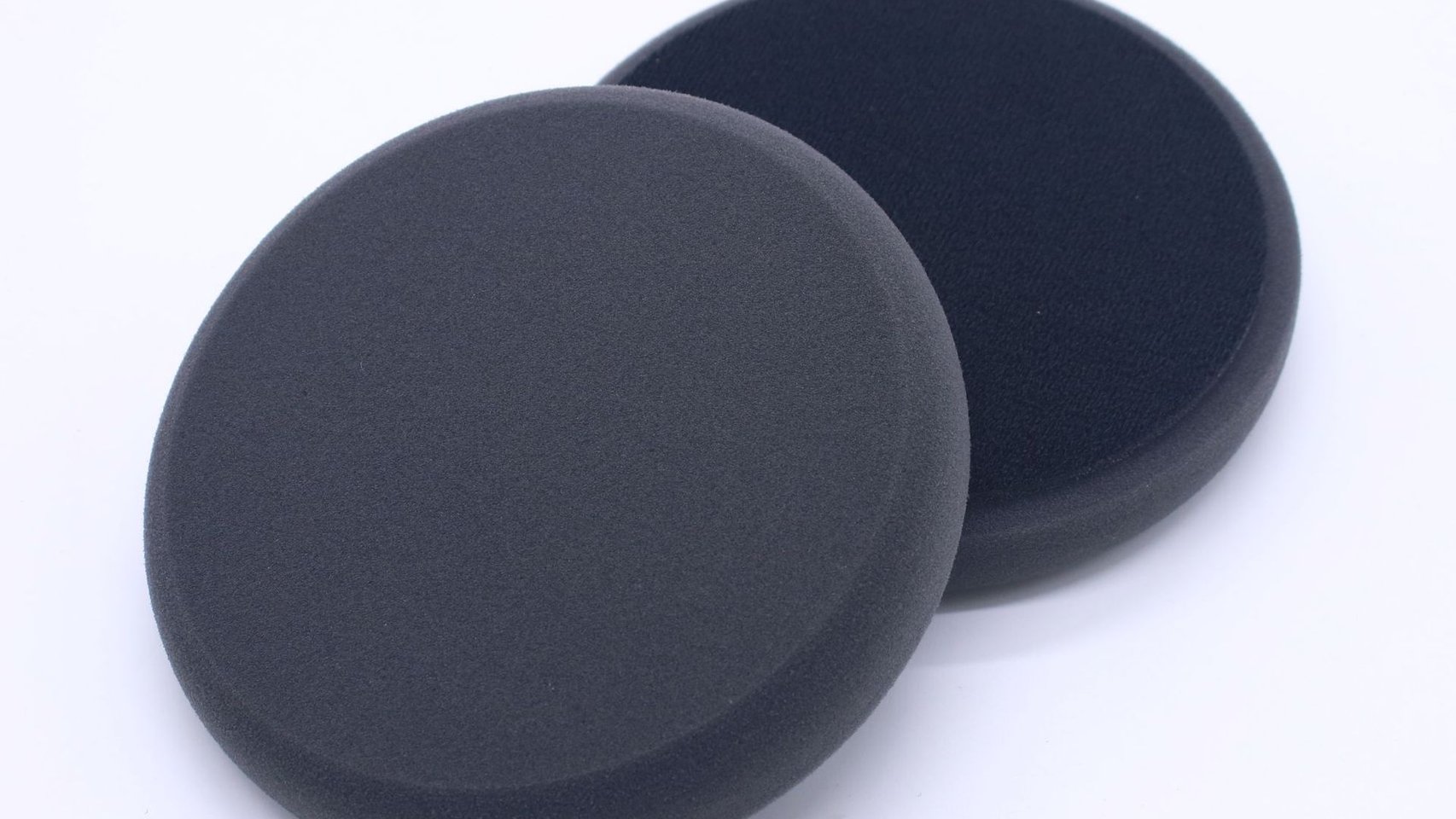
Plan B: Light repair (beginner recommended) — DA (15mm) + J5 Mirror Finish Agent + foam pad, 600-800rpm
Plan C: Medium repair (advanced) — DA (15mm) + J2 Water-Based Polish + J5 Mirror Finish Agent. J2 at 1500-1800rpm, J5 at 600-800rpm. Must follow J2→J5 sequence.
5.2 Pad Lifespan
- Quality wool pad: 10-15 cars
- Foam pad: 15-20 cars
6. Quick FAQ
Q1: DA or RO for beginners? A: DA. RO risk is too high. Gain 1-2 months DA experience first.
Q2: Must dark paint use DA? A: Strongly recommended. Dark paint is sensitive to any directional marks. RO concentric marks are very visible on black cars.
Q3: When to upgrade to RO? A: When DA efficiency can’t meet your needs. If you regularly handle heavy oxidation or do multiple full-car restorations annually.
Conclusion
For DIY car owners, my consistent advice is: Start with a DA polisher.
A 15mm DA can handle the vast majority of paint issues you’ll encounter. Paired with J2 + J5, you can complete everything from daily care to medium repair.
An RO is a nice-to-have, not a necessity. Unless you start doing professional restoration, one DA will last many years.
Remember: Polisher selection is the first step in auto detailing, but mastering operating technique matters more. Start with low speed and small areas, gradually building experience before tackling harder tasks.