
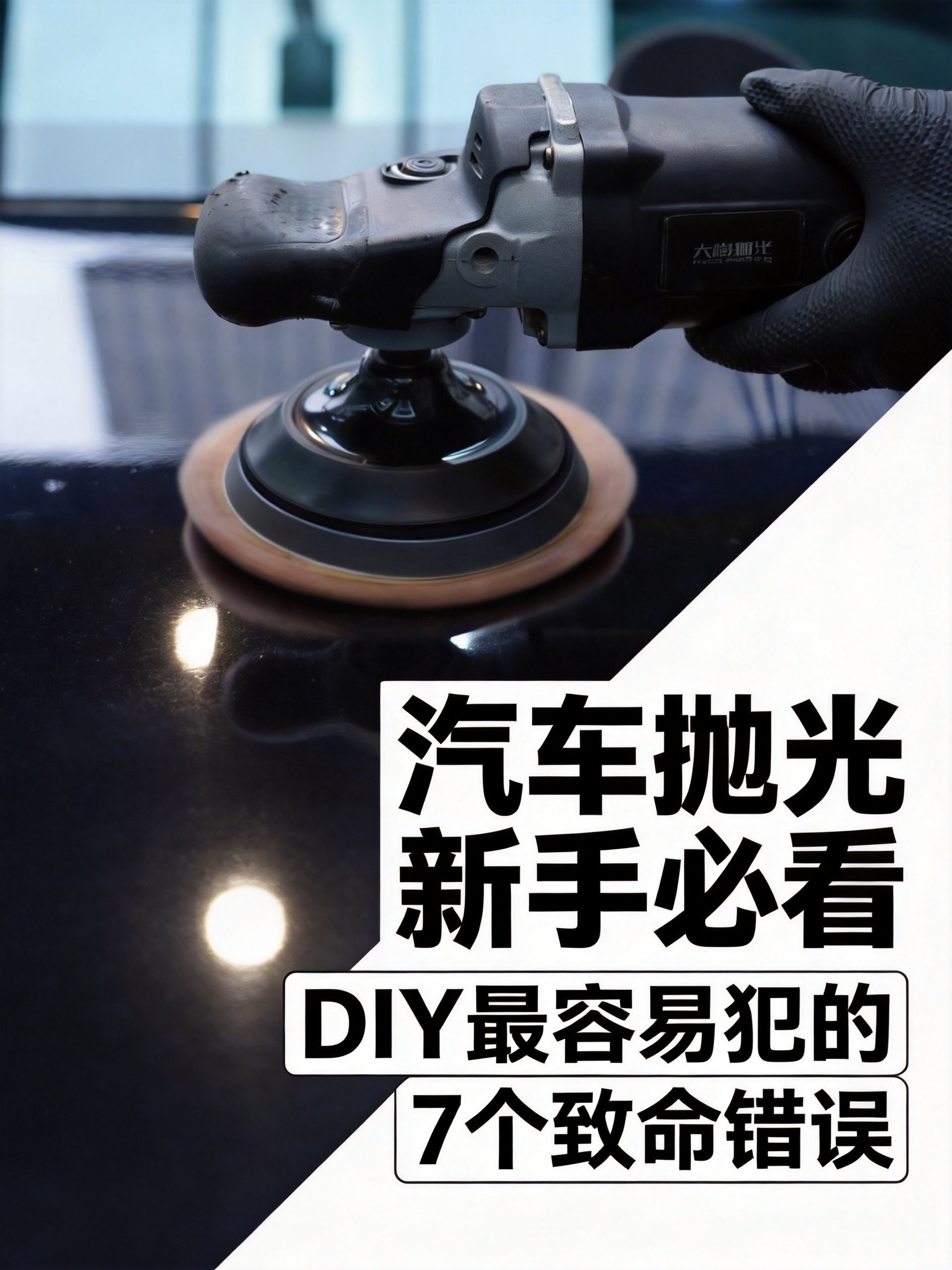
Must-Read for Beginners! 7 Fatal Mistakes in DIY Car Polishing
Introduction: Why Does Your Polishing Get Worse?
Over years in auto detailing, I’ve seen too many car owners start their first DIY polish with confidence, only to make the paint progressively worse. The contrast with proper results is stark — from mild hazing to burning through the clear coat.
Honestly, polishing is a skilled trade, not simply “apply something and buff.” Most beginner mistakes are avoidable — they just weren’t told the correct process.
This article compiles the 7 most common fatal mistakes based on years of hands-on experience, with correct vs. incorrect comparisons. Many seem like “common sense,” but these common-sense errors cause 90% of DIY failures.
Core principle: Safety always trumps results. Better to polish less than to over-cut. Every car’s clear coat is finite and deserves careful treatment.
Mistake #1: Polishing Without Washing First
Wrong: See scratches on the car, immediately grab the polisher and start.
Why it’s wrong: Mud and grit on the paint get picked up by the pad, acting like sandpaper, creating hundreds of new scratches. Old scratches aren’t removed — new ones are added.
Correct approach:
- Thorough wash: Two-bucket method, ensuring no grit on paint
- Deep paint cleaning: Degreaser to remove old wax and oils
- Clay bar treatment: Remove residual iron particles and industrial fallout
Measured result: Polishing without washing creates 5-8x more new scratches than proper preparation.
Mistake #2: Completely Wrong Speed Settings
Wrong: Get the polisher, set it to maximum speed, start polishing.
Why it’s wrong: Different stages require different speeds. Too high = paint burn; too low = no cutting. Different products have very different recommended parameters.
Correct speed parameters:
| Stage | DA (beginner) | RO (professional) | Product |
|---|---|---|---|
| Compound | 4000-5000 OPM | 1500-1800 RPM | J2 Water-Based Polish |
| Finish | 2000-2500 OPM | 600-800 RPM | J5 Mirror Finish Agent |
| Wax | 3000-4000 OPM | 1000-2000 RPM | Any car wax |
Key reminder: DA actual equivalent speed is lower than displayed reading. Beginners should start with DA — higher forgiveness, less paint damage risk.
Mistake #3: Compound Only Without Finishing
This is the root cause of 90% of post-polish hazing!
Wrong: Compound once, see the paint is shiny, call it done.
Why it’s wrong: After compounding, the paint is actually covered in fine micro-scratches. These create haze under strong light, making the paint look dull. The finishing step is what creates the true mirror effect.
Correct process:
Compound (J2 + wool pad) → Finish (J5 + fine foam pad) → Degrease → ProtectJ2 vs J5: J2’s abrasive particles (3-5μm) cut and remove oxidation/scratches. J5’s particles (0.5-1μm) fill and smooth the micro-imperfections left by compounding. After J2, surface roughness is Ra ~0.2-0.3μm (haze source); after J5, it drops below Ra 0.05μm — true mirror finish. Both steps are essential.
Mistake #4: Completely Wrong Pad and Product Pairing
Wrong: Grab any pad, squeeze on some compound, start.
Why it’s wrong: Compound with fine foam pad = can’t cut, generates heat haze. Finishing agent with wool pad = cuts too aggressively, creates new scratches.
Correct pairing:
| Product Type | Correct Pad | Wrong Pad |
|---|---|---|
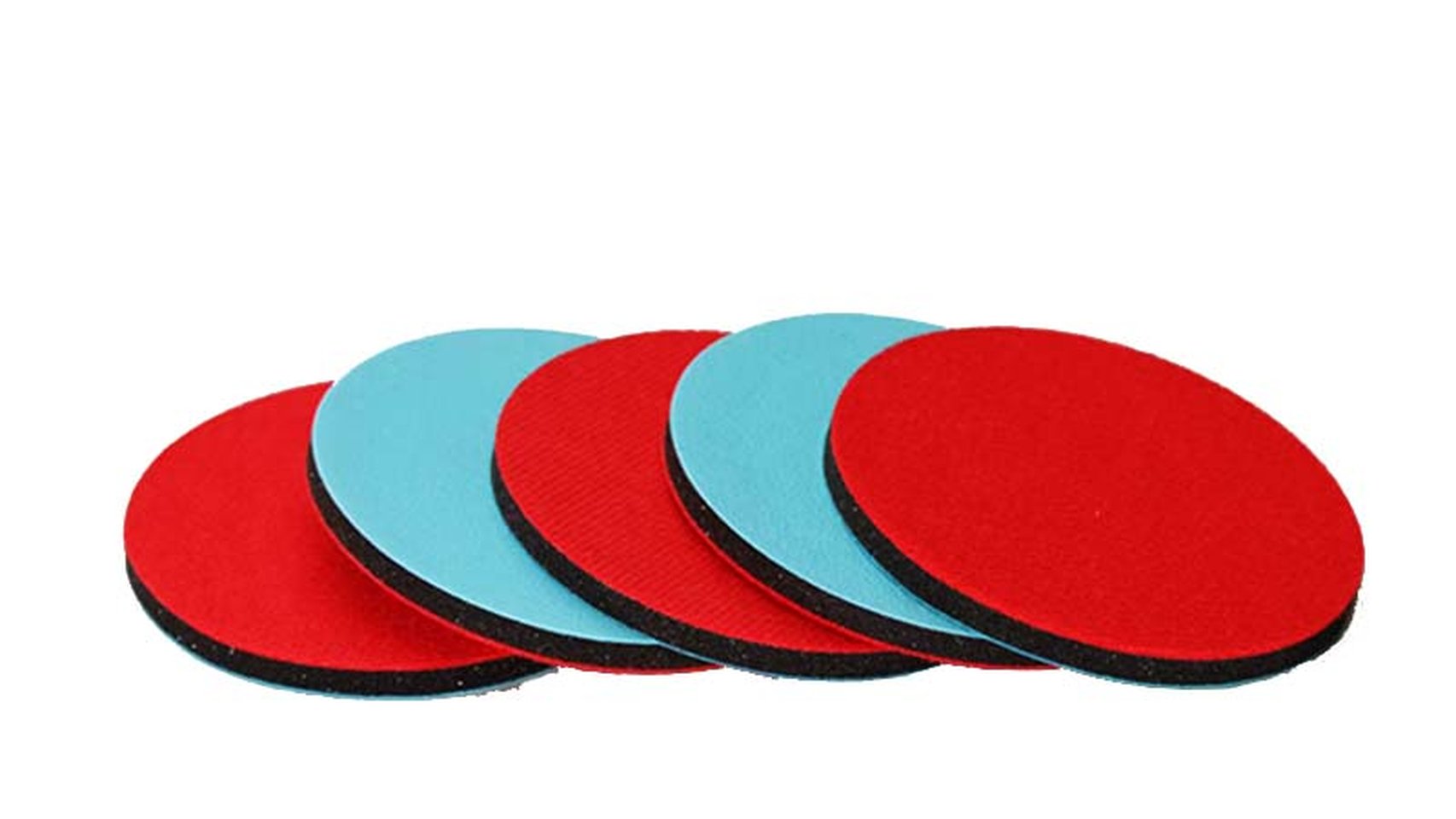
| Compound (J2) | Wool pad | Fine foam pad |
| Finish (J5) | Fine foam pad | Wool pad |
| Glaze | Soft foam pad | Wool pad |
J2 + J5 handles 99% of daily needs.
Mistake #5: No Protection After Polishing
This is the most wasteful mistake!
Wrong: Polish looks great, deliver the car immediately.
Why it’s wrong: Polished paint has open capillary pores, prone to oxidation. Without protection, swirl marks return quickly. Comparison of protected vs. unprotected paint shows dramatic differences after 3 months.
Must complete protection within 48 hours!
Protection options:
- Paste wax (1-2 months): Best value, easy for beginners
- Sealant (3-6 months): Better durability, stronger hydrophobic
- Ceramic coating (1-2 years): Highest hardness (9H), 30% scratch resistance improvement
Mistake #6: Polishing in Wrong Environment
Wrong: Polishing at noon under direct sunlight, paint surface burning hot.
Why it’s wrong: High temperature accelerates product decomposition, forming haze film. Hot paint is softer and more easily burned through.
Correct conditions:
| Requirement | Standard | Notes |
|---|---|---|
| Temperature | 15-30°C | Paint surface under 40°C |
| Humidity | 40-60% | Avoid very dry conditions |
| Lighting | Shade or indoor | Avoid direct sunlight |
| Ventilation | Good | For dust removal |
Mistake #7: Trying for Perfection in One Pass
Wrong: Try to remove all scratches at once, cutting deeper and deeper.
Why it’s wrong: Clear coat is limited (30-50 microns on new cars). Each polish removes 2-3 microns. Over-polishing thins the paint, losing protection.
Correct approach:
- Start in the least visible area
- First attempt not perfect? That’s okay
- Wait for paint recovery (1 week recommended) before second attempt
- Progressive approach is much safer than one aggressive pass
Beginner Safety Checklist
✅ Tools prepared? (polisher, pads, compounds, microfiber, masking tape) ✅ Paint thoroughly cleaned? (two-bucket wash → degrease → clay) ✅ Tested in inconspicuous area? (suggest starting at roof edge) ✅ Speed set correctly? (J2: 1500-1800 RPM; J5: 600-800 RPM) ✅ Each area under 50×50cm? ✅ Protection planned within 48 hours? ✅ Finishing step included? (compound without finishing = guaranteed haze)
FAQ
Q: DA or RO for beginners? A: DA. Think of it this way: DA is like an eraser — mistakes can be fixed. RO is like a utility knife — one wrong cut and there’s no going back.
Q: Polish vs compound — what’s the difference? A: Abrasive concentration (polish 5-20%, compound 30-60%); difficulty (polish is forgiving with DA, compound needs RO); use cases (polish for daily scratches, compound for deep scratches and professional work).
Q: When can I wash after polishing? A: Immediately. Only ceramic coating requires 5-7 day curing period.
DianYe Auto Technology focuses on automotive paint care, with products covering DIY owners and professionals:
- J2 Water-Based Polish: No sanding residue, efficient cutting, water-based eco-friendly
- J5 Mirror Finish Agent: Fine finishing, swirl removal, mirror gloss
- J1 Cleaning Wax: 3-in-1 clean, shine, protect
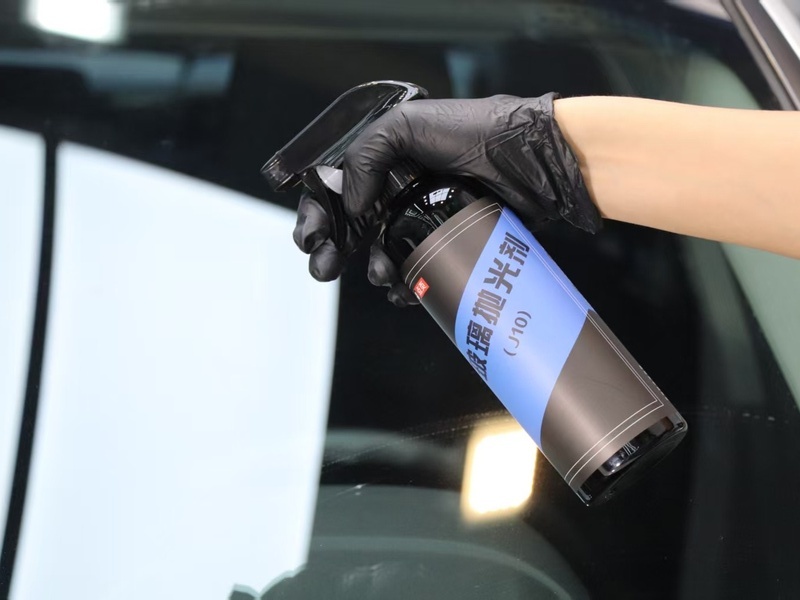
- J10 Glass Polish: Oil film removal, scratch repair for glass
The J2+J5 combination is the most cost-effective DIY polishing solution. For more details, visit DianYe Auto Technology.