
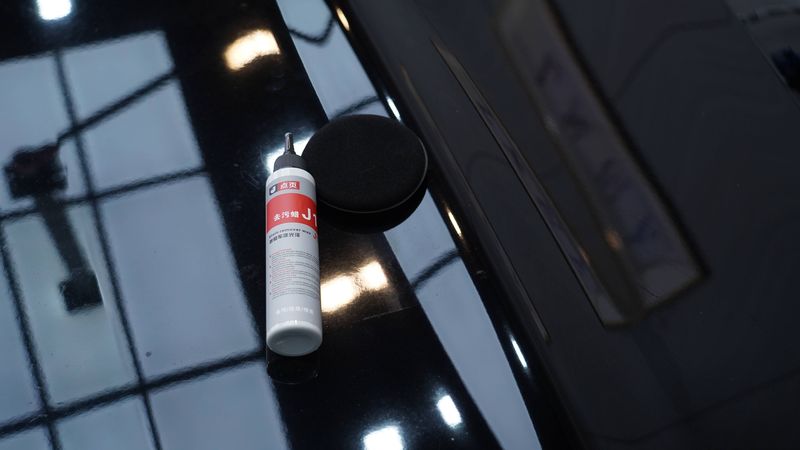
How to Choose Car Polish? Complete Comparison Guide for J2, J5, and J1
Just bought a new car six months ago and seeing swirl marks? Washed the car and the paint looks dull no matter how you wipe it? Bought the “universal wax” your neighbor recommended but scratches are still there? If these problems plague you, you probably haven’t found the right product yet.
The market offers countless products: compound, finishing wax, cleaning wax, glaze wax… each claiming to solve paint problems, but results vary dramatically. What’s the real difference between compound and fine wax? Which is right for you? How big is the gap between correct and incorrect product choice? Let’s systematically discuss how to choose car polish, using DianYe’s three representative products — J1 Cleaning Wax, J2 Water-Based Polish, and J5 Mirror Finish Agent — as examples.
1. Product Positioning Overview
| Comparison | J1 All-in-One | J2 Water-Based Polish | J5 Mirror Finish |
|---|---|---|---|
| Core role | Daily care 3-in-1 | Compound cutting | Finishing/hologram removal |
| Application | Hand wipe | Machine required | Machine required |
| Main function | Clean + shine + protect | Cut oxidation/scratches | Eliminate compound marks |
| Use cases | Light contamination | Moderate oxidation, swirl marks | Post-compound, pre-coating |
| Size | 200g | 1000g | 1000g |
The biggest difference: J1 is hand-application, safe for clear coat; J2 is machine compound with strong cutting; J5 is machine finishing for eliminating compound marks.
2. J1 Cleaning Wax: The Hassle-Free Daily Care Choice
When to Choose J1?
For light contamination and daily care, hand operation is completely sufficient. J1 was designed for this scenario:
- Light daily contamination: Tree sap, insect residue — wipe with towel and J1
- PPF oxidation/dulling: J1 restores brightness and smoothness
- Spot tar/bug removal: Efficient targeted treatment after road trips
J1 vs J2: When to Upgrade?
Simple test: Touch the paint. If smooth but visually hazy → J1. If you feel roughness or see clear swirl circles → J2.
Important: Daily care products have clear capability limits. If moderate+ oxidation, visible swirl marks, or deep scratches exist, cleaning wax cannot solve it. Upgrade to J2.
3. J2 Water-Based Polish: The Core Deep Repair Tool
When Must You Choose J2?
When paint problems exceed daily care capability:
- Swirl marks: Circular micro-scratches from improper washing. Once formed, hand cleaning wax can’t fix them — requires machine compound
- Oxidation layer: Paint loses transparency, turns gray/dull. For 3+ year-old cars, compounding is often the first step to restoration
- New car decontamination: Remove transport protection wax or factory residue coatings
Core Parameters
| Parameter | Recommended Value |
|---|---|
| Speed | 1500-1800rpm (beginners: 1200-1500rpm) |
| Pressure | 1-3kg |
| Area per pass | ≤0.5 sqm |
| Dwell time | ≤30 seconds |
About Dust
Dust during polishing is normal. Water-based compound is designed for real cutting, not filler coverage. Dust indicates effective paint cutting. This is the core difference between J2 and traditional oil-based fillers — fillers don’t produce dust but just add a wax layer that washes away.
⛔ Critical Warning: J2 Must Be Followed by J5
Compound leaves fine holograms on the paint surface. Therefore, compound must be paired with finishing agent, or the post-compound paint will look worse than before. Can J2 be used alone? No. This is the most critical difference from J1 — J1 can be used independently; J2 must be paired with J5.
4. J5 Mirror Finish Agent: The Critical Link Between Compound and Final Result
J5 vs J2: What’s the Difference?
J2 “subtracts” — cuts away problems. J5 “refines” — eliminates J2’s processing marks, upgrading paint from “roughly bright” to “transparently bright.”
J5 core functions:
- Post-J2 finishing: After any compounding, finishing agent is mandatory
- Dark paint final brightening: Black, dark blue, red demand higher surface quality
- Pre-coating mirror preparation: Coating needs perfectly flat paint for even crystal formation
Parameters
| Parameter | Recommended Value |
|---|---|
| Speed | 600-800rpm |
| Pressure | 0.5-2kg (light) |
| Dust | None (dust indicates wrong parameters) |
Can J5 Be Used Alone?
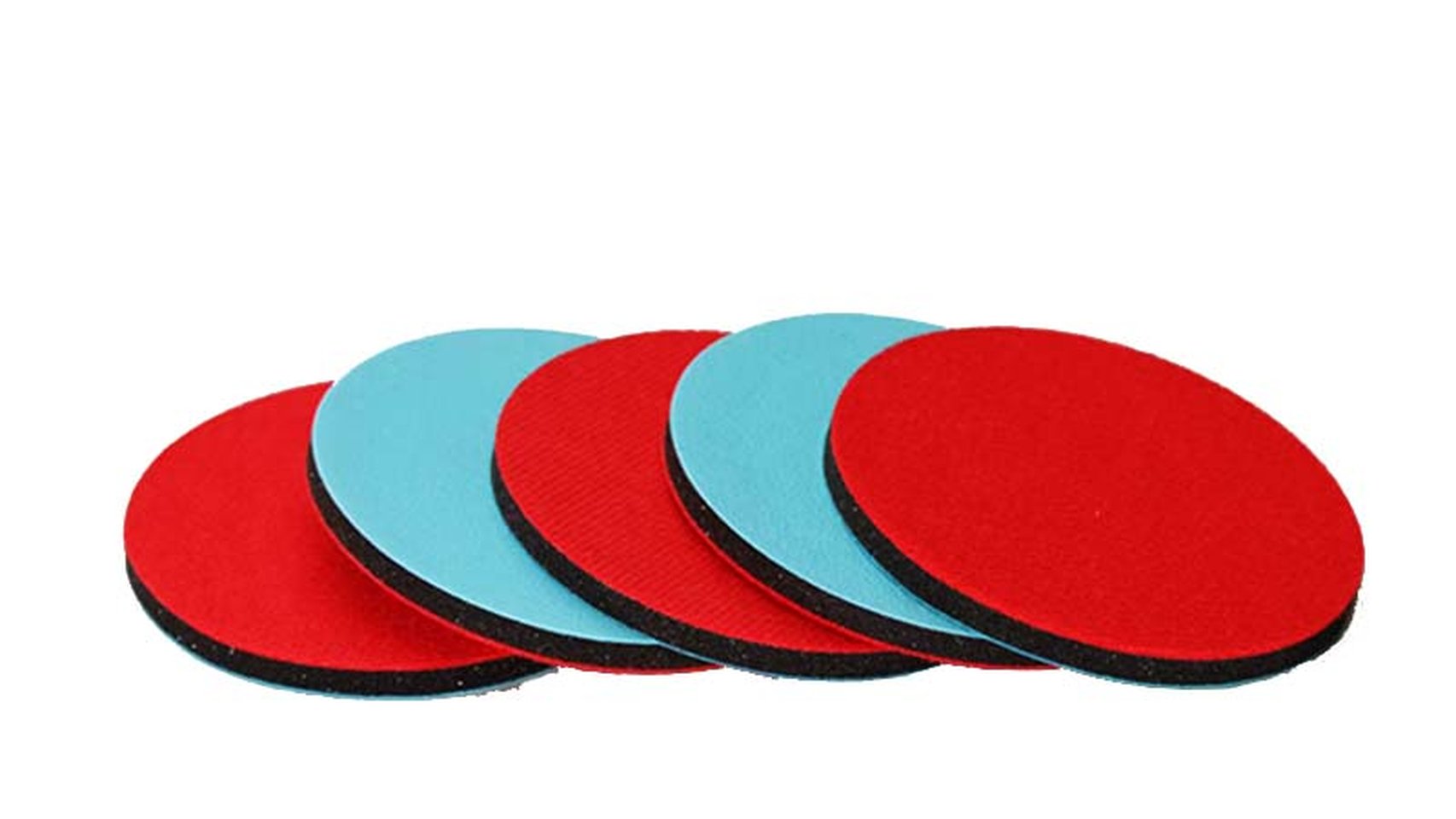
For light swirl marks or mild oxidation, finishing agent can be used independently with finishing pad, without J2 compounding. This is Stage 1 light correction, achieving 50-60% improvement. But if problems are widespread, J2 must come before J5 — this order cannot be reversed or skipped.
5. J2+J5 Combination: Professional-Grade Standard Process
Why Must J2 and J5 Be Paired?
Analogy: Restoring a scratched tabletop — coarse sandpaper removes old finish and deep scratches; fine sandpaper removes coarse sandpaper marks; clear coat provides the glossy surface.
Coarse sandpaper = J2, fine sandpaper = J5, clear coat = ceramic/sealant. Skipping any step produces inferior results. J2 and J5 are not “pick one” — they’re “J2 first, then J5” — both essential.
Combined Application
Stage 2 Medium Repair (80-85% improvement) for 3-5 year-old cars:
- Compound with long wool pad
- Clean paint, remove dust
- Finish with J5 + finishing pad
- Apply sealant or ceramic protection
Stage 3 Heavy Restoration (95%+ improvement): Compound with coarse pad → fine pad second pass → J5 mirror finish.
Paint Safety Limit
OEM clear coat: ~35-50 microns (source: IADA technical manual). Each polish removes ~5-10 microns. Heavy full-car polishing should not exceed 5-6 times.
6. Decision Tree
Step 1: Assess severity
- Paint basically good, only light contamination → J1 daily care
- Visible swirl marks / moderate oxidation → Step 2
Step 2: Machine needed?
- Small area, willing to hand-work → J5 alone
- Large area, want fast results → Compound + finish combo
Step 3: Final protection
- After polish and finish, apply sealant or ceramic promptly
7. Parameter Reference Table
| Parameter | J1 | J2 | J5 |
|---|---|---|---|
| Method | Hand wipe | Machine | Machine |
| Speed | N/A | 1500-1800rpm | 600-800rpm |
| Pressure | Manual | 1-3kg | 0.5-2kg |
| Area | 0.5-1 sqm | ≤0.5 sqm | ≤0.5 sqm |
| Dust | None | Normal | None |
| Follow-up | None | Must use J5 | Can seal/coat directly |
8. Common Misconceptions
Myth 1: “One universal wax is enough.” Different problems need different cutting levels. One product for everything means nothing properly solved.
Myth 2: “Fine wax is better, choose fine first.” Coarse and fine represent different cutting levels for different conditions. Neither is “higher.”
Myth 3: “J2 made it shiny, no need for J5.” J2’s “shine” reveals fine cutting marks under sunlight. Finishing eliminates these marks, upgrading from “roughly bright” to “transparently bright.” Skip finishing, and quality halves.
Myth 4: “Polishing damages paint, avoid it.” Key: proper daily care reduces problem accumulation. When compound+finish is needed, do it right once instead of repeated rework. Scientific use of correct products and parameters makes polishing safe.
9. Summary
| Your Need | Product | Reason |
|---|---|---|
| Daily care, light contamination | J1 | Hand operation, 3-in-1 |
| Swirl marks, moderate oxidation | J2+J5 | Professional process |
| Light issues, pre-coating | J5 alone | Gentle finishing |
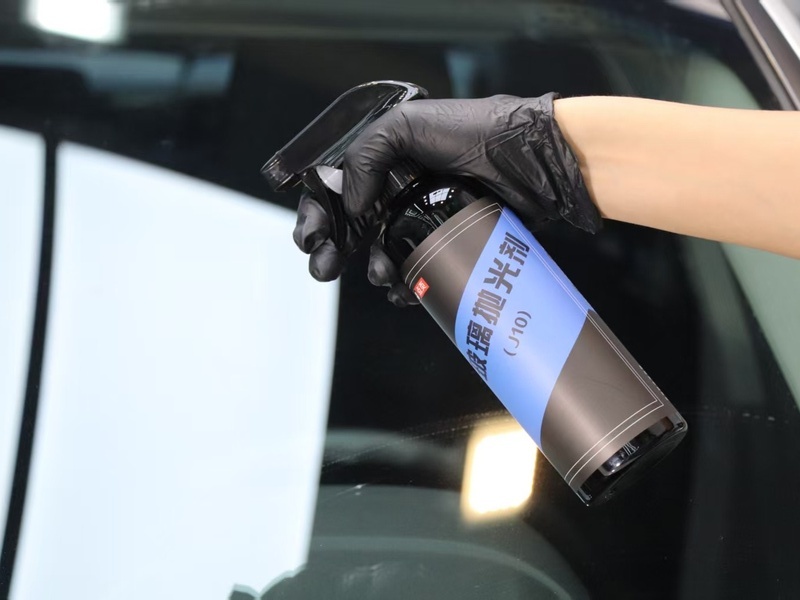
Note: J10 Glass Polish is specifically for glass oil film and light scratches — completely different from paint polishing. Choose accordingly.
Core principle: Light problems → hand care. Medium/heavy problems → J2+J5 combo. Choosing the right product matters more than choosing the expensive one.