
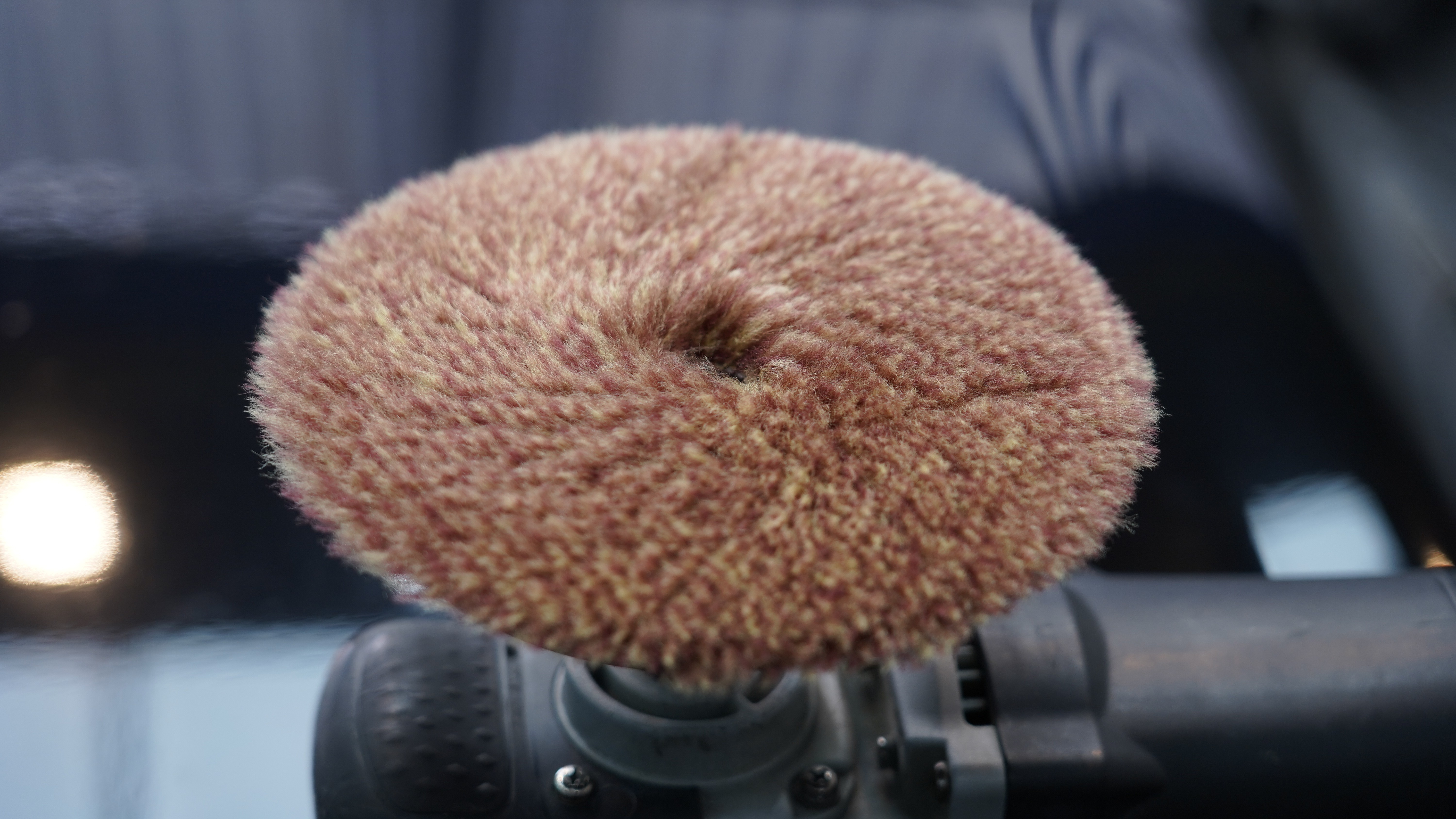
Wool Pad vs Foam Pad: Which to Choose for Car Polishing?
In automotive paint restoration, polishing pad selection directly determines application efficiency and final results. Many novice technicians and DIY owners face a classic dilemma: Wool pad or foam pad — which to choose?
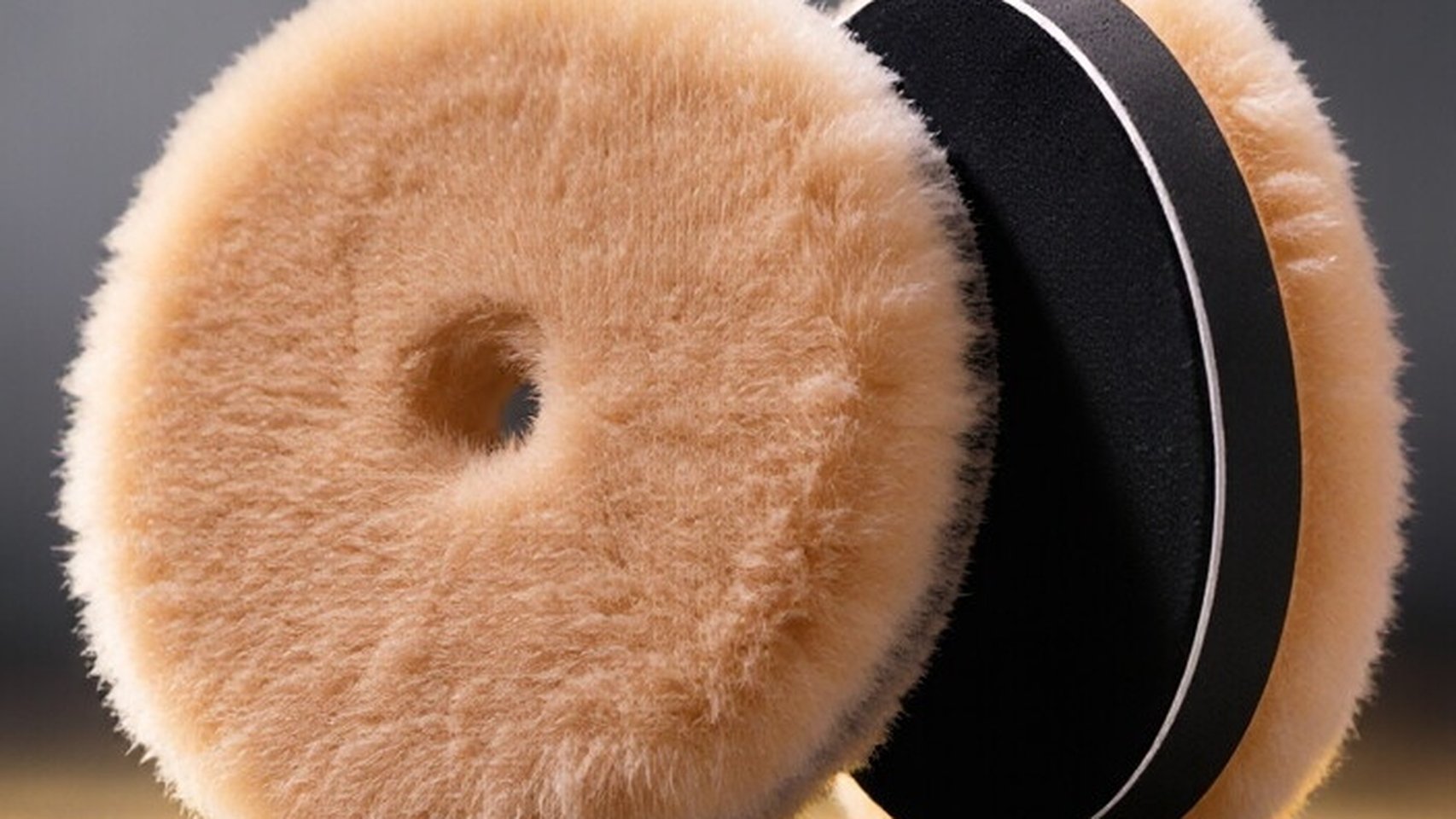
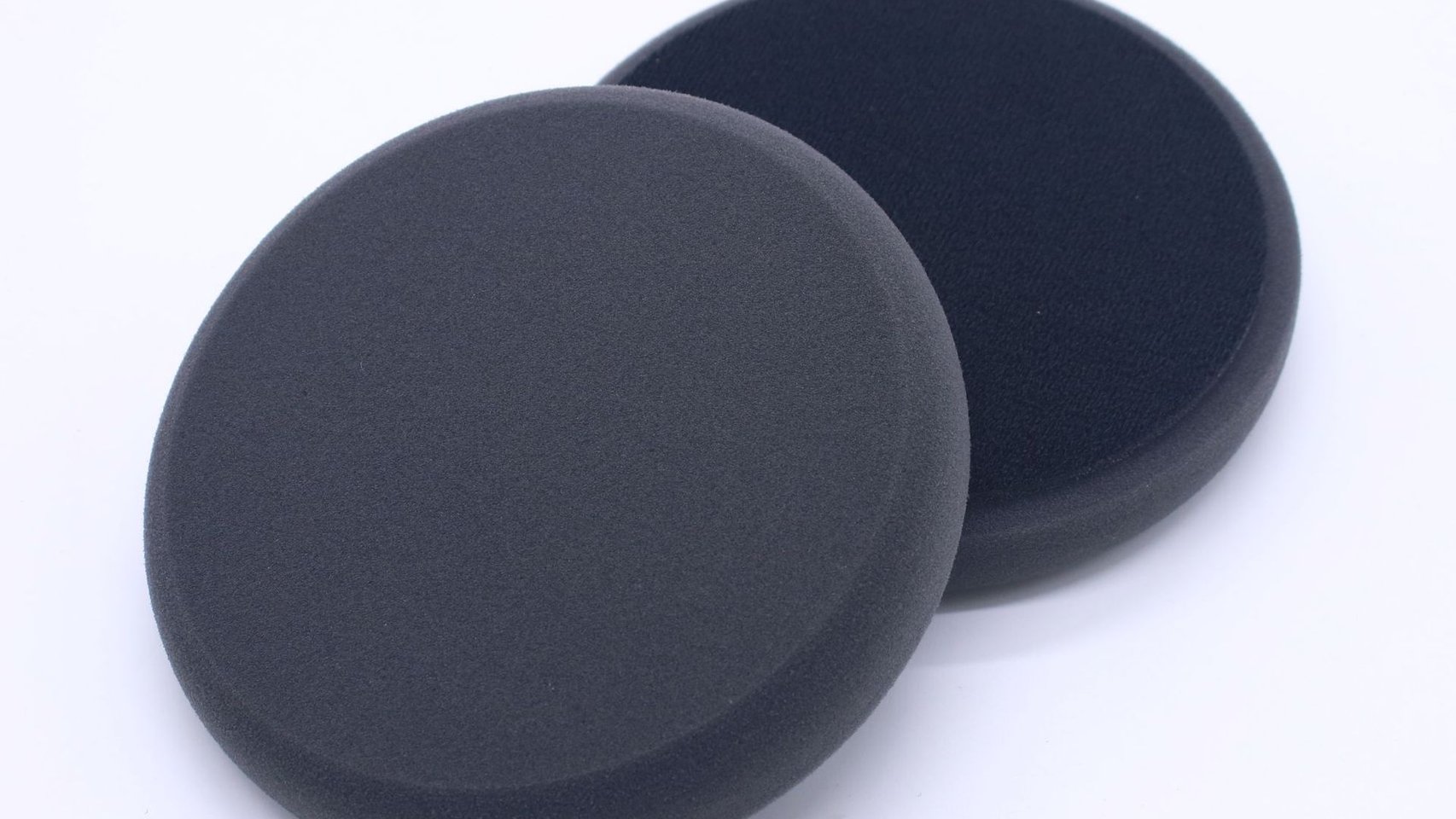
Some say wool pads are more efficient; others say foam pads are safer. The truth: Both have their optimal scenarios — choosing correctly is the key. This article provides systematic comparison across material properties, cutting performance, paint compatibility, and operating parameters.
1. Why Pad Selection Directly Affects Results
The polishing pad is the critical interface between polisher and paint, determining:
- Cutting efficiency: How much paint correction per unit time
- Final result: Flatness and gloss uniformity
- Safety: Risk of holograms, paint burn-through
- Difficulty: Can beginners use it safely?
Wrong pad choice ranges from rework time-loss to paint damage. Industry data shows ~25% of polishing accidents relate directly to incorrect pad selection.
2. Core Differences Between Wool and Foam Pads
2.1 Material Properties
Wool pads use natural or synthetic wool fibers, ~20-30 microns diameter, with sawtooth surface structure creating a “micro-blade” cutting effect at high speed.
| Property | Wool Pad | Foam Pad |
|---|---|---|
| Material | Natural/synthetic wool fiber | Polyurethane foam |
| Cutting mechanism | Physical scraping | Abrasive + elastic buffer |
| Fiber structure | Sawtooth, naturally sharp | Smooth pores, liquid storage |
| Main function | Active cutting | Abrasive carrier |
Foam pads use polyurethane foam, pore density 50-120 PPI:
- High density (60-80 PPI): Medium cutting
- Medium density (80-100 PPI): Fine cutting
- Low density (100-120 PPI): Mirror finishing
2.2 Quantified Cutting Performance
Per IADA 2025 test data:
| Metric | Wool Pad | Foam Pad |
|---|---|---|
| Cutting efficiency | 1.8x coarse foam | Baseline |
| Hologram probability | 3.2x foam | Baseline |
| Paint removal per pass | 0.3-0.5 microns | 0.1-0.2 microns |
| Heat dissipation | Poor, heat accumulates | Good, air circulation |
Core conclusion: Wool pads cut efficiently but carry higher risk; foam pads are slower but safer and more controllable.
2.3 Lifespan
| Pad Type | Normal Lifespan | Replacement Signal |
|---|---|---|
| Wool pad | 20-30 cars | Significant fiber loss |
| Foam pad | 30-50 cars | Hardening, cracking, elasticity loss |
Quality wool pads with proper care can extend to 50-80 cars.
3. Pad Grading System and Use Cases
3.1 Four-Level Cutting Classification
| Pad Type | Cutting Level | Paint Issues | Recommended Speed |
|---|---|---|---|
| Long wool pad | Level 5 (strongest) | Heavy oxidation, deep scratches, orange peel | 1200-1500rpm |
| Coarse foam | Level 4 | Medium scratches, swirl marks | 1500-1800rpm |
| Medium foam | Level 3 | Light oxidation, holograms | 1000-1200rpm |
| Fine foam | Level 2 | Mirror finishing, glazing | 600-800rpm |
Beginners: Start with medium and fine foam pads — high forgiveness, low risk.
3.2 Pad Selection by Process Stage
Compounding (removing deep problems)
- Goal: Deep scratches, severe oxidation, orange peel
- Recommend: Wool pad + J2 Water-Based Polish
- Parameters: RO/DA 1500-1800rpm, medium pressure
Medium cutting (moderate problems)
- Goal: Medium scratches, light oxidation
- Recommend: Medium foam + J2 (small amount)
- Parameters: 1000-1200rpm, light-medium pressure
Finishing (precision work)
- Goal: Remove holograms, swirl marks, boost gloss
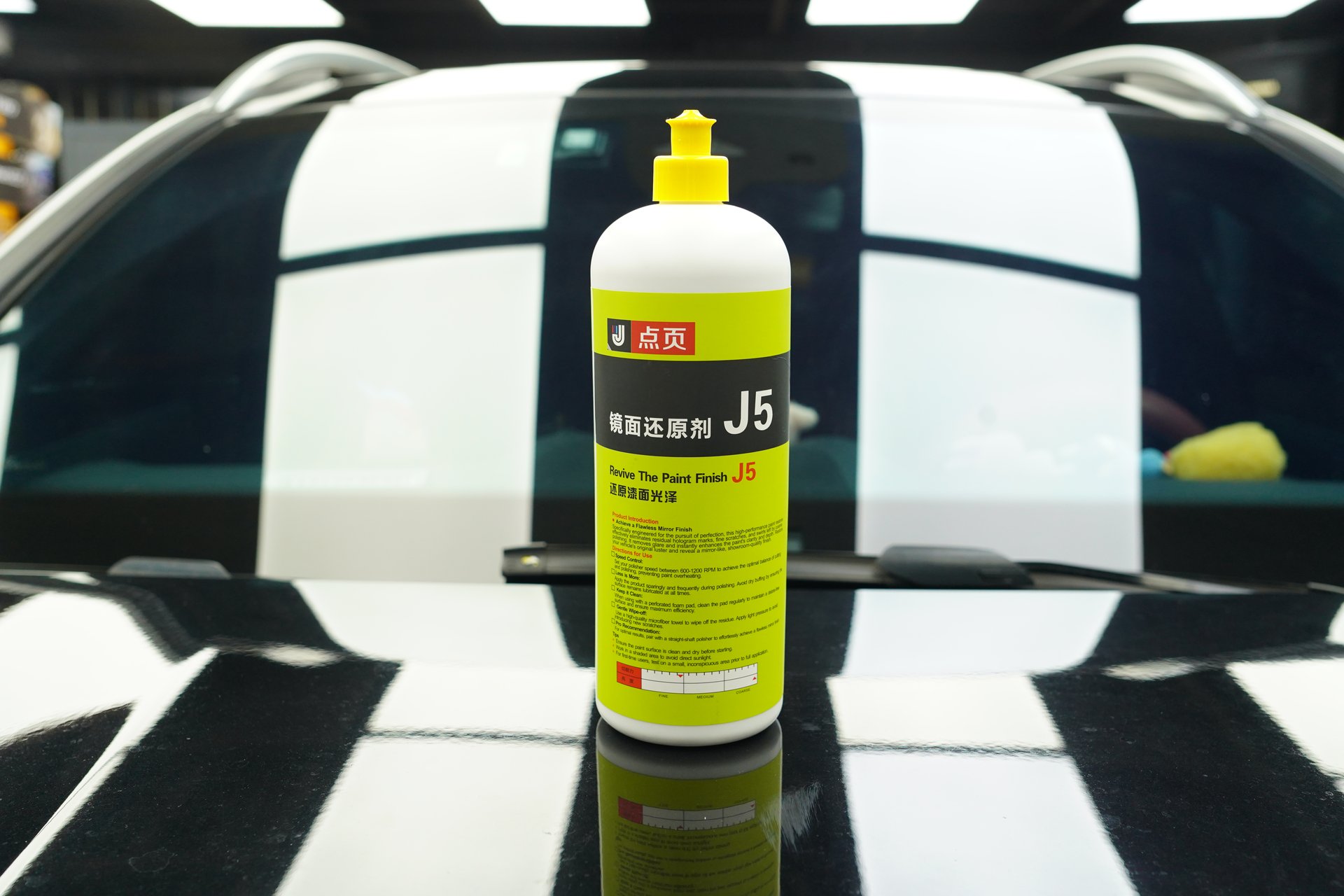
- Recommend: Fine foam + J5 Mirror Finish Agent
- Parameters: 600-800rpm, ultra-light pressure
Professional standard: Wool compound → medium foam mid-cut → fine foam finish.
4. Paint Hardness and Pad Matching
4.1 By Clear Coat Hardness
Hard clear coat (2H+)
- Typical: German (VW, BMW, Mercedes), American (GM, Ford)
- Characteristics: Wear-resistant but brittle, prone to holograms
- Recommendation: Wool pad for efficient compounding, strict temperature control
Soft clear coat (HB-1H)
- Typical: Japanese (Toyota, Honda, Nissan), Korean (Hyundai, Kia)
- Characteristics: Tough but easily marred, needs gentle treatment
- Recommendation: Foam pads throughout, reducing over-cut risk
Ceramic clear coat (highest hardness)
- Some premium vehicles with new-generation coatings
- Recommendation: Wool or hard foam for compounding, soft foam for finishing
4.2 By Paint Condition
| Condition | Recommended | Notes |
|---|---|---|
| New car/light oxidation | Fine foam + finishing agent | Gentle, preserve OEM clear |
| Medium oxidation/swirls | Medium/coarse foam + wax + finisher | Combined systematic approach |
| Heavy oxidation/scratches | Wool + wax → fine foam + finisher | Deep repair + fine finishing |
| Hologram issues | Fine foam + finisher, low speed | Remove previous residue marks |
5. Pad Configuration by User Type
5.1 DIY Owners
| Configuration | Use | Price Range |
|---|---|---|
| Medium foam ×2 | General medium cutting | $5-10 each |
| Fine foam ×2 | Mirror finishing | $4-8 each |
5.2 Professional Technicians
| Configuration | Use | Notes |
|---|---|---|
| Long wool ×2 | Heavy cutting | Primary pad for severe issues |
| Coarse foam ×2 | Medium cutting | Daily mid-cut workhorse |
| Medium foam ×2 | Fine mid-cut | Transition stage |
| Fine foam ×2 | Mirror finishing | Final result key pad |
| Ultra-fine foam ×1 | Ultimate finish | Premium projects |
5.3 Beginner Progression
Phase 1 (1-3 months): Fine foam + finishing agent — build fundamentals Phase 2 (3-6 months): Medium foam + wax + finisher — independent moderate repairs Phase 3 (6+ months): Wool + wax + finisher — challenge heavy problems
6. Wool Pad Operating Standards
6.1 Speed Control
| Vehicle/Paint | Recommended Speed | Notes |
|---|---|---|
| Hard clear coat | 1500-1800rpm | Can use higher end |
| Soft clear coat | 1200-1500rpm | Must reduce speed |
| Edges/plastic | 800-1000rpm | Never high speed |
| Beginners | 1200-1500rpm | Conservative start |
6.2 Time and Temperature
- Single-point dwell: Under 2-3 seconds
- Pad temperature: Keep below 50°C
- Area per section: Under 0.5 sqm
- Movement: Uniform and slow, never linger
6.3 Danger Signals — Stop Immediately
- Rainbow coloration on paint (hologram precursor)
- Pad feels excessively hot
- Scratches visibly worsening
- Burning smell
7. Foam Pad Operating Standards
7.1 Unique Feel
First-time foam pad users experience a “sticking” sensation — this is normal. Foam adheres more strongly than wool, creating higher torque.
Solutions: Keep pad clean; moderate product amount (4-6 soybean-sized dots); don’t over-press, let machine weight do the work.
7.2 Speed and Pressure
| Stage | Speed | Pressure |
|---|---|---|
| Medium cut | 1000-1200rpm | Medium |
| Fine cut | 800-1000rpm | Light |
| Finishing | 600-800rpm | Ultra-light |
7.3 Movement Pattern
Cross-hatch method:
- Horizontal pass covering entire area
- Vertical pass perpendicular to horizontal
- Each pass overlaps half a pad width
Ensures uniform polishing without residual patterns.
8. Pad Maintenance
8.1 Wool Pad Cleaning
- Wire brush immediately after use to remove wax/paint residue
- Periodic hand wash with warm water + neutral detergent
- Air dry in shade, no sun exposure
- Avoid prolonged soaking
8.2 Foam Pad Cleaning
- Squeeze-wash in clean water after use
- Soft brush for surface cleaning
- Squeeze out water, air dry
- No high-pressure water
8.3 Storage
- Cool, dry place
- Avoid compression/deformation
- Check elasticity regularly
9. FAQ
Q1: Wool or foam for beginners? A: Foam first. High forgiveness, hard to cause serious damage even with errors. Add wool after building feel.
Q2: Can they alternate? A: Absolutely — and recommended. Standard 3-step: wool compound → medium foam de-hologram → fine foam mirror finish.
Q3: Safest pad for dark paint? A: Foam pads throughout, or add extra foam finishing after wool use.
Q4: Are cheap online pads okay? A: Not recommended. Quality directly affects results and safety. Inferior pads have uneven fibers and irregular pores.
Q5: Same pads for DA and RO? A: Mostly interchangeable. DA’s random轨迹 works well with foam and long wool. RO’s concentric rotation suits coarse foam or wool.
10. Summary: Decision Framework
Paint problem severity → Pad type
     ↓
Heavy (deep scratches, severe oxidation) → Wool pad
Medium (swirl marks, light oxidation) → Coarse/medium foam
Light (daily care, mirror finishing) → Fine foam
     ↓
Final result → Water-based polish + mirror finish agent combo
Core principles:
- Heavy problems: wool pad; light problems: foam pad
- Combined use achieves best results
- Beginners: start with foam to build feel
- Strictly follow speed and time standards
- Right pad is the foundation; J2 Water-Based Polish + J5 Mirror Finish Agent completes the system
For professionals, both wool and foam are essential. For DIY owners, start with foam and progressively build to wool.
Choosing the right pad is half the battle.