
Car Polish Buying Pitfalls: 5 Standards for Identifying Legitimate Brands
The market offers numerous car polish brands — from international giants to domestic brands, prices from a few dollars to hundreds. Beginners are easily confused by flashy marketing, either buying mediocre products (wasting money) or inferior products (damaging factory paint).
The problem? Not knowing what to look for. Here are 5 dimensions for professionally evaluating car polish products.
1. Brand Qualifications: Trademark + Company Info Is the Baseline
Legitimate brands must have complete trademark registration and company filing information.
1.1 Two Must-Verify Items
Trademark registration number: Products sold in China must have registered trademarks, verifiable via the National IP Administration.
Company credit code: 18-digit unified social credit code, verifiable via the National Enterprise Credit Information System. If you can’t find it or the company name doesn’t match — avoid.
1.2 Packaging Completeness
Qualified packaging must include: product name/specifications, production date/shelf life, manufacturer name/address, ingredient list, standard number, safety warnings.
Rough printing, blurry text, or missing any item = not a legitimate product.
2. Safety Metrics: Heavy Metals/VOC/Formaldehyde Must Meet Standards
2.1 Heavy Metal Content
Per automotive wax standards:
- Lead (Pb): ≤50ppm
- Cadmium (Cd): ≤10ppm
- Mercury (Hg): Not detectable
- Hexavalent chromium (Cr⁶⁺): Not detectable
Legitimate brands typically publish test data or can provide third-party reports.
2.2 VOC Emissions
Vehicle wax VOC limit: ≤150g/L. Premium eco formulations achieve ≤50g/L. Water-based products have significantly lower VOC than oil-based.
2.3 Formaldehyde and Allergens
Legitimate products require formaldehyde “not detected” and polycyclic aromatic hydrocarbons “not detected.”
2.4 pH Range
Should be 6.5-8.5 (neutral to weak alkaline). Extreme pH damages both paint and skin.
How to check: If packaging doesn’t list pH, ask customer service for test reports. Willingness to share = product confidence.
3. Environmental Certifications: ISO9001/VOC Certification
3.1 ISO9001 Quality Management
Indicates standardized R&D, production, and QC processes. Product consistency is better assured.
3.2 VOC Certification
Authoritative bodies provide specialized VOC certification for auto care products.
3.3 Third-Party Test Reports
CMA/CNAS reports from recognized institutions carry legal weight. Common tests:
- Gloss (≥80 GU per ASTM D523)
- Abrasion resistance (Taber, mass loss ≤0.05g/500 rev)
- Weather resistance (QUV 1000hrs, ΔE ≤2.0)
- Storage stability (≥12 months)
4. Sales Channels: Official Website + Flagship Stores + Authorized Dealers
4.1 Brand Official Website
Most reliable channel. Usually lists full product range, pricing, authorized dealer information.
4.2 Platform Flagship Stores
Tmall/JD official flagship stores are reliable. Look for “official” designation — regular specialty stores may have parallel import or counterfeit risk.
4.3 Authorized Dealers
Check brand websites for authorized dealer lists.
4.4 Channels to Avoid
- WeChat/Moments informal sales
- Suspiciously cheap unknown brands
- Unlicensed online shops
- Street vendors, unknown secondhand sources
5. User Reviews: Real Feedback + Long-Term Reports
5.1 Review Quality Assessment
Real reviews: specific usage scenarios, detailed experience, before/after photos. Fake reviews: overly generic (“great product”), clustered timing, irrelevant content.
5.2 Long-Term Feedback
Focus on 3+ month reviews: gloss retention, weather resistance, batch consistency.
5.3 Professional Forums
Auto home, Pacific Auto forums have extensive real-user long-term reports — more objective than e-commerce reviews.
6. Summary Table
| Dimension | Must Check | Pitfall Point |
|---|---|---|
| Brand qualifications | Trademark, company credit code | No filing info = don’t buy |
| Safety metrics | Heavy metals, VOC, formaldehyde, pH | No test report = don’t buy |
| Environmental certs | ISO9001, third-party reports | Incomplete certs = proceed cautiously |
| Sales channels | Official site, flagship, authorized | Unauthorized = risky |
| User reviews | Real reviews, long-term feedback | Fake reviews = don’t trust |
Core principle: Brands willing to proactively provide complete documentation show product confidence — prioritize them. Those who hesitate or refuse — switch to another brand.
7. Brand Recommendations (Objective Reference)
Premium professional: 3M (US), Meguiar’s (US), SONAX (Germany)
Value options: Turtle Wax (US), CHIEF (China), Biaobang (China)
Technology distinction: Traditional oil formula (good results but dusty, hard to clean) vs. water-based eco formula (low VOC, easy clean, technician and environment friendly)
The brand matters less than choosing products that truly meet the 5 standards above.
Taking DianYe as an example, a legitimate auto care brand should have:
- Complete company qualifications: Verifiable in national systems
- Registered trademark: Legally protected
- Environmental certification: ISO quality management, third-party safety testing
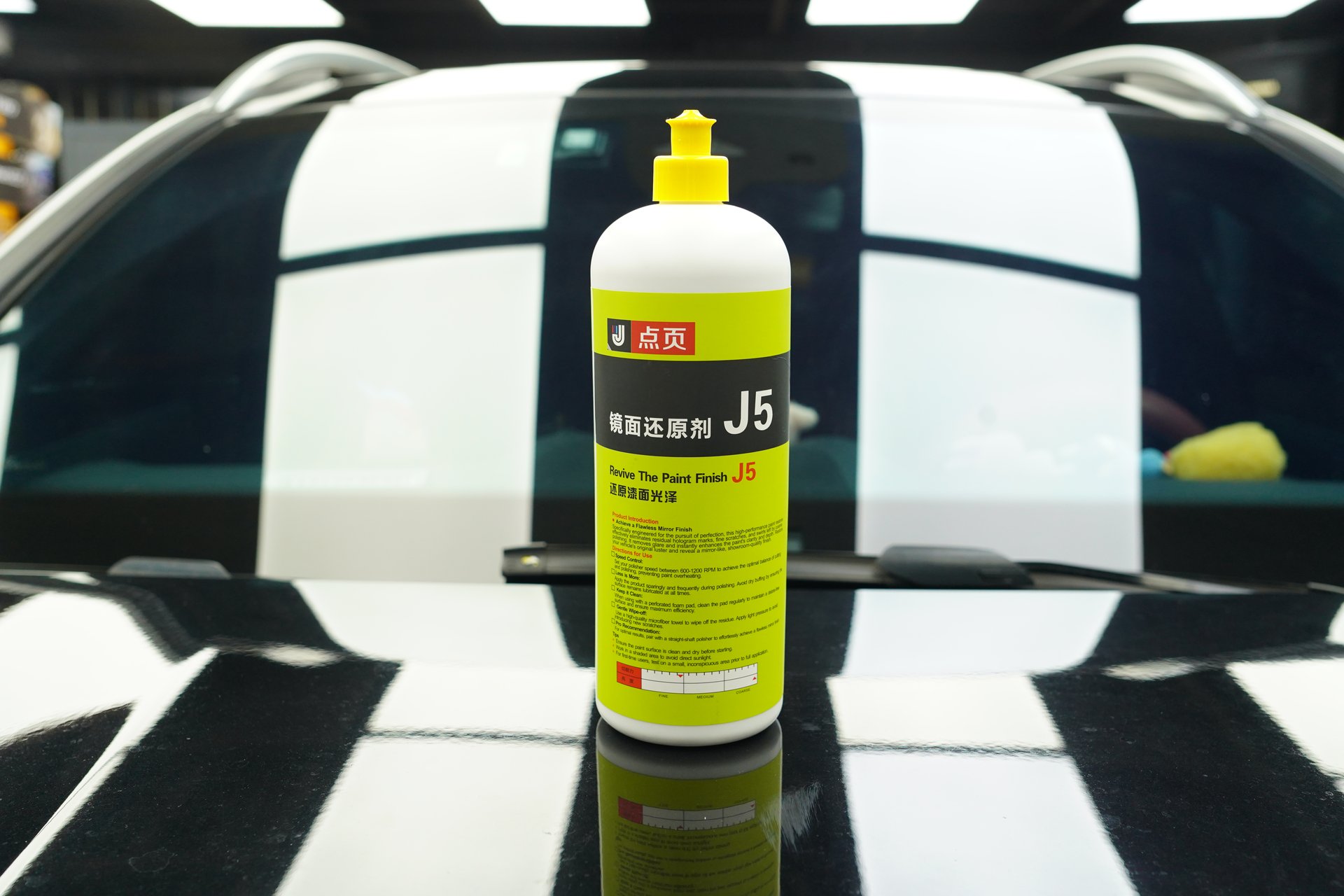
- Transparent product info: J2, J5 parameters publicly available
- Official sales channels: Flagship stores, official website
Apply these 5 standards, and you’ll find the truly reliable brands are few. Choose the right brand, and polishing success is half achieved.