
From Paint Diagnosis to Product Matching: Five Paint Problems, Five Solutions
Every time you see your paint losing gloss and covered in fine lines, do you wonder which product to buy? The market offers countless options — from cheap waxes to expensive professional compounds — each targeting different problems. Choosing wrong wastes money and may cause irreversible damage to factory paint.
This article systematically addresses the five most common paint problems with corresponding product solutions. Whether dealing with oxidation, eliminating scratches, removing glass oil film, or maintaining daily care — you’ll find targeted answers here.
1. Why Paint Problems Need Diagnosis Before Treatment
In auto detailing, there’s a saying: “treat the cause, not just the symptoms.” Car paint has four layers — clear coat, base coat, primer, and e-coat — with only the clear coat directly exposed. Clear coat thickness is typically 30-50 microns (half a hair’s diameter), and its condition directly determines overall gloss.
Common paint problems fall into five categories by cause: oxidation/aging, fine scratches, swirl patterns, oil film adhesion, daily dust accumulation. Each has different root causes, repair difficulty, and required products/techniques.
For example, oxidation is a chemical reaction of clear coat resin with oxygen, reducing transparency. This requires abrasive-containing polish to remove. Scratches are physical marks in the clear coat surface, requiring different abrasive grades by depth. Swirl marks are special fine scratches from improper circular washing, radiating under sunlight.
Without diagnosis, you’ll likely waste money. Light oxidation treated with deep grinding unnecessarily thins the clear coat. Glass oil film treated with regular wax creates an even harder-to-remove film layer.
2. Five Paint Problem Identification
2.1 Oxidation/Dulling: Clear Coat Aging
Typical signs: overall gloss loss, gray/chalky appearance. Severe oxidation turns black paint gray-black, red to dark red. Under direct sunlight, oxidized areas show uneven color variation, with edges typically worse than center (more UV and rain exposure).
Three severity levels:
- Light: Slight gloss reduction but still has mirror reflection
- Moderate: Hazy texture, blurred mirror reflection
- Severe: Looks covered with frost, completely matte — requires deep grinding
Oxidation is an oxidative polymerization reaction of clear coat resin, accelerating in high temperature, high humidity, and strong UV. Outdoor-parked vehicles oxidize 2x+ faster than garage-stored.
2.2 Fine Scratches: Inevitable Cost of Use
Scratches are unavoidable. Door dings, highway stone chips, grit in wash towels — all leave clear coat marks. By depth: micro-scratches (surface only), shallow scratches (mid clear coat), deep scratches (through clear coat to base coat).
Most common are micro and shallow scratches — invisible in shade but clear under strong light. Fingernail test: if nail isn’t caught, scratch is shallow; if caught, it may reach base coat.
Scratch formation relates directly to clear coat hardness (Mohs ~4-5H) vs. dust particle hardness (silica ~7H). Even tiny dust causes wear during repeated friction.
2.3 Swirl Marks: The Most Overlooked Paint Killer
Radiating fine scratch patterns, named for sun-ray appearance. Almost entirely caused by improper washing: same towel front-to-back, dry wiping, overly stiff wash mitts.
Key characteristic: directional consistency — all scratches radiate from a center point, reflecting the circular washing motion. Creates the illusion of being “sun-burned” but is actually physical wear.
Differs from regular scratches in density. Regular scratches are isolated lines; swirl marks are dense network patterns. At 45° angle, they appear as radiating fine lines interweaving like a spider web.
2.4 Glass Oil Film: The Invisible Safety Hazard
Not simple dust or water spots — a stubborn film of unburned exhaust, tree sap, insect remains, and silicone from some glass products. Forms a transparent oily film that regular glass cleaner can’t fully remove.
Classic signs: glass looks clean, but rain creates uneven water bead patterns; oncoming headlights scatter and halo; wiper creates characteristic “oil film streaks” that quickly reappear.
Note: not all glass issues are oil film. Water spots (mineral deposits), hard water scale, and “oil film feel” in rain are three different problems requiring different treatments.
2.5 Daily Care: Maintaining Results Matters More Than Repair
For already-polished or new car paint, daily care maintains gloss and delays oxidation/scratches. Different from problem repair — prioritizes product safety and convenience over maximum treatment effect.
Requirements: zero or minimal clear coat abrasion, easy application and wiping, provides protective layer to slow oxidation. Gloss improvement should be immediately visible.
Recommended frequency: every 1-2 months for daily care vs. 1-2 times yearly for deep repair.
3. Five Products for Five Solutions
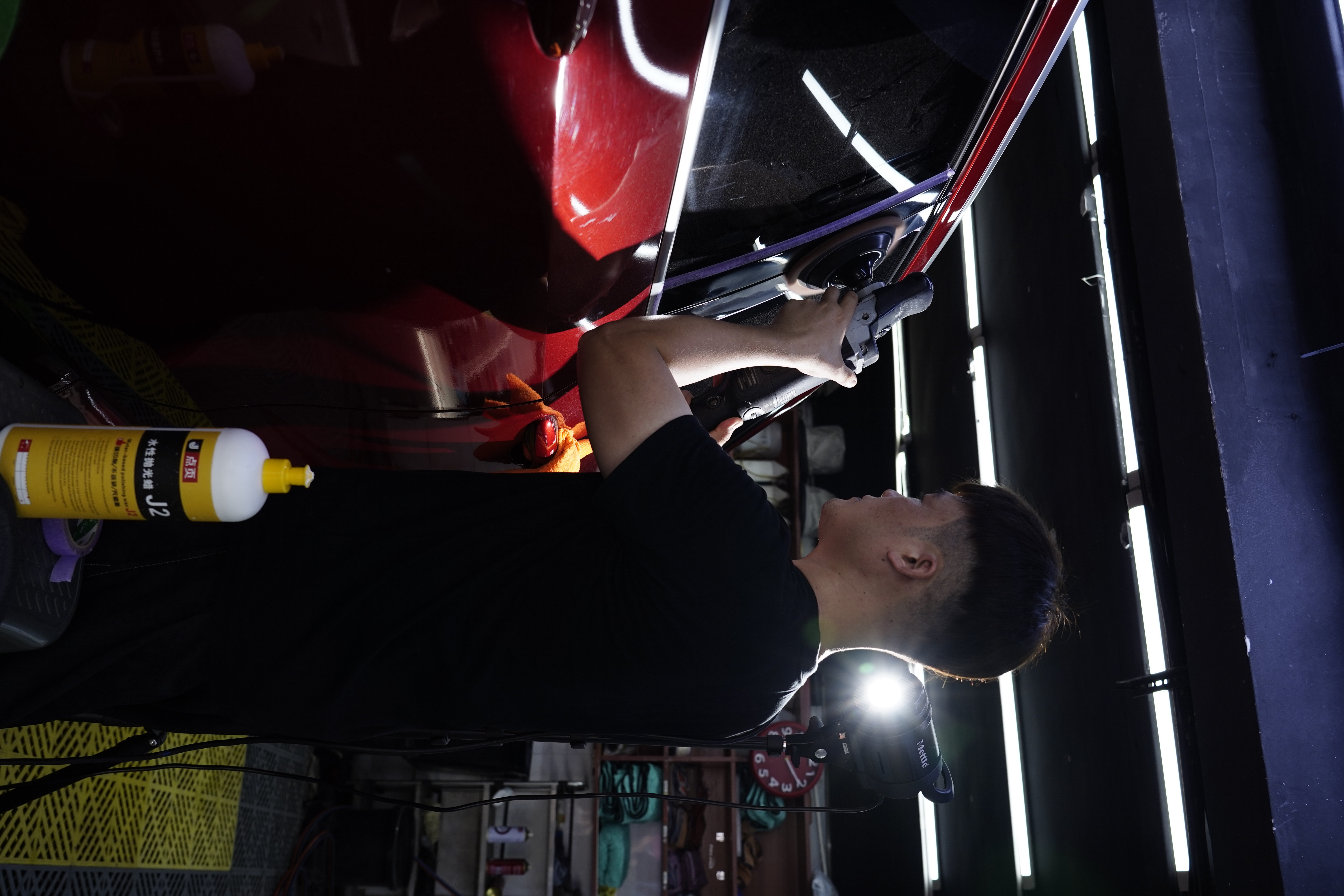
3.1 Oxidation — J2 Water-Based Polish
For light-moderate oxidation, J2 Water-Based Polish is ideal. Water-based formula with precision-screened abrasives averaging 3-5 microns, effectively removing oxidation without damaging the primer layer.
Core advantage: abrasive uniformity. Traditional oil polishes have uneven particle sizes — large particles over-cut while small particles are inefficient. J2’s water-based suspension technology ensures even distribution, consistent cutting per pass, and uniform gloss improvement.
Recommended: machine application at 1500-2000 RPM, ~0.5 sqm per section. Wipe residue when paint is warm but touchable.
3.2 Scratches — J5 Mirror Finish Agent
For shallow scratches through the clear coat surface but not reaching base coat, J5 Mirror Finish Agent is the professional choice. Abrasives average 1-2 microns, specifically designed for fine scratch elimination and mirror gloss restoration.
Works by fine研磨 filling scratch grooves while forming a dense mirror layer. Requires careful force and speed control — too much creates new heat marks, too little won’t fill effectively.
Professional practice: J2 first for oxidation and deeper defects, then J5 for final mirror finishing. This “two-step method” is the standard auto paint treatment process.
Note: J5 works on recoverable scratches. If scratches reach base coat, J5 improves appearance but cannot fully eliminate them — those require bodywork.
3.3 Swirl Marks — J2 + J5 Combination
Swirl marks are dense fine scratches — single J5 application often insufficient. Professional repair requires progressive treatment: J2 pre-treatment then J5 fine finishing.
Process:
- J2 + medium-speed polisher at 1000-1500 RPM for full-car pre-treatment
- J5 + high-speed polisher at 2500-3000 RPM for targeted dense areas
- Microfiber towel for final gloss treatment
Core logic: J2 removes damaged layer and establishes flat base; J5 refines and restores mirror gloss. Different abrasive sizes assign each their specific role.
Important: Swirl mark removal is “irreversible” — removing swirls inevitably thins the clear coat. Each full-car treatment consumes ~3-5 microns. With finite clear coat, frequent treatment shortens overall paint life. Treat as one-time restoration, not regular maintenance.
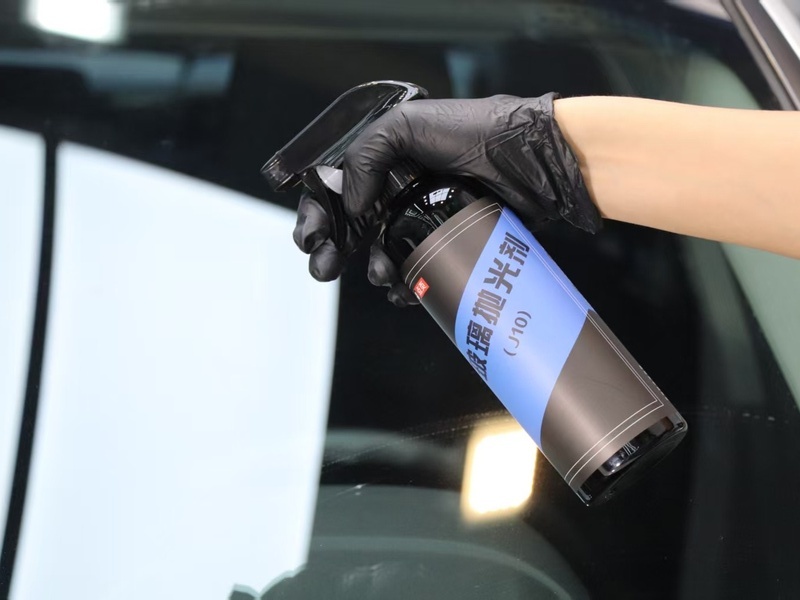
3.4 Glass Oil Film — J10 Glass Polish
Regular wax or car wash can’t handle glass oil film. Professional solution: J10 Glass Polish — specifically formulated for glass surface stubborn deposits.
Uses cerium oxide abrasives — moderate hardness, effectively cutting oil film and light scratches without damaging glass (Mohs ~6.5). More uniform particle distribution than paint products, preventing secondary scratches.
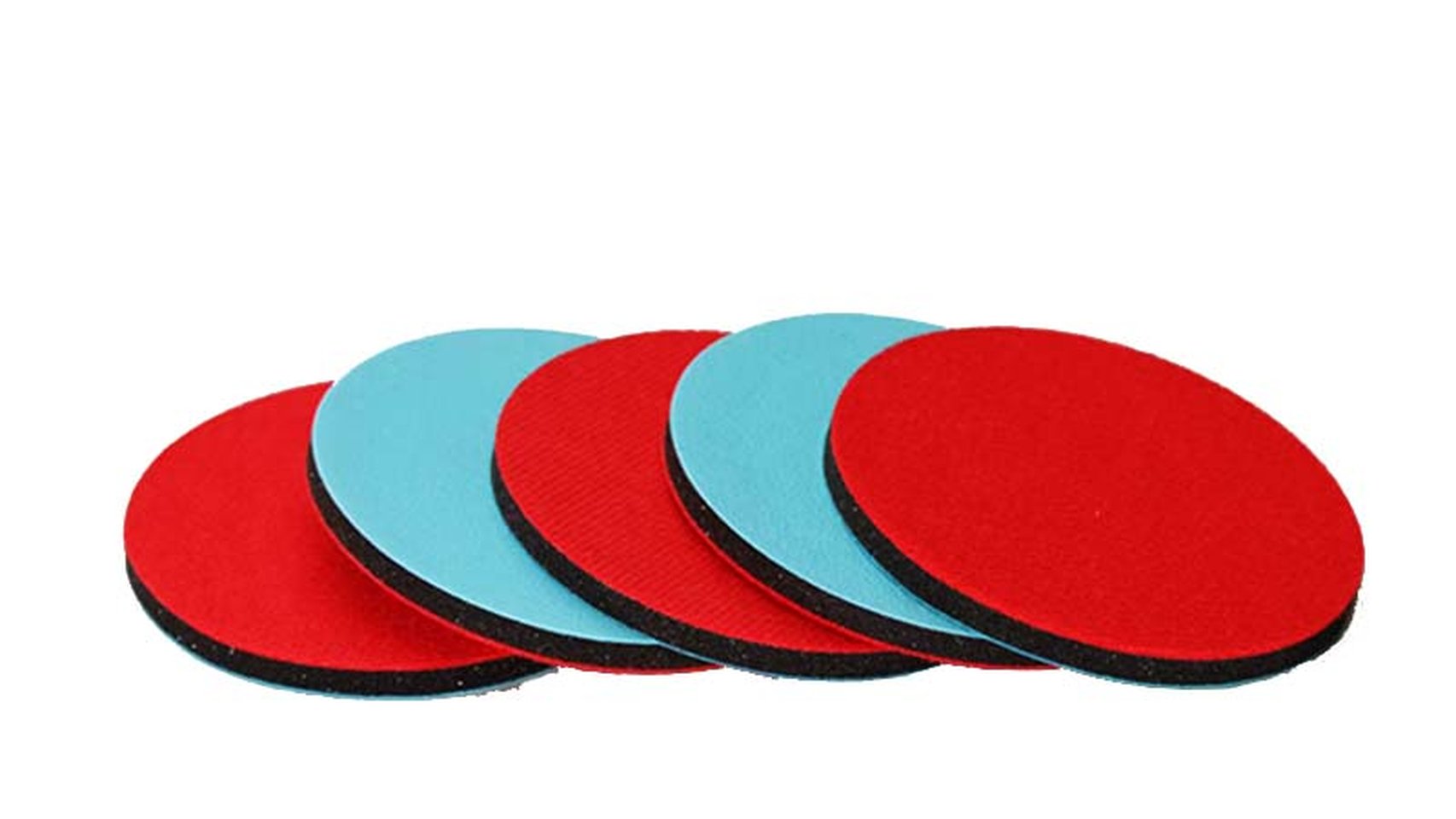
Application: Apply to glass, use dedicated glass grinding pad with polisher. For small areas, hand application with sponge in circular motion works.
Result: fully transparent glass, water forming even sheets instead of scattered beads. No more headlight scatter at night = oil film thoroughly removed.
Note: J10 is specifically for glass — not for paint. Glass and clear coat differ greatly in material and hardness.
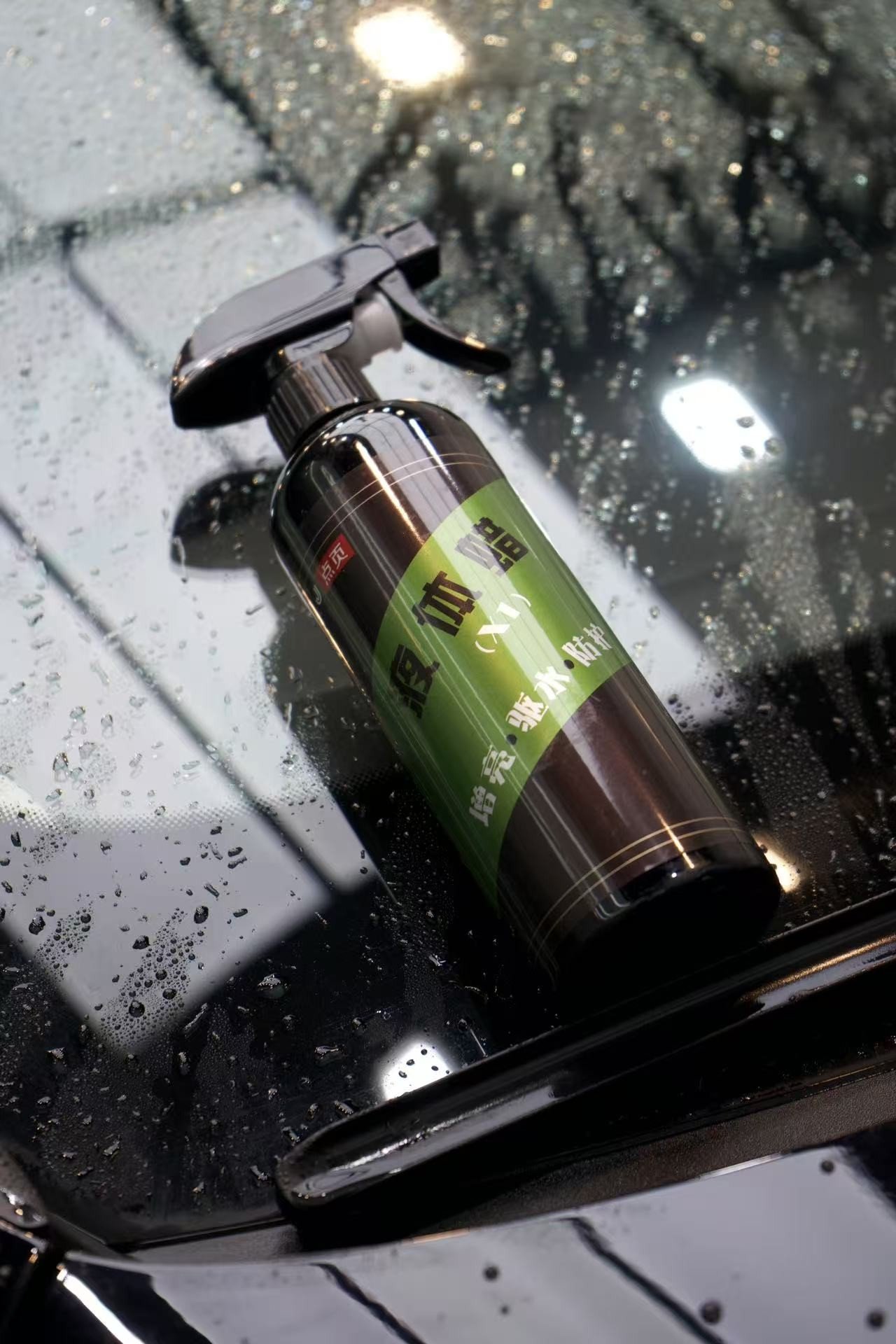
3.5 Daily Care — X1 Quick Liquid Wax
For post-polish or new car paint, daily care recommends X1 Quick Liquid Wax. Designed for “convenience + instant results” — ideal for owners who want to maintain paint without spending much time.
Contains no coarse abrasives — main ingredients are polymer compounds and Brazilian carnauba extract. Forms a thin hydrophobic protective film that reduces water spot and dirt adhesion while boosting gloss.
Application: Rinse and dry car, apply X1 to sponge, spread evenly, wait 3-5 minutes, wipe to shine. Full car in 20-30 minutes.
Protection lasts 2-4 weeks depending on parking environment. Outdoor vehicles: every 2 weeks. Garage vehicles: monthly is sufficient.
4. Practical Product Selection Guide
4.1 Problem-Product Correspondence
| Paint Problem | Severity | Product | Difficulty | Time |
|---|---|---|---|---|
| Oxidation/dulling | Light-moderate | J2 Water-Based Polish | Basic | 1-2 hrs/full car |
| Fine scratches | Micro-shallow | J5 Mirror Finish | Intermediate | 2-3 hrs/full car |
| Swirl marks | Light-moderate | J2+J5 combo | Advanced | 3-4 hrs/full car |
| Glass oil film | Light-moderate | J10 Glass Polish | Basic-intermediate | 30min-1hr |
| Daily care | — | X1 Quick Liquid Wax | Basic | 20-30 min/full car |
4.2 Common Selection Mistakes
Mistake 1: Stronger cutting = better. Stronger cutting means more clear coat removal. Light problems with heavy products waste clear coat unnecessarily.
Mistake 2: Higher price = better. Price differences come from formulation and brand premium, not just performance. Choose based on problem type and severity.
Mistake 3: Spot treatment only. Full-car treatment ensures color and gloss consistency. Spot treatment may create visible color differences.
Mistake 4: One-time permanent fix. No treatment is permanent. Environmental factors and usage habits continuously affect paint. Daily care delays recurrence, not prevents it entirely.
4.3 Environment and Tools
Ideal environment: cool, well-ventilated indoor space — avoid direct sunlight and high temperature. Sun causes rapid product drying; heat accelerates evaporation.
Essential tools: polisher (DA recommended), various hardness foam pads, microfiber towels, masking tape. For small areas, hand application with sponge suffices — just slower.
5. Summary
Paint problems seem simple but involve materials science, surface treatment, and formulation chemistry. Choosing correctly requires understanding both product characteristics and accurately diagnosing paint condition.
For most owners: daily X1 maintenance + prompt J2/J5 treatment when problems arise balances effectiveness and economy. For severe issues (heavy oxidation, dense swirls), seek professional help rather than forcing DIY with aggressive products.
Remember: all paint treatment should protect factory paint. Clear coat is non-renewable — every grinding irreversibly consumes thickness. While pursuing immediate results, also consider long-term vehicle use. Plan care frequency and product choices scientifically.
Note: Product usage methods and parameters in this article are based on manufacturer data and industry standards. Actual results may vary by environment, technique, and initial paint condition. Always test in an inconspicuous area before full application.