
How to Judge Paint Oxidation Severity? A Three-Step Graded Treatment Guide
Many car owners notice their paint becoming duller but don’t know whether it’s light or heavy oxidation, let alone how to treat it.
If you misjudge the oxidation level and use the wrong method, at best you waste money, at worst you damage the paint. This article teaches you to quickly assess oxidation grades and treat accordingly.
1. Why Does Car Paint Oxidize?
Paint oxidation is essentially a chemical reaction between organic substances on the paint surface (oils, pollutants) and oxygen in the air, compounded by UV rays, acid rain, and bird droppings, forming an oxidation layer.
This oxidation layer has three characteristics:
- Loose and porous: Pollutants penetrate easily, accelerating aging
- Blocks gloss: Light cannot reflect properly, making paint look dull
- Progressively worsens: Without treatment, it gets worse, potentially reaching the primer
Data shows that in hot, rainy regions like Shenzhen, unprotected vehicle paint loses over 40% of its gloss after 3 years.
2. Quick Oxidation Assessment: Three Levels
1.1 Light Oxidation: Dull Paint
Assessment method:
- Paint still looks hazy after washing, not glossy enough
- Feels slightly rough to the touch but not abrasive
- No obvious peeling or discoloration
- Most common on white, silver, and other light-colored paints
Professional measurement: Using a gloss meter, readings below 80 GU indicate light oxidation (new car paint typically reads 90-110 GU).
1.2 Moderate Oxidation: Visible Whitening and Yellowing
Assessment method:
- Visible white or yellowish patches under sunlight
- Localized color differences compared to other areas
- Regular washing and waxing provide limited brightness improvement
- Clear coat has begun to degrade
At this stage, oxidation has gone beyond surface-level—pollutants have penetrated the clear coat surface layer.
1.3 Heavy Oxidation: Peeling and Cracking
Assessment method:
- Visible peeling and cracking on the paint surface
- Some areas expose the primer
- Rust spots appear (more obvious near metal panels)
- Paint protective layer has completely failed
Heavy oxidation has damaged the clear coat and possibly the primer. Standard polishing cannot fully restore this condition—more professional treatment is needed.
3. How to Treat Different Oxidation Levels?
2.1 Light Oxidation Treatment
**Core approach: Cleaning + Protection
Light oxidation only affects the outermost layer. The priority is thorough cleaning followed by a protective layer.
Recommended process:
-
Deep cleaning
- Use pH-neutral car wash soap with a detail brush to thoroughly remove surface contaminants
- Focus on flat areas like the roof and hood, where dust accumulates most
-
Clay bar treatment
- Use a clay bar with lubricant, gently gliding over the paint surface
- Removes microscopic particles that regular washing cannot
- Keep the surface lubricated to avoid creating new scratches
-
Sealant or wax protection
- Apply protection immediately after cleaning
- Sealants last longer (3-6 months)
- Wax offers good value and simple application (1-2 months)
Daily prevention:
- Wash at least 1-2 times per month
- Wash within 24 hours after rain exposure
- Park indoors or in shaded areas when possible
2.2 Moderate Oxidation Treatment
**Core approach: Polishing + Refining + Protection
Moderate oxidation requires polishing to remove the degraded layer, then restoring gloss, and finally applying protection.
Recommended process:
-
Clean first
- Same deep cleaning to remove surface dust
- Ensures abrasives work on the oxidation layer, not wasted on contaminants
-
Medium polishing
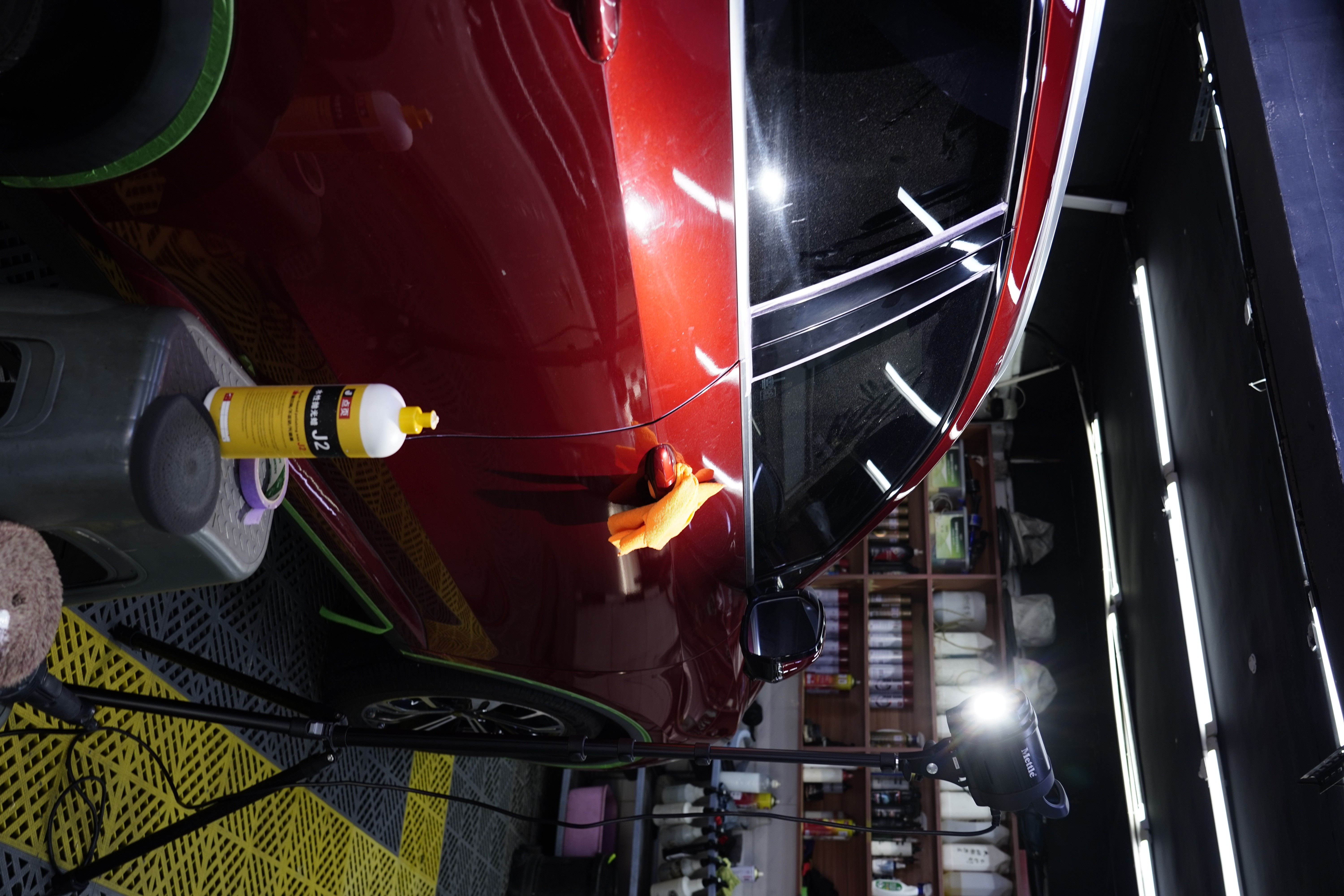
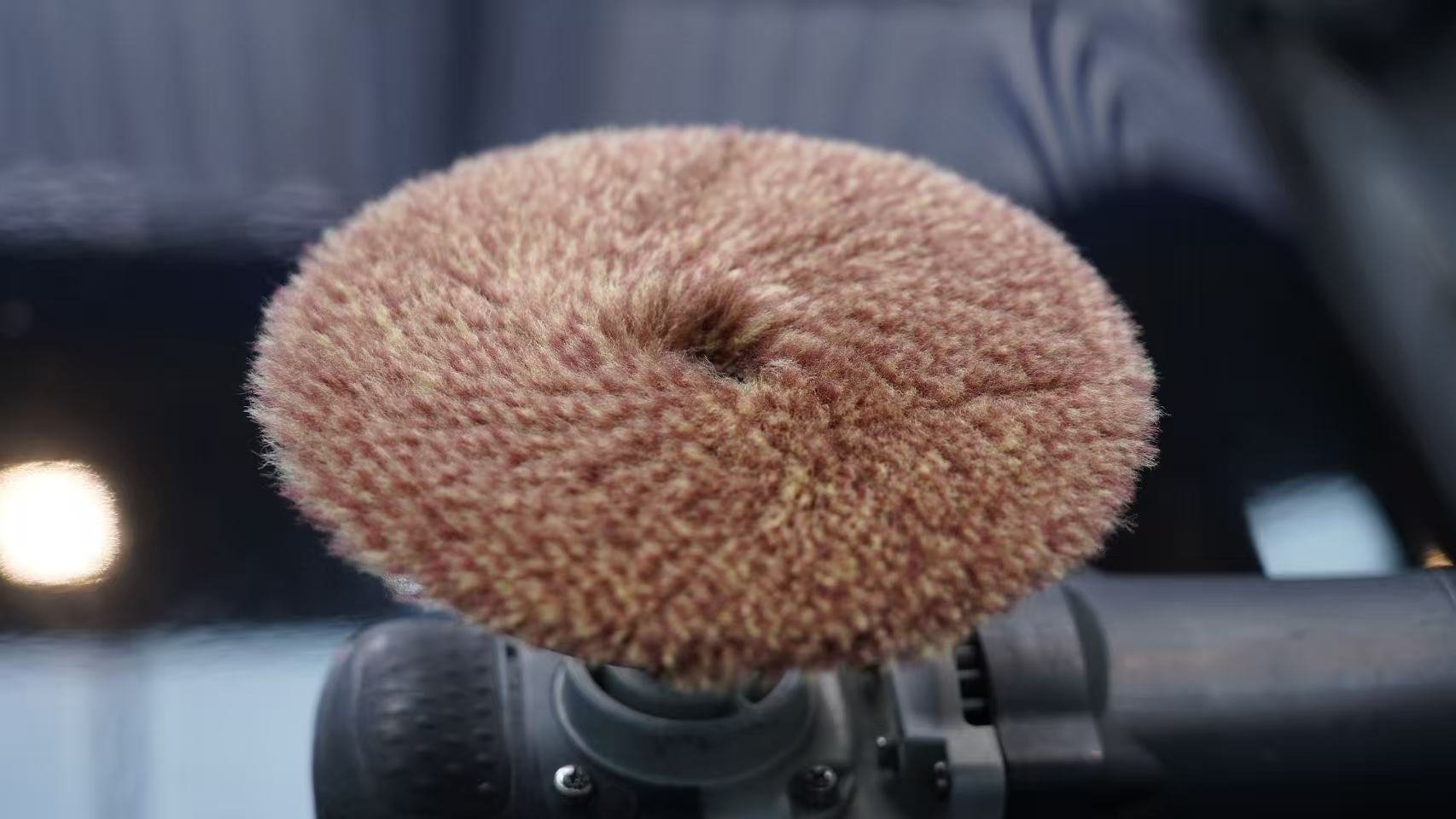
- Use medium-cut polishing wax with a DA orbital polisher
- Wool pad or medium-hardness foam pad
- Speed control at 1500-1800 rpm
- Polish one section at a time (about 60×60cm), 2-3 minutes each
-
Mirror finishing
- Coarse polishing leaves fine scratches that need refinement
- Use fine wax with a finishing pad
- Reduce speed to 800-1200 rpm
- Post-refinement gloss can recover to 85 GU or above
-
Protection layer
- Wax or apply coating promptly after polishing
- Protects the freshly refined surface
- Sealants are recommended for longer-lasting results
Note: Moderate oxidation polishing consumes a small amount of clear coat. Keep each pass within 2 microns. The total clear coat thickness is about 30-50 microns, which can normally withstand 10-15 polishing sessions.
2.3 Heavy Oxidation Treatment
**Core approach: Professional assessment + Step-by-step restoration
Heavy oxidation has damaged the clear coat or even the primer. DIY treatment is not recommended—seek professional shops.
Recommended process:
-
Professional assessment
- Use a paint thickness gauge to measure all areas
- Determine if restoration is possible or repainting is needed
- Technician provides multiple options and quotes
-
Spot repair vs. full restoration
- Mild damage: Treat only affected areas to reduce costs
- Severe damage: May require full-body polishing or spot repainting
- If over 50% of the surface has heavy oxidation, consider repainting
-
Post-restoration care
- Apply sealant or coating immediately after restoration
- Increase waxing frequency for the first three months
- Establish regular maintenance to prevent recurrence
Not recommended: Continuing to aggressively compound heavily oxidized paint. This only thins the clear coat further until it completely loses its protective ability.
4. Product Combinations for Different Scenarios
| Oxidation Level | Recommended Combination | Difficulty |
|---|---|---|
| Light oxidation | J1 Cleaning Wax + X1 Liquid Wax | Simple, DIY-friendly |
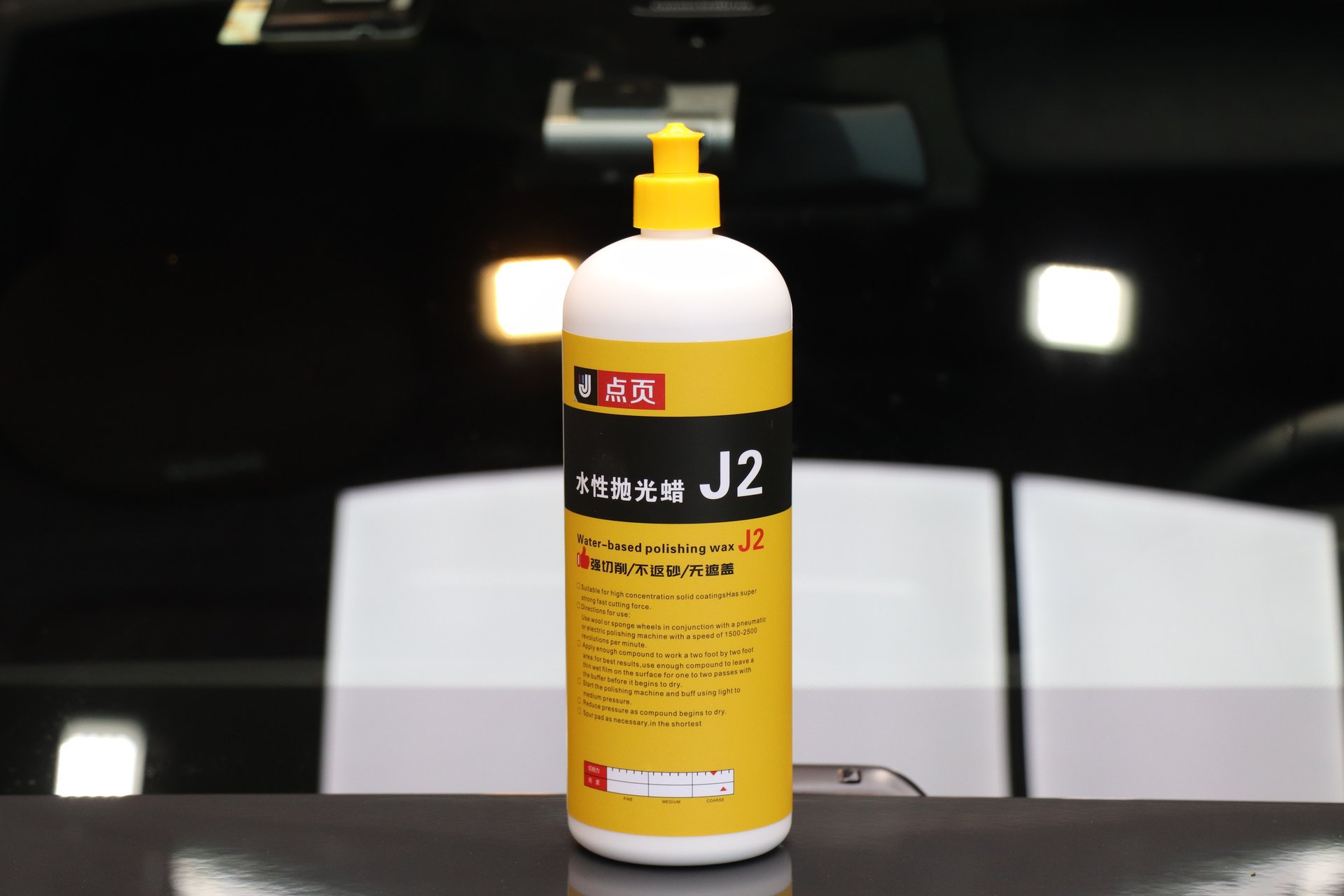
| Moderate oxidation | J2 Water-Based Polishing Wax + J5 Mirror Finishing Agent | Moderate, requires practice |
| Heavy oxidation | Professional shop recommended | High, not recommended for DIY |
Why this combination?
J1 Cleaning Wax contains a surfactant system that quickly dissolves organic pollutants, with only 8% abrasive content—minimal cutting effect on paint. Hand-applying J1 with gentle wiping completes the cleaning stage for light oxidation, making it ideal for DIY treatment.
J2 Water-Based Polishing Wax uses rounded alumina abrasives, 3-5 microns in size, removing 2-3 microns per pass—effective at removing oxidation without over-cutting. After machine-compounding with J2, J5 Mirror Finishing Agent repairs the fine scratches left by polishing. This combination is the standard treatment for moderate oxidation.
5. Prevention Is More Important Than Treatment
Rather than waiting for oxidation and then treating it, proactive prevention is better.
Daily care recommendations:
-
Regular washing
- 1-2 times per month, using pH-neutral car wash soap
- Never use dish soap or laundry detergent
-
Prompt contaminant removal
- Bird droppings, tree sap, acid rain marks: clean within 24 hours
- Iron particles, tar: use dedicated cleaners
-
Regular waxing or sealing
- Wax: every 1-2 months
- Sealant: every 3-6 months
- Coating: once per year
-
Parking environment
- Park indoors when possible
- Use a car cover for outdoor parking
- Avoid prolonged sun exposure
6. Common Questions
Q: What happens if light oxidation is left untreated? A: Pollutants continue to penetrate. Within 6-12 months, it will develop into moderate oxidation. The sooner you treat it, the more you save on money and paint.
Q: How long should I wait after polishing before waxing? A: No waiting needed—you can wax directly after polishing. Apply, wait 5-10 minutes for slight curing, then buff with a clean towel.
Q: Can heavy oxidation be fully restored by polishing? A: Not necessarily. If the clear coat has thinned below 15 microns, you may still see the underlying color after polishing. In this case, consider spot repainting.
Q: Do new cars need anti-oxidation treatment? A: New cars have factory protective layers, but regular waxing should begin after 3 months. If the paint already looks dull at delivery (from transport and storage oxidation), one light cleaning plus sealant treatment is recommended.
Summary
Paint oxidation comes in three levels, each requiring different treatment:
- Light: Cleaning + protection, DIY-friendly
- Moderate: Polishing + refining, requires some skill
- Heavy: Professional assessment, don’t force DIY
Remember the principle: Early detection, early treatment, less paint damage, money saved.
If your paint shows signs of oxidation, don’t delay. Small investment now beats costly repainting later.