
How to Polish Black Car Paint? 5 Essential Precautions for Dark Paint Polishing (Practical Guide)
Black car paint is deep and premium—many owners’ first choice. But black paint is also the most demanding—swirl marks, holograms, hazing and whitening, virtually every polishing problem is magnified several times on black cars.
This article starts from the physical properties of black car paint, detailing the 5 major precautions for dark paint polishing, helping you understand why black paint is “hard to polish” and how to polish it safely.
1. Why Black Car Paint Is “Especially Demanding”
Black car paint’s uniqueness can be explained by one physical principle: high reflectivity magnifies every defect.
Dark paint surfaces reflect light more directly—any micro-surface irregularity, whether scratches, water marks, oxidation, or even fine polishing marks—becomes格外 prominent through light scattering. Light-colored paint (white, silver) can somewhat “hide” these flaws; black paint exposes them all.
According to professional sources, factory clear coat thickness typically ranges 40-60 microns, with each standard polish removing approximately 5-10 microns. That means a car can be polished approximately 4-6 times in its lifetime before risking burn-through. Black car paint, due to faster heat absorption and quicker temperature rise compared to light colors, is more prone to clear coat damage from local overheating during polishing, with lower margin for error.
Additionally, black cars develop obvious “swirl marks” under direct sunlight—those fine circular scratches are essentially micro-abrasions on the clear coat surface, accumulated through regular washing and wiping. Swirl marks are most visible on black cars and are the most common reason owners choose to polish.
2. Five Essential Precautions for Black Car Paint Polishing
1. Temperature Control Is the Lifeline
Black car paint absorbs heat far more than light colors. In summer sunlight, black paint surface temperature can reach 60-70°C—far exceeding safe polishing temperature.
Technical guides specify that before polishing, paint surface temperature must be below 35°C. Use an infrared thermometer if available; without one, press the back of your hand to the paint—if it doesn’t feel hot, you can begin.
During polishing, paint temperature must never exceed 50°C. Beyond this threshold, clear coat softens and may chemically change, causing irreversible “burning”—localized whitening, gloss loss, or in severe cases, clear coat burns through to expose primer.
Temperature control practical points:
- Work in shade, avoid direct sunlight
- Section work, each area no larger than 30×30cm, 3-5 minutes per section
- Stop immediately if paint feels hot, wait for cooling
- Coarse polishing at 1500-1800 rpm, fine polishing at 1000-1200 rpm
2. Equipment Selection: DA Is Better Than Rotary
Polishers fall into two categories: Rotary and Dual-Action (DA orbital).
Rotary polishers have strong cutting force and high efficiency but demand极高 skill from the operator. On black paint, the “holograms”—concentric circular patterns visible under light sources—are nearly unavoidable with rotary machines. Without extensive professional experience, using a rotary on black paint will likely make it worse.
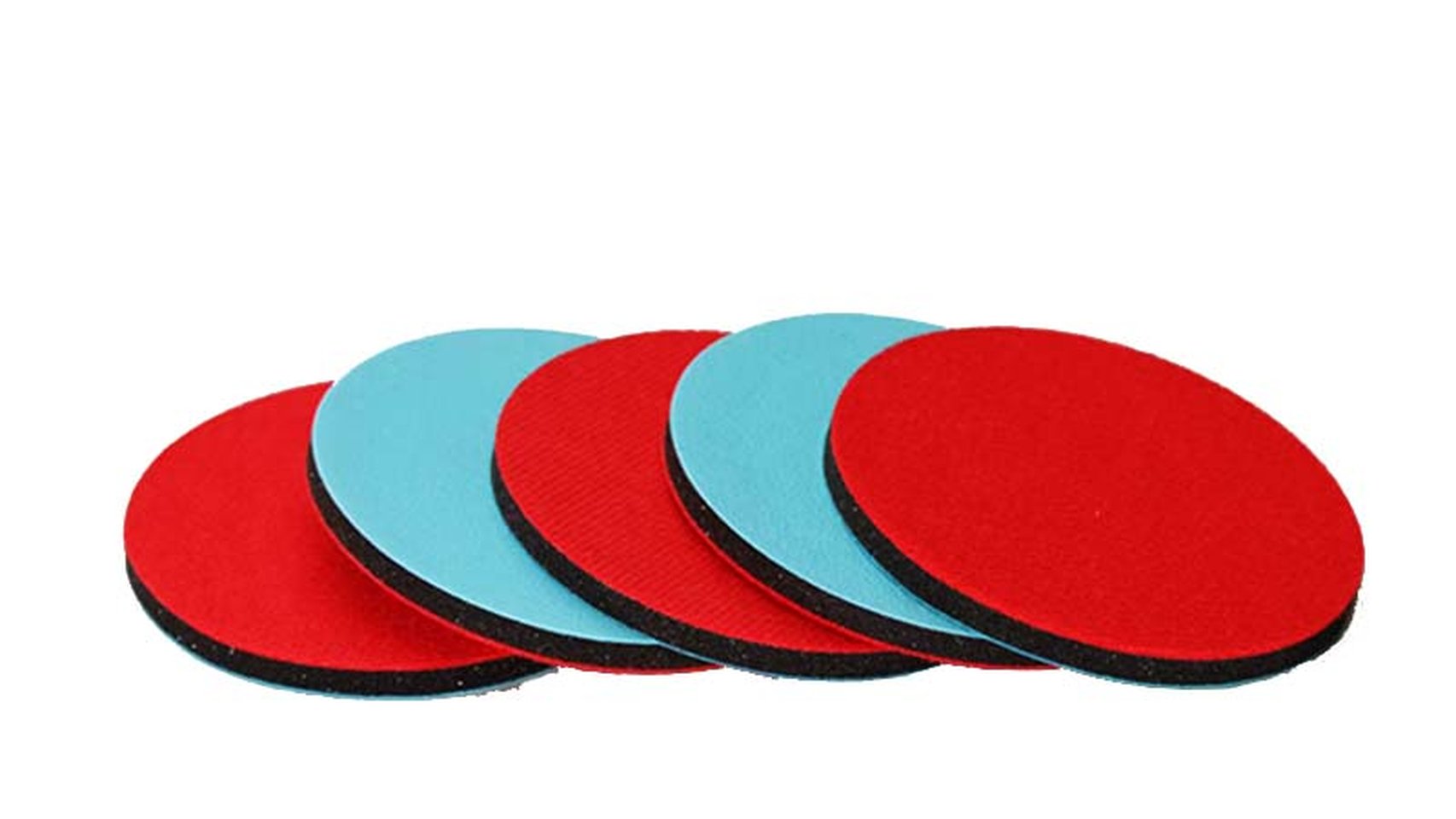
DA orbital polishers (recommended 12mm throw) distribute grinding pressure through eccentric motion. Though cutting efficiency is slightly lower, safety is much higher and hologram risk is greatly reduced. For black paint, safety matters more than efficiency.
Many budget polishers only offer rotary mode without DA function. If you only have a rotary, reduce speed, lighten pressure, shorten section time, and ensure thorough finishing to compensate.
3. Coarse and Fine Polishing Must Be Separate Steps
Many beginners want to “do it in one step”—one compound, one pad, coarse to fine all at once. This might pass on light-colored cars; on black cars, absolutely not.
Black car paint polishing must strictly follow the “coarse → fine” two-step process:
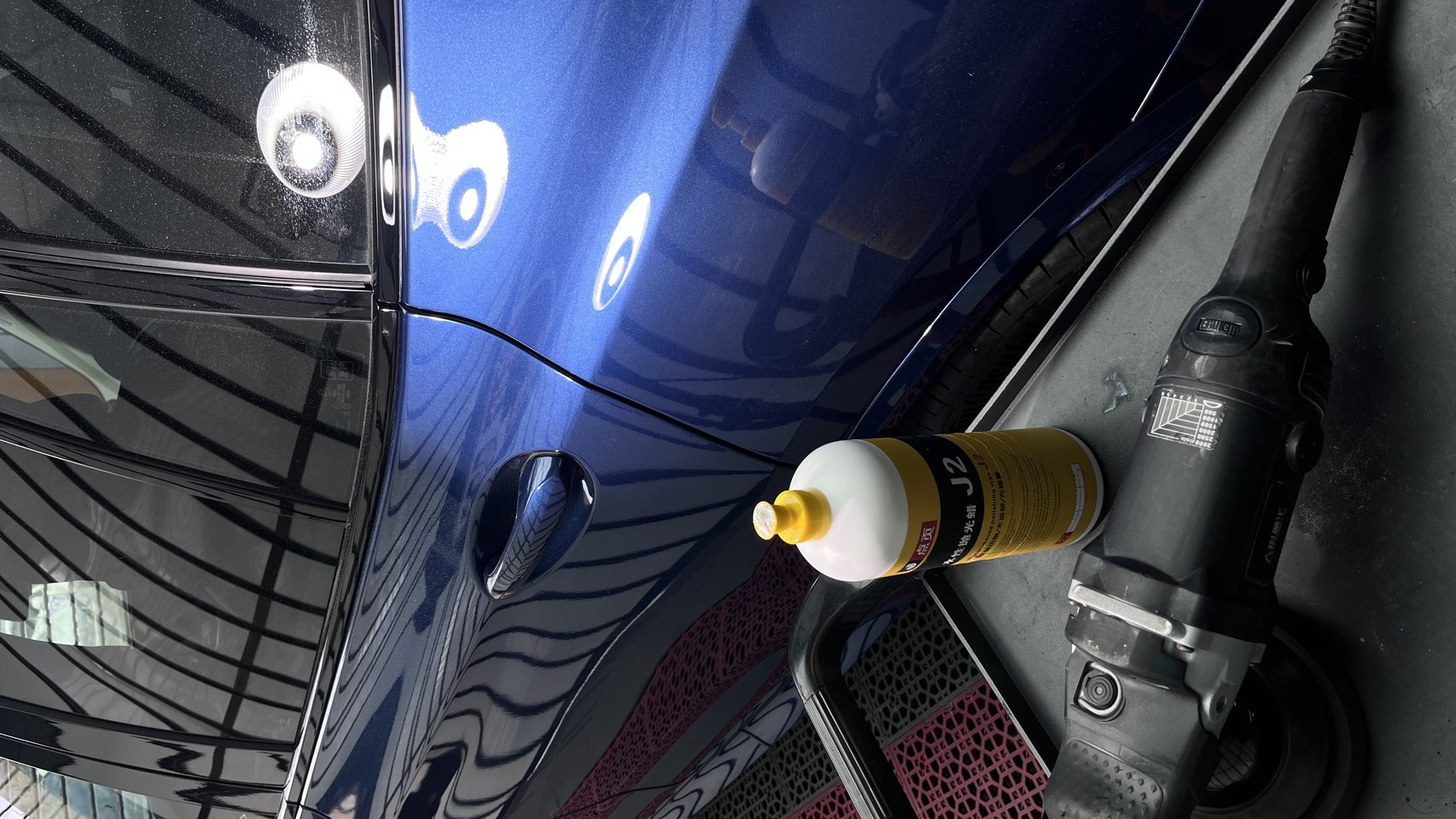
Coarse polishing: Medium-cut water-based polishing wax with medium-hardness pad, 1500-1800 rpm, 1.2-1.5 kg pressure. Purpose: remove oxidation, swirl marks, and deeper scratches. After coarse polishing, paint will look matte—this is normal.
Fine polishing: Switch to mirror finishing agent with soft fine polishing pad, speed reduced to 1000-1200 rpm, pressure adjusted to 0.8 kg. Purpose: eliminate fine marks left by coarse polishing, restore mirror gloss.
Skipping fine polishing and delivering directly shows dense micro-scratches under sunlight—especially obvious on black. Rushing to fine polish without adequate coarse work leaves deep scratches untouched—wasted effort.
4. Holograms: Black Paint’s #1 Enemy
Holograms are concentric circular patterns left by tools or products during polishing, appearing as rainbow-colored rings under light. Traditional oily compounds temporarily “fill” holograms with oils, making paint look glossy—but after a few washes, oils wash away and holograms reappear.
Hologram prevention points:
- Use DA polisher, not rotary
- Keep pads clean—clean or replace after every 1-2 panels
- Moderate compound amount—cover 1/3 of pad area; excess causes residue buildup
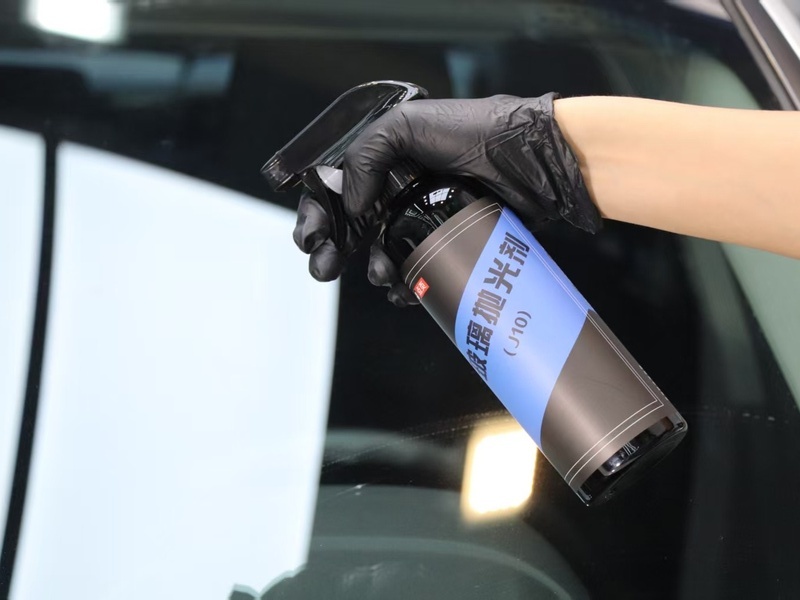
- After polishing, wipe with 15-20% IPA solution (industry “degreasing check”) to remove residual oils and fillers, revealing true results
- Final wipe with clean microfiber towel (≥300g/m²)
If degreasing check reveals remaining holograms, fine polishing was insufficient. Switch to finer pad and mirror finishing agent for another pass until the degreasing check passes.
5. Protection Must Be Applied Immediately After Polishing
Polishing removes the oxidation layer and old wax from the clear coat surface, exposing “naked” clear coat. Without timely protection, UV, acid rain, and bird droppings quickly attack the freshly polished surface, and swirl marks return fast.
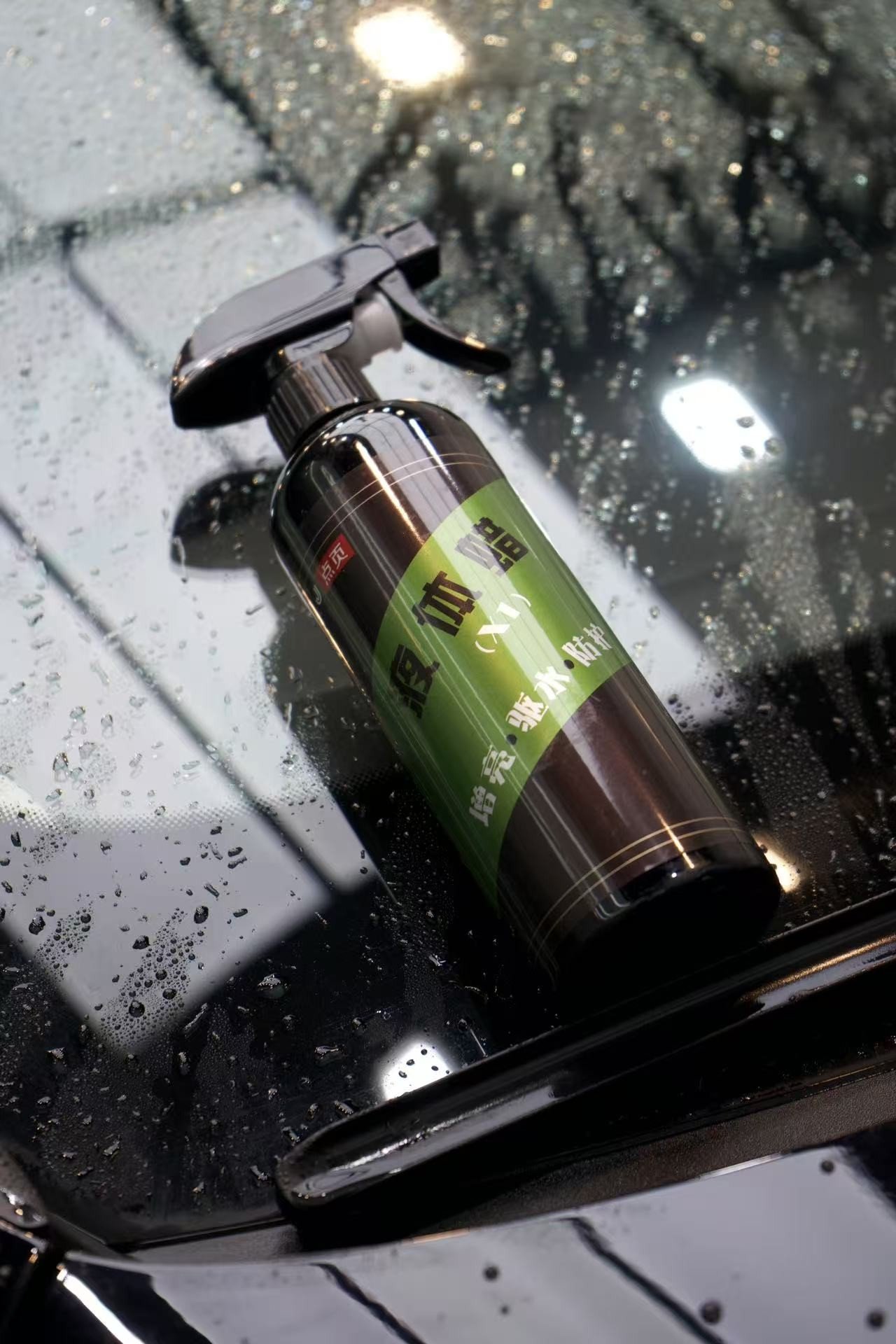
After polishing and degreasing, immediately wax or coat to form a protective layer. Daily maintenance recommends waxing every 2-3 months; annual coating provides longer-lasting protection.
3. Why Does Paint Look Hazy After Polishing?
This is the most common black car polishing problem: after polishing, not only isn’t it brighter—it’s covered in a white haze.
Analysis identifies three main causes:
First, abrasive grit too coarse. Using overly aggressive compound or pad leaves countless micro-scratches on the clear coat. Light scatters chaotically across these marks, looking like a white haze. Fix: switch to finer finishing compound and re-polish.
Second, compound residue not removed. Oils and fillers from compound dry on the paint, forming a white film. Wipe with 15-20% IPA solution to remove. This is why degreasing checks are essential after polishing.
Third, clear coat burn. The most severe scenario. Local overheating causes chemical change in clear coat, creating irreversible white fog spots. Mild burning can be fixed with fine polishing; severe burning requires repainting.
Diagnosis method: Wipe with IPA first. If haze disappears, it’s residue. If haze remains and strong light reveals fine scratches, abrasive grit was too coarse. If the hazy area feels rough or has slight depressions, it’s likely burn damage.
4. FAQ
Q: How often should black cars be polished? A: No more than 1-2 times per year. Proper washing (two-bucket method, clean towels) prevents rapid swirl accumulation. For slight dullness, try hand-applying cleaning wax first—machine polishing may not be needed.
Q: Can black cars use regular polishing compound? A: Regular oily compounds cause more issues on black—lubrication relies on oils that slip and leave residue at high temperatures, noticeably affecting gloss on black paint. Water-based polishing wax uses water as a medium, lubricates thoroughly without residue, better suited for dark paint.
Q: Can black cars get rained on after polishing? A: If waxed after polishing, rain is fine. Only coating products need 24-hour curing; regular wax and maintenance products don’t require waiting.
Q: Do black new cars need polishing? A: No. New car clear coat is intact—first do decontamination (remove transport wax and industrial dust), then wax or coat. Premature polishing only wastes clear coat thickness.
5. Recommended Combination
| Stage | Recommended Product | Purpose |
|---|---|---|
| Paint decontamination | J1 Cleaning Wax | Remove oxidation and contaminants |
| Coarse restoration | J2 Water-Based Polishing Wax | Remove swirl marks and moderate scratches |
| Fine finishing | J5 Mirror Finishing Agent | Eliminate fine marks, restore mirror gloss |
| Daily maintenance | X1 Quick Liquid Wax | Post-polish protection, maintain shine |
Application advice: For machine coarse polishing, use J2 Water-Based Polishing Wax—water-based formula lubricates thoroughly with low heat generation, reducing burn risk on dark paint. Fine finishing with J5 Mirror Finishing Agent effectively eliminates holograms. Together, they form the ideal black car polishing combination.
For more car polishing knowledge, search “DianYe Auto Technology.”