
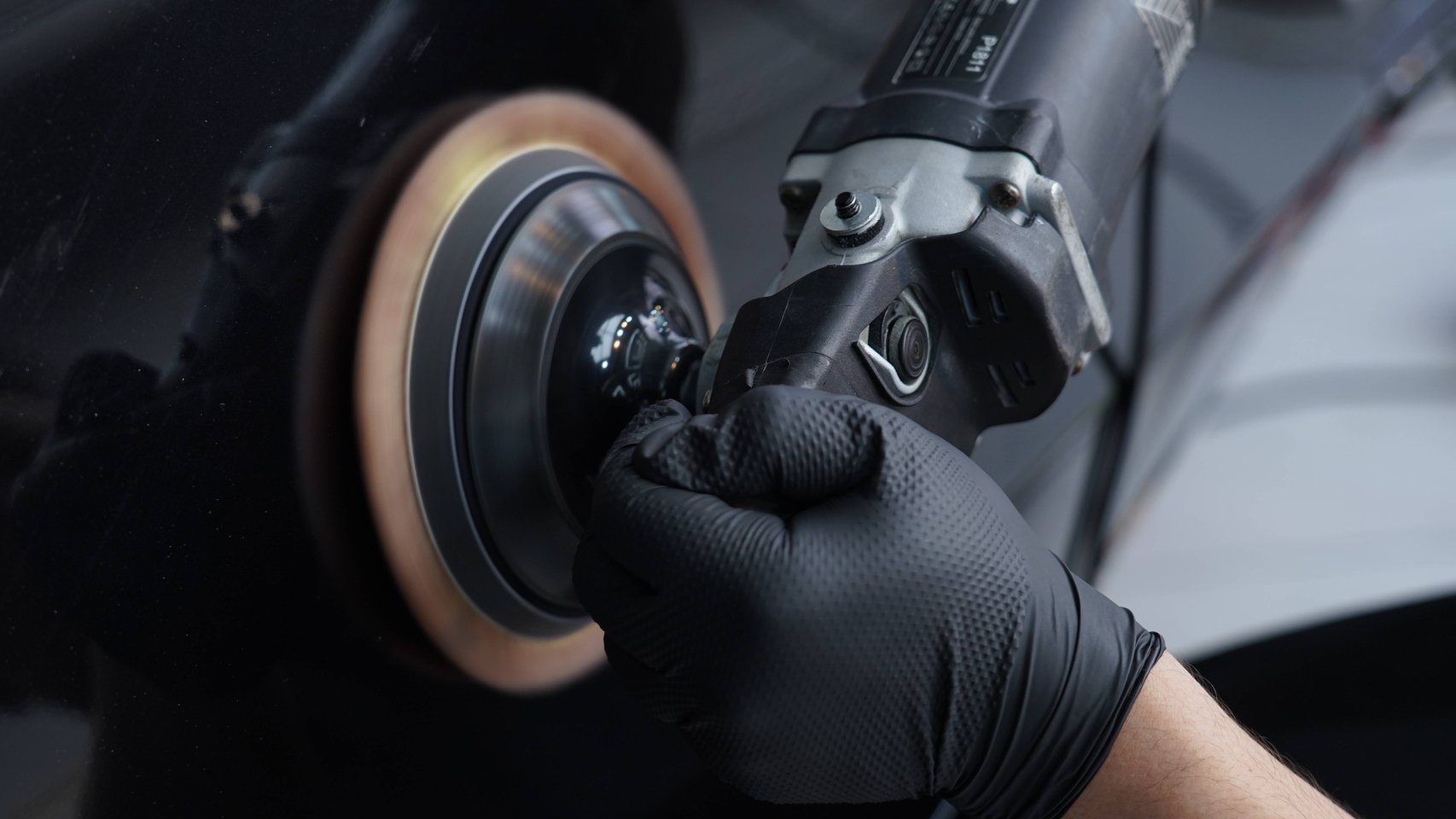
What Is Polishing Really Doing? One Physics Principle Explains All Operating Logic
Have you ever asked yourself: What is polishing really doing?
Many people with years of auto detailing experience know how to operate and select products, but if asked “what is the essence of polishing,” most likely can’t answer. They know what to do, but not why—that’s the reality for most practitioners.
Today’s article doesn’t cover operating steps or product recommendations. It covers just one thing: the first principle of polishing. Understanding this fundamental logic lets you deduce for yourself how to set speed, how much pressure, whether to use coarse or fine abrasive, and whether to choose wool or foam pads.
1. The First Principle of Polishing
1.1 Explained in One Sentence
Polishing = controlled, progressive micro-cutting that transforms irregular surfaces into regular surfaces.
That simple. All operating standards, product choices, and process flows revolve around the words “controlled” and “progressive.”
“Irregular” refers to scratches, oxidation, swirl marks, orange peel—everything making paint surfaces uneven. “Regular” means smooth, flat surfaces—where light reflects like a mirror.
1.2 Understanding from Physics
Why does “grinding irregular into regular” make paint bright?
The key is light reflection behavior.
When paint is smooth and flat, incident light reflects in a unified direction—this is specular reflection. You see clear reflections and full gloss—this is the “mirror effect” we pursue.
When paint is uneven, incident light scatters in all directions—this is diffuse reflection. You see blur, haziness, fogging—this is the visual effect of oxidation, scratches, and swirl marks.
So polishing’s essence isn’t “brightening”—it’s flattening the surface so light changes from scattering to reflection. Brightness increase is simply the natural result of a smoother surface.
1.3 Why “Controlled” and “Progressive” Matter
“Controlled” means you can’t remove too much or too little. Too much thins the clear coat; too little leaves scratches.
“Progressive” means you can’t do it in one step. Coarse grinding removes deep scratches but leaves new micro-scratches; medium grinding removes coarse marks but leaves finer marks; fine grinding (finishing) removes medium marks to achieve mirror finish.
This is why polishing is always coarse → medium → fine—no skipping steps. Skipping essentially means: you used coarse particles to remove deep scratches but didn’t give fine particles the chance to remove coarse marks—result: hazy paint.
2. The Physical Nature of Abrasive Particles
2.1 Why Particles Harder Than Clear Coat Are Needed
Polishing’s physical principle is: using abrasive particles harder than the clear coat, combined with pressure and speed, to micro-cut the paint surface.
The clear coat’s main component is polyurethane resin, with Mohs hardness around 2-3. If abrasive particles are softer than clear coat, it’s like rubbing glass with an eraser—no cutting at all.
Common abrasive particle materials:
| Particle Material | Mohs Hardness | Characteristics |
|---|---|---|
| Aluminum oxide | 9 | Strong cutting, most common |
| Silicon carbide | 9-9.5 | Even stronger cutting, common in sandpaper |
| Ceramic particles | 8-9 | Uniform cutting, slow degradation |
| Quartz sand | 7 | Base material for standard compounds |
For comparison: clear coat hardness 2-3, abrasive hardness 7-9. Abrasive is 3-4x harder than clear coat—that’s why it can cut.
2.2 How Grit Size Determines Cutting Power
Compound coarseness is essentially particle diameter.
Coarse compound: Particle diameter 10-30 microns. Each particle is like a tiny knife, removing more material per pass. Suited for deep scratches and heavy oxidation, but leaves deeper micro-scratches.
Medium compound: 5-15 microns. Moderate cutting for treating coarse compound marks.
Fine/finishing compound: 1-5 microns. Very weak cutting, but smooths medium compound micro-scratches to achieve mirror effect.
Key insight: Coarse isn’t “better,” fine isn’t “worse.” Each has its purpose. Like woodworking—coarse sandpaper first, then fine; skipping any level leaves the surface uneven.
Traditional methods that only coarse polish without finishing assume coarse is enough for brightness. Actually, coarse compound’s micro-scratches show as haze under strong light—this is the root cause of many shops’ “looks bright immediately, dulls in days.”
2.3 Water-Based vs. Oil-Based: Filling vs. Real Cutting
This is a frequently misunderstood point.
Oil-based compounds contain大量 filling silicone oils. During polishing, silicone fills scratches, making paint look bright. But it’s an illusion—after degreasing, fillers wash away and scratches fully reappear.
Water-based compounds contain no silicone fillers—cutting is real. Post-polish results may not be as “stunning” as oil-based, but remain bright after degreasing with no fallback.
Using first principles: polishing’s essence is flattening the surface. Oil-based compounds don’t flatten—they fill. Filling ≠ flattening.
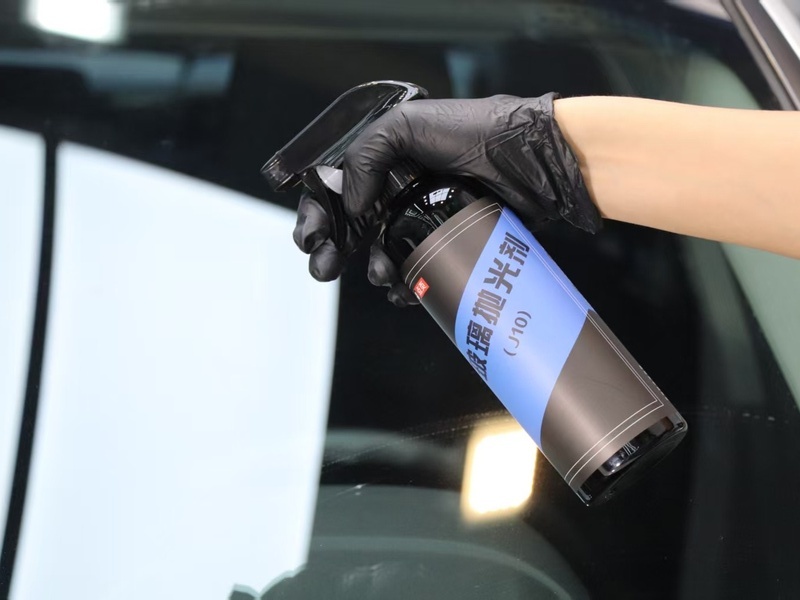
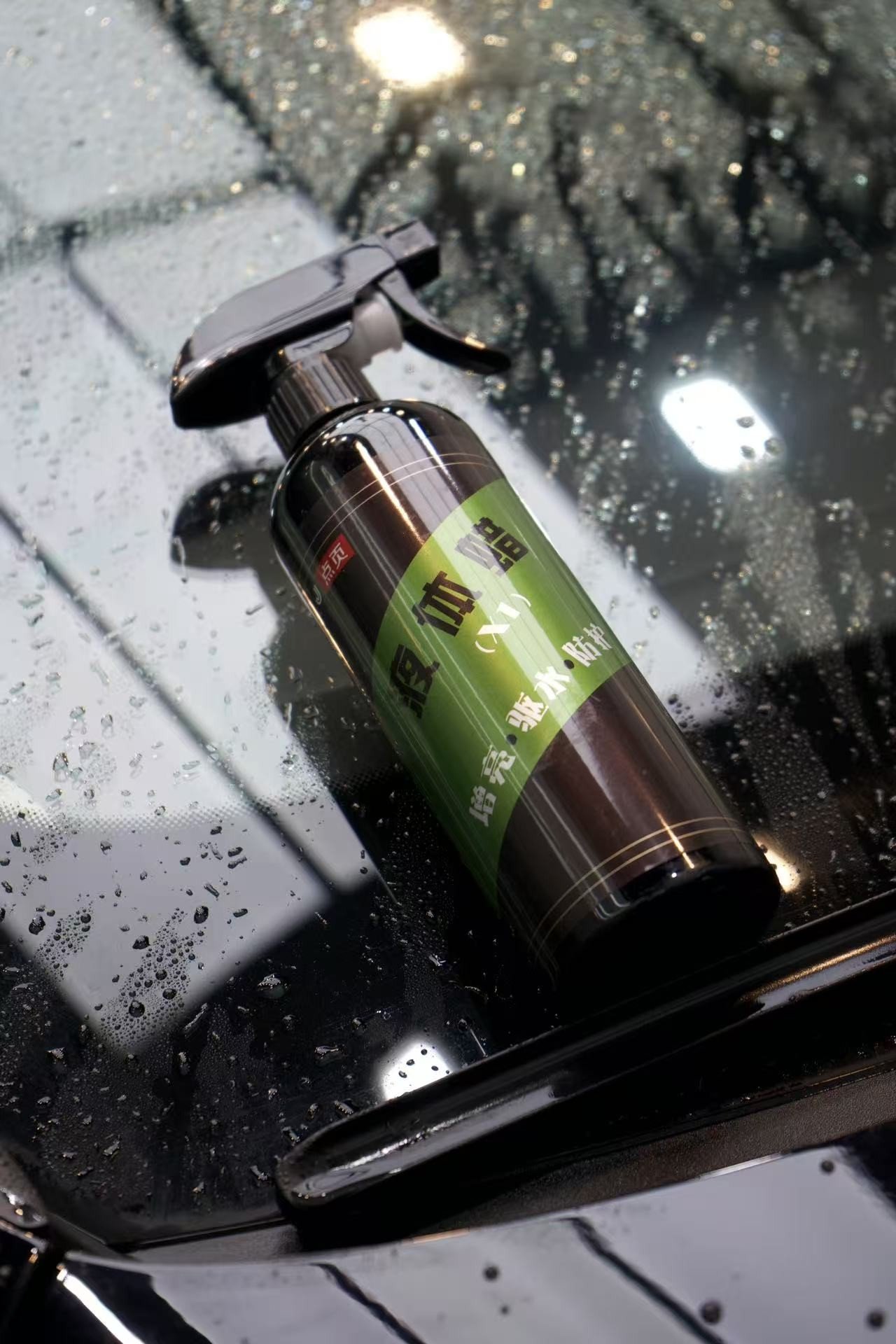
Only truly flattened surfaces change light from scattering to reflection—this is real mirror finish. DianYe J2 Water-Based Polishing Wax and J5 Mirror Finishing Agent follow the real cutting path—brightness doesn’t diminish after degreasing inspection.
3. The Triangle of Pressure, Speed, and Temperature
3.1 Cutting Force = Pressure × Speed × Particle Hardness
From a physics perspective, abrasive particle cutting effect is determined by three factors:
- Pressure: How hard you press the polisher. Greater pressure pushes particles deeper into paint, larger single-pass cutting volume.
- Speed: Polisher rotation speed. Higher speed means more particle passes per unit time, larger total cutting volume.
- Particle hardness and grit: As discussed—hardness determines whether cutting occurs; grit determines how much per pass.
The product of these three determines cutting force. Understanding this formula, all operating standards are its derivations.
3.2 Why Coarse Polishing Needs High Speed
Coarse polishing aims to quickly remove deep scratches and oxidation—needing large cutting volume. Using coarse compound (large particles) with higher speed (1500-1800 rpm) achieves large-area cutting in shorter time.
But note: coarse polishing pressure can’t be too high. Excessive pressure drives particles too deep, creating new deep scratches and increasing subsequent stage workload.
Correct approach: Coarse polish with high speed + medium pressure—let particles cut uniformly rather than violently grinding.
3.3 Why Finishing Needs Low Speed
Finishing aims to remove coarse and medium marks—requiring very small cutting volume. Using fine compound (small particles) with low speed (600-1000 rpm) controls each cutting amount to ensure no new scratches form.
If finishing speed is too high, fine particles generate excessive heat at high speed, decomposing the finishing compound and forming a hazy film on paint. This is a common cause of “increasingly foggy” results.
3.4 Temperature: The Red Line That Must Be Controlled
The greater the product of pressure and speed, the more friction heat generated. Temperature is the most dangerous variable in polishing.
40-50°C: Normal working temperature, paint feels warm, continue operating.
50-60°C: Warning zone—stop and move to another area, wait for cooling.
Above 60°C: Danger! Clear coat begins softening; continued operation causes deformation and burn-through. Your hand already feels it burning—must stop immediately.
Traditional methods don’t emphasize temperature control, polishing one area until smoking before moving. This easily burns through clear coat. The correct method: treat only 40×40cm small areas at a time, 1-2 passes then move on, allowing heat dissipation time.
4. Deriving Operating Standards from Principles
4.1 Why You Can’t Skip Steps
From first principles: polishing transforms irregular to regular surfaces—this process is progressive.
Coarse compound removes deep scratches → leaves coarse scratches → medium removes coarse → leaves fine → fine removes fine → achieves mirror.
If you skip medium or finishing, nobody handles coarse compound’s scratches—paint stays irregular, light stays scattered, appearance stays hazy.
Skipping steps = spending money and effort but not completing the job.
4.2 Why Pad Selection Matters
From physical principles: abrasive particles must be delivered to paint through the polishing pad. Pad material determines how particles “work.”
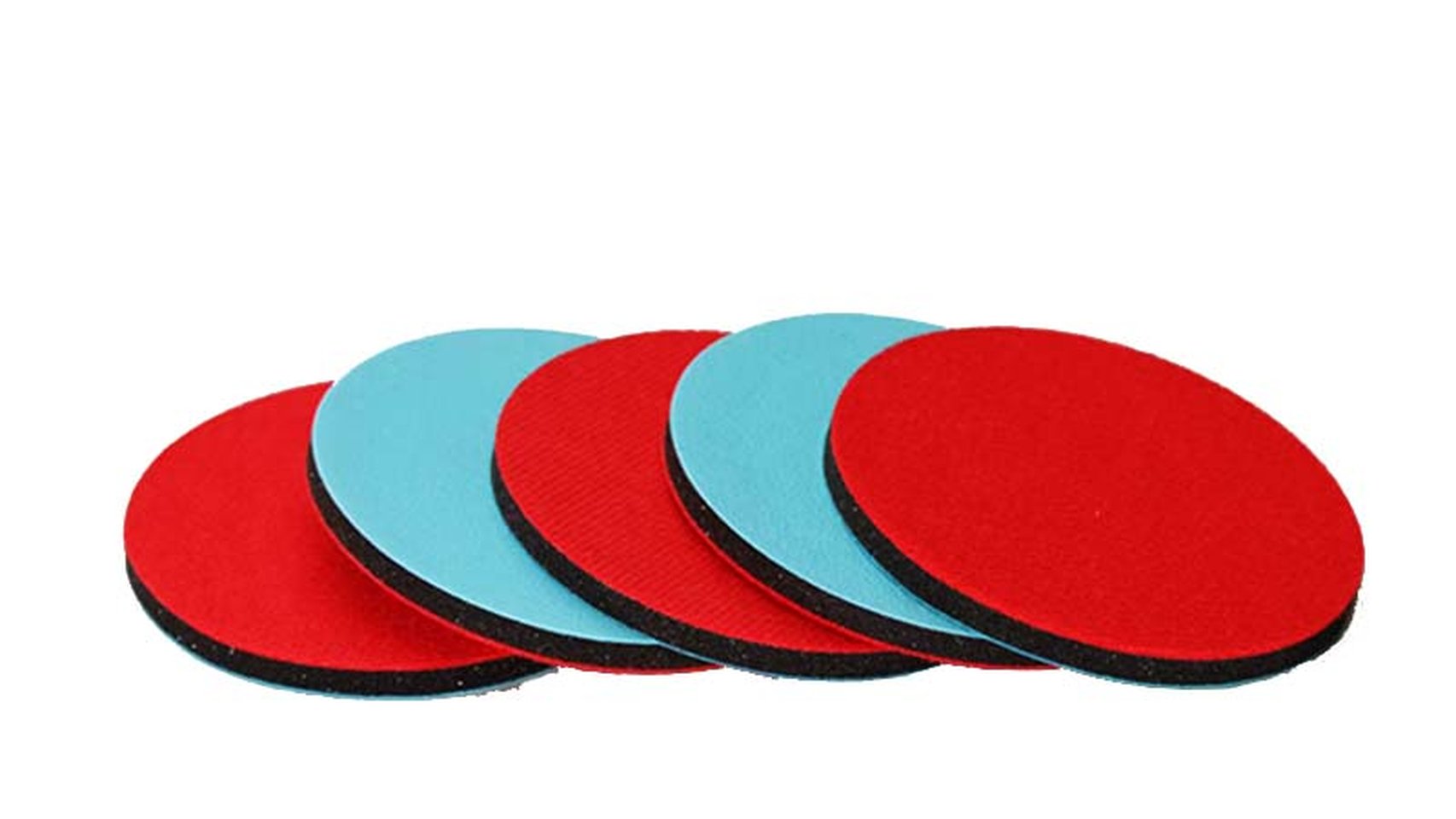
Wool pads: Fiber structure stores more compound, with cushion between pad and paint—suited for coarse and medium. Fibers during rotation act like brushes “throwing” particles onto paint—high cutting force.
Foam pads: Open-cell structure, less cutting than wool but more uniform. Fine foam suits finishing—it evenly distributes fine particles for precise micro-cutting.
Wrong pad pairing = particles’ cutting force not correctly applied to paint.
Coarse compound + fine foam pad: particles get “absorbed” by fine pad, can’t cut, repeated friction generates heat and haze.
Finishing compound + wool pad: particles get thrown by wool fibers, cutting force too strong, creates new scratches.
4.3 Why Degreasing Is the Acceptance Standard
Degreasing’s essence is: removing all foreign substances from paint, revealing its true condition.
If oil-based compound was used, before degreasing, wax fills scratches showing a “filled” effect. After degreasing, fillers wash away showing the “flattened” real effect.
Degreasing is the truth mirror. Without degreasing, work isn’t complete—you don’t know if the brightness you see is real or just filled.
5. Understanding Common Problems Through First Principles
5.1 “Why Is It Bright Right After Polishing But Dull Days Later?”
Oil-based compound polishing—brightness comes from filling, not cutting. Days later, fillers evaporate or wash away in rain, revealing true paint—scratches still there, naturally dull.
First principles judgment: if the surface wasn’t truly flattened, brightness can’t be lasting. Regular oily wax “brightness” is fake; water-based product cutting is real.
5.2 “Why Does It Get Foggier the More I Polish?”
Excessive speed causes compound to decompose from high temperature; decomposition products form haze on paint. Or the pad is dirty—old and new compound mixing, cutting unevenly.
First principles understanding: cutting force = pressure × speed × particle hardness. When temperature is high enough to decompose particles, they lose cutting ability—only friction heat remains—the more you polish, the foggier it gets.
5.3 “How Many Times Can Paint Actually Be Polished?”
From physical principles: clear coat 50-150 microns, each full-car polish removes 5-10 microns. Theoretically 5-10 times to burn through; in practice quality noticeably declines beyond 5 times.
Paint is a consumable—each pass reduces it. This is why problems solvable by spot polishing shouldn’t be panel polished; fewer passes is always better than more.
6. Summary
Back to the original question: What is polishing really doing?
Polishing = controlled, progressive micro-cutting that transforms irregular surfaces into regular surfaces, changing light from scattering to reflection.
Remember these three corollaries:
- Progressive—no skipping: Coarse → medium → fine, each step builds on the previous. Skipping means the job is only half done.
- Cutting force = Pressure × Speed × Particle hardness: All operating standards derive from this formula. Temperature is the safety red line.
- Flattening ≠ filling: Real cutting produces lasting mirror finish. Degreasing is the only acceptance standard.
Understanding first principles, you no longer need to memorize operating standards—because every standard derives from this principle.
DianYe J2 Water-Based Polishing Wax and J5 Mirror Finishing Agent combination logic is also based on this principle: J2 handles real cutting for coarse and medium stages; J5 handles fine cutting for finishing. Two steps complete, degreasing inspection confirms—brightness is real with no compromise.