
Mirror Finish Only Lasts a Few Days After Polishing? The Problem Is in This Critical Step
You spent hundreds on a full-car polish. The moment it was finished, the paint was so shiny you could see your reflection. Then after less than a week of driving, the swirl marks came back, scratches became faintly visible again, and the gloss dropped significantly.
This situation is far too common. Many car owners blame the wax or feel they were misled by the shop. In reality, the problem often lies not in the wax itself, but in compound selection and an overlooked inspection step.
At DianYe Auto Technology, during our paint correction training sessions, this is the most frequent customer question. Today we’ll explain this thoroughly.
1. First, Understand: Where Does the Mirror Finish Come From?
The core principle of polishing is using abrasive particles in the compound to grind away the oxidation layer and fine scratches from the clear coat, making the paint surface smooth again. The smoother the paint, the more concentrated the light reflection, and the brighter it appears — this is the so-called “mirror finish.”
But there’s a critical distinction: a mirror finish is “ground” into the surface, not “filled” into it.
Quality car polishing wax achieves this through true cutting action — leveling the high points and achieving genuine physical flatness. This paint correction result is lasting because the paint surface itself has been repaired.
Some products take a different approach — using oily components to fill scratches and pits. Right after polishing, it also looks shiny because the oily substance has temporarily “filled” the uneven areas, improving light reflection. But this fill is fake — one or two car washes or a few rainfalls later, the filler is washed away and the scratches “resurface.”
2. Why Did Your Mirror Finish Only Last a Few Days?
Most likely, you used an oil-based compound.
Oil-based compounds contain large amounts of filling silicone oils. After polishing, it looks brilliant and scratch repair appears excellent. But this is only because the silicone oil has filled the scratches — they weren’t actually removed. Once the silicone oil evaporates or is washed away, every scratch that was there before is still there.
This is why some shops’ work looks fantastic right after polishing, but customers return a week later complaining — not because the shop cut corners, but because the wrong product was chosen. DianYe Auto Technology has consistently emphasized the importance of water-based compounds in the industry precisely because filling-type products cause harm.
How to tell if it was an oil-based fill?
There’s a very simple method: the degreasing test.
After polishing, use a degreaser (or 15-20% isopropyl alcohol solution) to thoroughly wipe the entire paint surface, removing all oily residues. After wiping, observe under strong light:
- If the paint remains glossy with no visible scratches — the compound achieved true cutting; the paint correction is genuine
- If scratches “reappear” and the paint looks hazy and dull — what you saw before was a fill illusion; you need to redo it with a true cutting-type car polishing wax
There’s a saying in the industry: “Degreasing is the truth revealer” — this is exactly what it means.
3. Why Do Water-Based Compounds Produce Longer-Lasting Results?
Professional auto detailing shops are increasingly choosing water-based polishing wax, and here’s why.
Water-based compounds (such as DianYe J2 Water-Based Polishing Wax) use rounded aluminum oxide abrasives without filling silicone oils. What they do during polishing is genuine physical cutting — actually removing the oxidation layer and scratches from the clear coat, not filling holes with oil.
Advantages of water-based polishing wax:
1. Real, verifiable cutting power What’s done is done — the degreasing test won’t reveal “resurfacing.” The paint flatness is real, and the mirror finish is naturally lasting. This is why DianYe Auto Technology has consistently pursued the water-based path.
2. Low dust, easier to work with The water-based formula doesn’t splash excessively during polishing, creating a cleaner work environment and making it easier to control results.
3. Suitable for multi-step polishing processes Use water-based polishing wax for compounding to remove oxidation and scratches, then use a mirror finish restorer (such as DianYe J5) for the final gloss enhancement. Two steps working together ensure both paint correction quality and final brightness.
4. The Correct Polishing Process: Ensuring Lasting Results
Want the mirror finish to last months or longer? The key is not cutting corners on any step. There’s a saying in the auto detailing industry: “30% product, 70% technique.”
Step 1: Thorough Cleaning
Washing is foundational. If you polish over dirt and sand, those particles get dragged under the pad and create new scratches. Use pH-neutral car wash soap with the two-bucket method to ensure the paint is completely clean. For stubborn contaminants, use a clay bar first. If this step isn’t done right, all subsequent paint correction results will be compromised.
Step 2: Compounding — Removing Defects
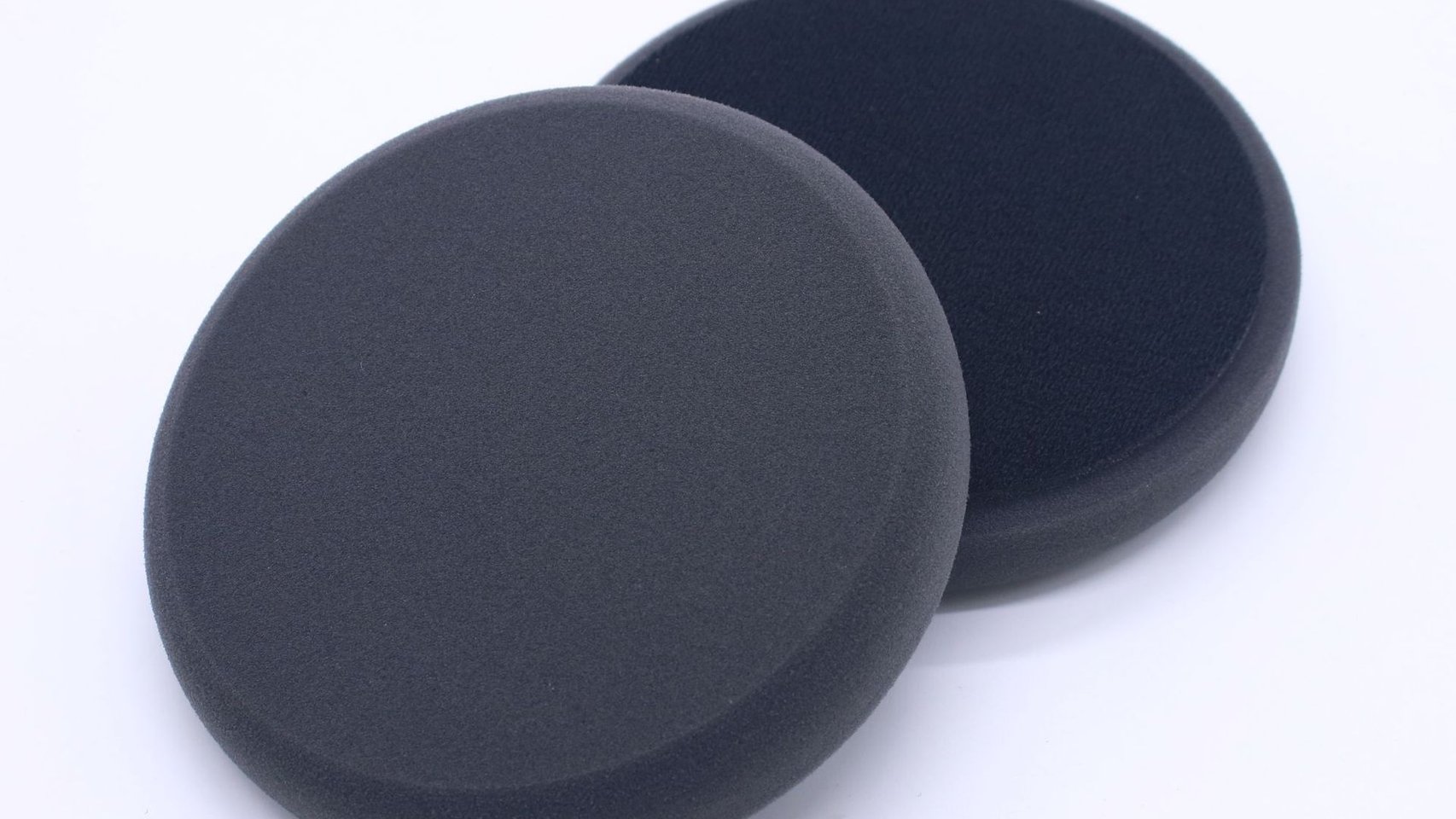
Use water-based polishing wax (such as DianYe J2) with a medium-hardness foam pad or wool pad. Speed: 1500-1800rpm, treating 50cm×50cm sections at a time. The goal is removing oxidation, swirl marks, and fine scratches — this is the key step in scratch repair.
After compounding, the paint may appear matte — don’t panic, this is normal. The compound has left fine micro-marks on the paint that need to be eliminated in the next step.
Step 3: Refining — Mirror Restoration
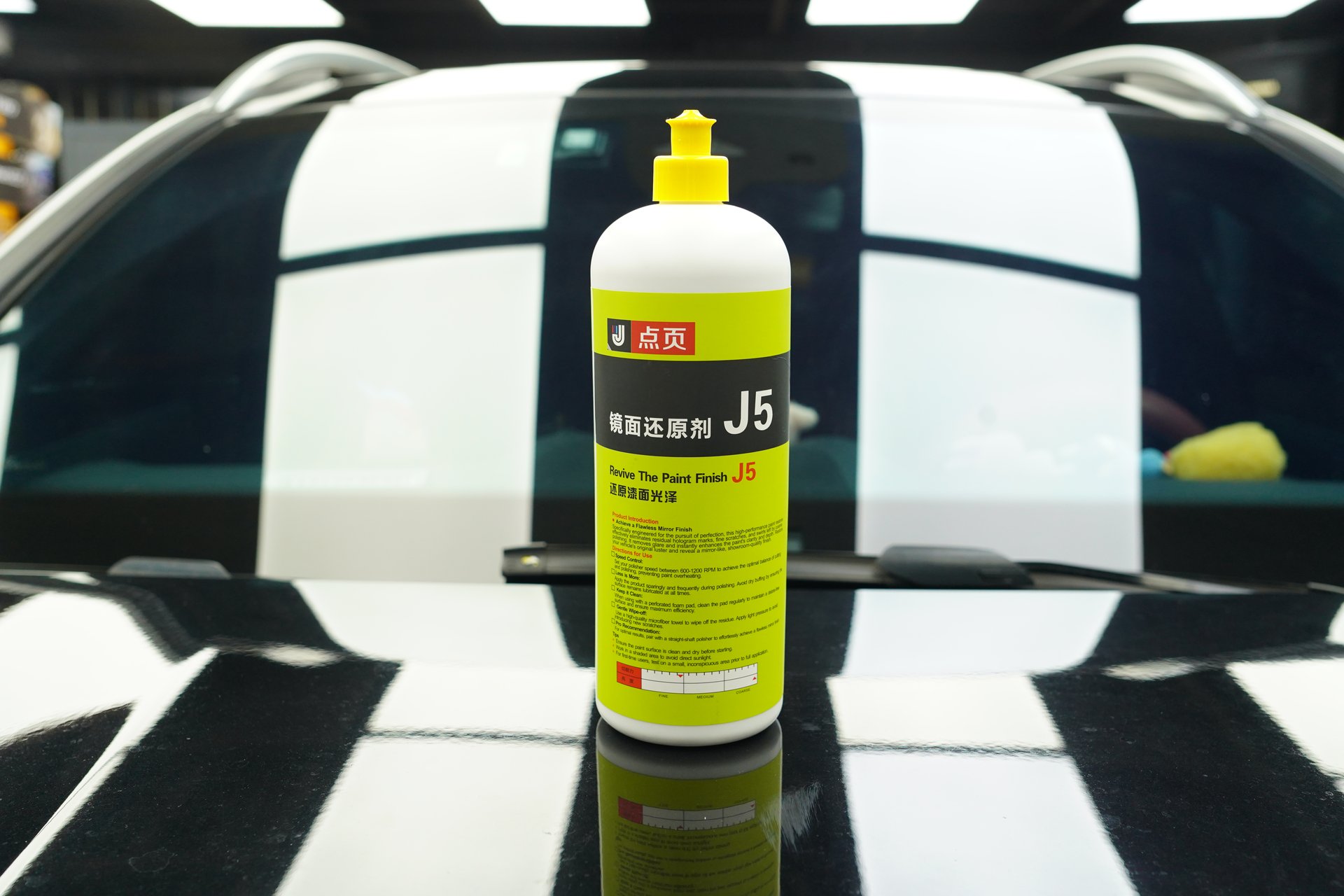
Switch to a mirror finish restorer (such as DianYe J5) with a fine foam pad. Reduce speed to 800-1200rpm, working in sections as before. This step smooths the micro-marks left by compounding and restores true mirror gloss. The final result of paint polishing depends on this step.
Important: This step must never be skipped. Skip the refining step, and fine纹路 will definitely be visible in sunlight, especially on black cars.
Step 4: Degreasing Inspection
Wipe the paint with a degreaser or isopropyl alcohol solution to remove all compound residue. Inspect the paint under strong light — this is the final “true result.” If the paint remains clear and glossy after degreasing, the paint care was done properly.
Step 5: Protection — Locking in the Results
Polishing is “corrective”; protection is “preservative.” Paint after polishing has no protective layer and will oxidize rapidly when exposed to air. Protection must be applied within 7 days:
- Waxing: DianYe X1 Quick Liquid Wax — simple and fast, protection lasts 1-2 months
- Ceramic coating: Longest-lasting protection (1-3 years), but expensive and requires professional application
- Sealant/glaze: A middle-ground option, protection lasts 6-12 months
5. Frequently Asked Questions
Q: I already used oil-based wax and now the paint looks hazy. What do I do?
First, degrease to remove the filler. Then use a fine-grit water-based compound with a fine foam pad to lightly re-polish, followed by a mirror finish restorer. The paint correction result this time will be genuine.
Q: How do I tell water-based wax from oil-based wax?
Check the product label. Products marked “water-based” are typically true cutting type; if a product boasts “instant shine” or “one-wipe brilliance” and contains大量 silicone oil, it’s most likely a filling type. DianYe J2 Water-Based Polishing Wax uses a water-based formula with real, verifiable cutting power — ideal for auto detailing shops.
Q: How often do I need to re-polish?
It depends on how well paint care is maintained. If you wax or apply ceramic coating promptly after polishing, the protection normally lasts 1-6 months. Without protection, the bare paint oxidizes and starts looking dull within 1-2 weeks. For日常 paint maintenance, wax every 2-3 months.
6. Summary
- A mirror finish that only lasts a few days is usually caused by oil-based compound filling — an illusion
- The degreasing test is the only standard for verifying truth — without degreasing after polishing, what you see may be a fake result
- Water-based polishing wax achieves true cutting; paint correction results are lasting and don’t “resurface”
- Complete process: Clean → Compound → Refine → Degreasing inspection → Protect — not a single step can be skipped
- Protection must be applied within 7 days after polishing — otherwise bare paint is worse than not polishing at all
Polishing isn’t about being “as bright as possible” — it’s about being “as genuine as possible.” Choose the right compound, perform the degreasing test, and apply timely paint care — do these three things, and the mirror finish will last far more than just a few days.