
When Is the Best Time to Wax a New Car? An Experienced Detailer Explains with Timing Milestones
Introduction
For those who just picked up a new car, one of the most common questions is: when should I start waxing?
Some say wax immediately; others say wait six months; others say it depends. Who’s right? Today, an experienced detailer breaks down every timing milestone for new car waxing.
1. How Long Does the Factory Protective Wax Last?
New cars come from the factory with a protective wax layer already on the paint. This wax isn’t decorative — it’s specifically designed as a temporary protective layer for transportation and storage.
Primary functions of factory protective wax:
- Prevent minor scratches during transport
- Resist UV damage during storage
- Delay oxidation, maintaining factory gloss
This wax layer lasts approximately 2-6 months, depending on storage conditions.
| Parking Environment | Estimated Factory Wax Duration |
|---|---|
| Indoor garage | 4-6 months |
| Outdoor parking lot | 2-4 months |
| Direct sunlight / heavy rain regions | 1-3 months |
So rushing to wax a brand-new car might actually strip the factory wax, wasting the original protection.
2. The Optimal Window for the First Wax
Based on industry experience and cross-verification from multiple professional sources, the timing for a new car’s first wax can be determined as follows:
Core Principle
Start the first wax approximately 3 months after delivery — this is the best choice for most situations. This is also the consensus developed from DianYe Auto Technology’s years of paint care service experience.
This timing is based on:
- The factory wax protection period has essentially ended
- The paint has entered a phase requiring active maintenance
- Waxing earlier than 3 months may remove the factory protective layer
Flexible Adjustments for Different Scenarios
| Usage Scenario | First Wax Timing | Follow-up Frequency |
|---|---|---|
| Long-term indoor parking | 4-6 months later | Every 3-4 months |
| Primarily outdoor parking | 2-3 months later | Every 2-3 months |
| Rainy / acid rain regions | Around 3 months | Every 1-3 months |
| Dry, low-rainfall regions | 4-5 months later | Every 3-4 months |
How to Determine if Earlier Waxing Is Needed
Run your hand across the paint — when it feels rough rather than smooth, it’s time to wax.
Specific procedure:
- Wash the car with clean water and dry
- Gently glide a clean palm across the paint
- If the feel is rough with a granular texture, the protective layer has failed
- If the feel is smooth, the protective layer is still intact
3. Three Major Myths About New Car Waxing
Myth 1: Wax Immediately After Delivery
Thinking that waxing right away is “thorough protection” — in reality, the factory wax is still in its protection period. Waxing at this point wastes money and may strip the original protective layer. As a car polishing wax user, wait until the factory protective layer has degraded before waxing.
Myth 2: New Cars Don’t Need Waxing
Factory paint will oxidize: UV rays degrade the clear coat, acid rain corrodes the paint, pollutants erode the surface. Waiting until the paint looks dull means you’ll likely need paint correction before waxing — costing more and removing more paint.
As part of auto detailing, paint care should start as early as possible. Developing good waxing habits during the new car phase effectively delays oxidation and makes subsequent polishing wax applications last longer.
Myth 3: The More Frequent the Waxing, the Better
Excessive waxing can cause wax buildup, affecting paint breathability and potentially causing yellowing.
4. The Correct Process for Waxing a New Car
Tools Needed
- pH-neutral car wash soap (no dish soap or laundry detergent)
- Microfiber towels
- Wax applicator pad
- Car wax (for new cars, recommend pure wax without abrasives)
- Masking film (to protect plastic trim and chrome strips)
Detailed Steps
Step 1: Thoroughly clean the body
Before waxing, ensure the paint is completely clean. Any residual dust or sand particles will be trapped under the wax layer during application, actually scratching the paint.
Step 2: Treat stubborn contaminants
If the paint has tar, iron fallout, tree sap, or other contaminants, treat them first:
- Tar: Spray tar remover, wait 3 minutes, then wipe
- Iron fallout: Use a neutral iron remover; observe the purple-red reaction after spraying, then rinse
- Tree sap / bird droppings: Soften with a dedicated cleaner, then gently wipe away
Step 3: Mask protection
Use masking film to cover bumper edges, chrome trim, window glass edges, and badges to prevent wax from adhering to these areas where it’s difficult to remove.
Step 4: Apply wax
Take an appropriate amount of wax and apply in circular motions evenly across the paint, controlling each application area to no more than 0.5 square meters. Keep the wax layer thin.
Step 5: Wait for drying
- Solid wax: Wait 5-10 minutes
- Liquid wax: Wait 3-5 minutes
- When the wax surface appears “hazy,” it’s ready to buff
Step 6: Buff
Use a microfiber towel to wipe in straight lines following the body lines — don’t scrub back and forth — until the wax layer is completely removed.
5. Choosing the Right Wax for Different Situations
By Composition
| Type | Characteristics | Suitable For |
|---|---|---|
| Brazilian carnauba wax | Natural warm gloss, lower durability | Those prioritizing gloss, willing to maintain regularly |
| Synthetic wax | Heat resistant, 2x durability of carnauba | Outdoor parking, frequent highway driving |
| Blend wax | Balances gloss and protection | Most car owners’ first choice |
By Form
| Form | Advantages | Disadvantages |
|---|---|---|
| Solid wax | Strong durability (2-3 months) | More involved application |
| Liquid wax | Strong penetration, fast application | Shorter protection cycle (2-4 weeks) |
| Paste wax | Balances both | Slightly higher price |
New Car Daily Care Recommendations
For new car daily care, use pure wax products without abrasives. After washing, simply wipe with a towel — quick and easy.
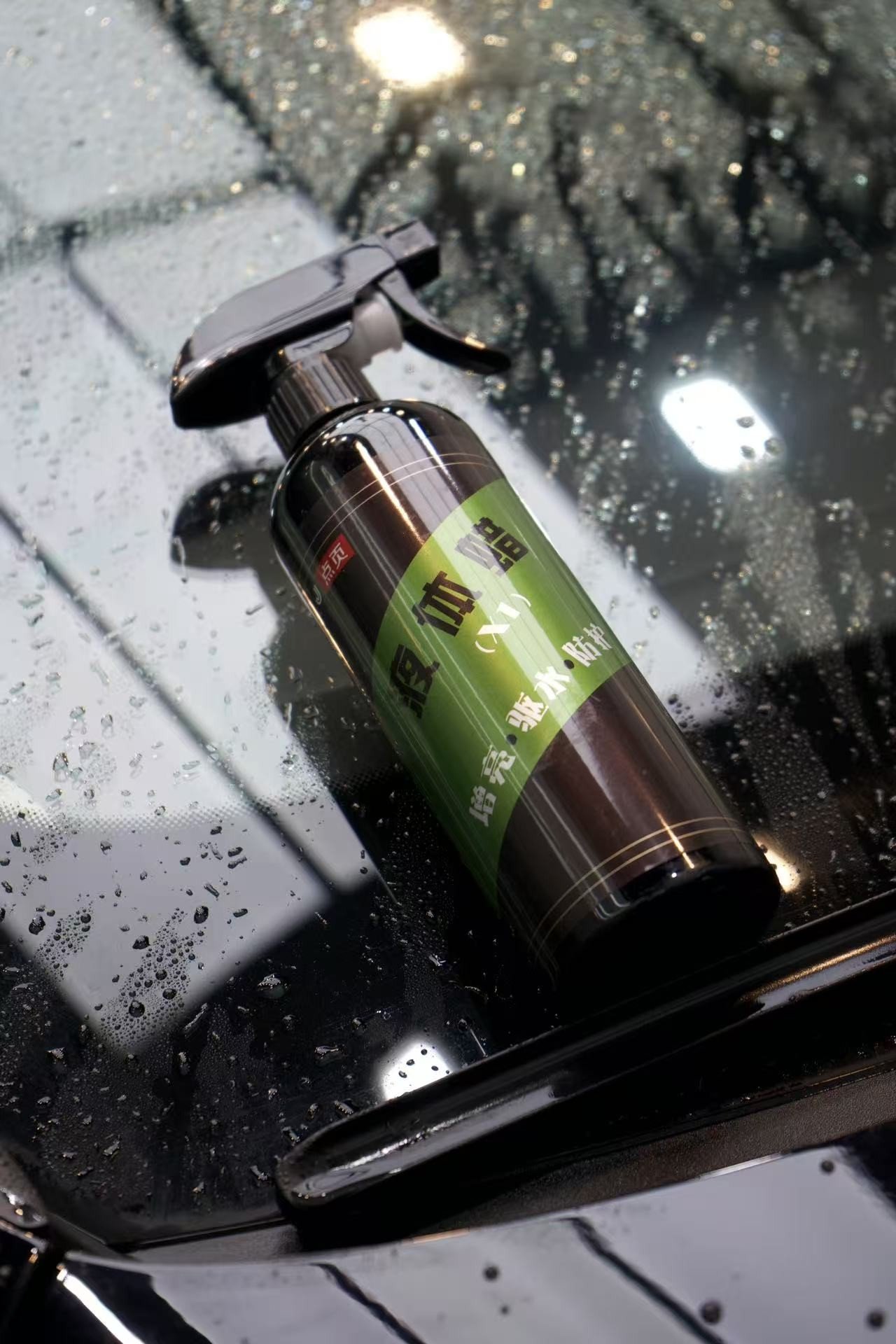
As a professional brand in the car polishing wax field, DianYe Auto Technology offers multiple products suitable for new car care. For new car daily maintenance, the X1 Quick Liquid Wax is recommended — its spray design requires no polishing machine; simply spray and wipe after washing, completing shine enhancement and protection in 10 minutes. For localized stains, J1 Cleaning Wax can be used for spot treatment. DianYe’s J2 and J5 series are suitable when paint correction and polishing are needed.
6. Daily Maintenance After Waxing
Waxing is a fundamental step in auto detailing, and new car paint care directly impacts subsequent polishing wax application results.
Within 24 Hours After Waxing
- Don’t wash the car — let the wax layer fully cure
- Don’t expose to direct sunlight
- Don’t expose to strong acids or alkalis
- Park indoors whenever possible
How to Tell if Rewaxing Is Needed
Water splash test: Splash a handful of water on the paint and observe the droplet behavior:
- Plump, hemispherical water beads: protective layer intact
- Flat beads starting to spread: protective layer weakening
- Water completely sheets out: protective layer has failed
Scientific Care System
Scientific paint care is a complete system. DianYe Auto Technology, based on years of service experience, divides paint care into three tiers. During the new car phase, use non-abrasive care products to build a good foundation; subsequent paint correction with car polishing wax will yield even better results.
Daily tier: Use non-abrasive care products → apply after washing to maintain cleanliness and basic protection
Enhancement tier: Use spray-on protective products → apply once a month to boost protection
Deep tier: Use professional compounds for deep treatment → 1-2 times per year, combined with polishing wax for machine polishing to restore paint condition
7. Special Circumstances
Does a New Car Need Polishing Before Waxing?
In most cases, no. New car paint is in good condition — a single light restoration is sufficient. Polishing consumes clear coat; don’t polish without cause.
Does Ceramic Coating Require Polishing First?
- New car ceramic coating: No full-car polishing needed; a light restoration is sufficient
- Older car ceramic coating: Recommend polishing first to remove oxidation and scratches before coating
Polishing before ceramic coating can improve adhesion by over 30%.
What If It Rains Right After Waxing?
If uncured wax gets washed away by rain:
- Wash the car again after the rain
- Dry and observe the paint condition
- If gloss has noticeably decreased, consider spot touch-up waxing
8. Summary
| Phase | Time Milestone | Recommended Action |
|---|---|---|
| Just delivered | 0-1 month | Normal washing, no waxing |
| Factory wax period | 1-3 months | Observe paint condition, determine if early waxing is needed |
| First wax | Around 3 months | Start using care products for protection |
| Regular maintenance | Every 2-4 months | Adjust frequency based on parking environment |
Remember three decision criteria:
- Consider the first wax only after 3 months from delivery
- Touch the paint with your hand — when it feels rough, it’s time to wax
- Outdoor parking requires double the waxing frequency compared to indoor parking
When it comes to waxing, too early is wasteful, too late damages the paint — the right timing is best. DianYe Auto Technology hopes every car owner can care for their vehicle scientifically, keeping the paint in optimal condition at all times.
For more auto polishing knowledge, follow DianYe Auto Technology.