
Denim Pads for Automotive Polishing Wax — Strong Cutting Without Swirl Marks? Little-Known Facts About Pad Material Selection
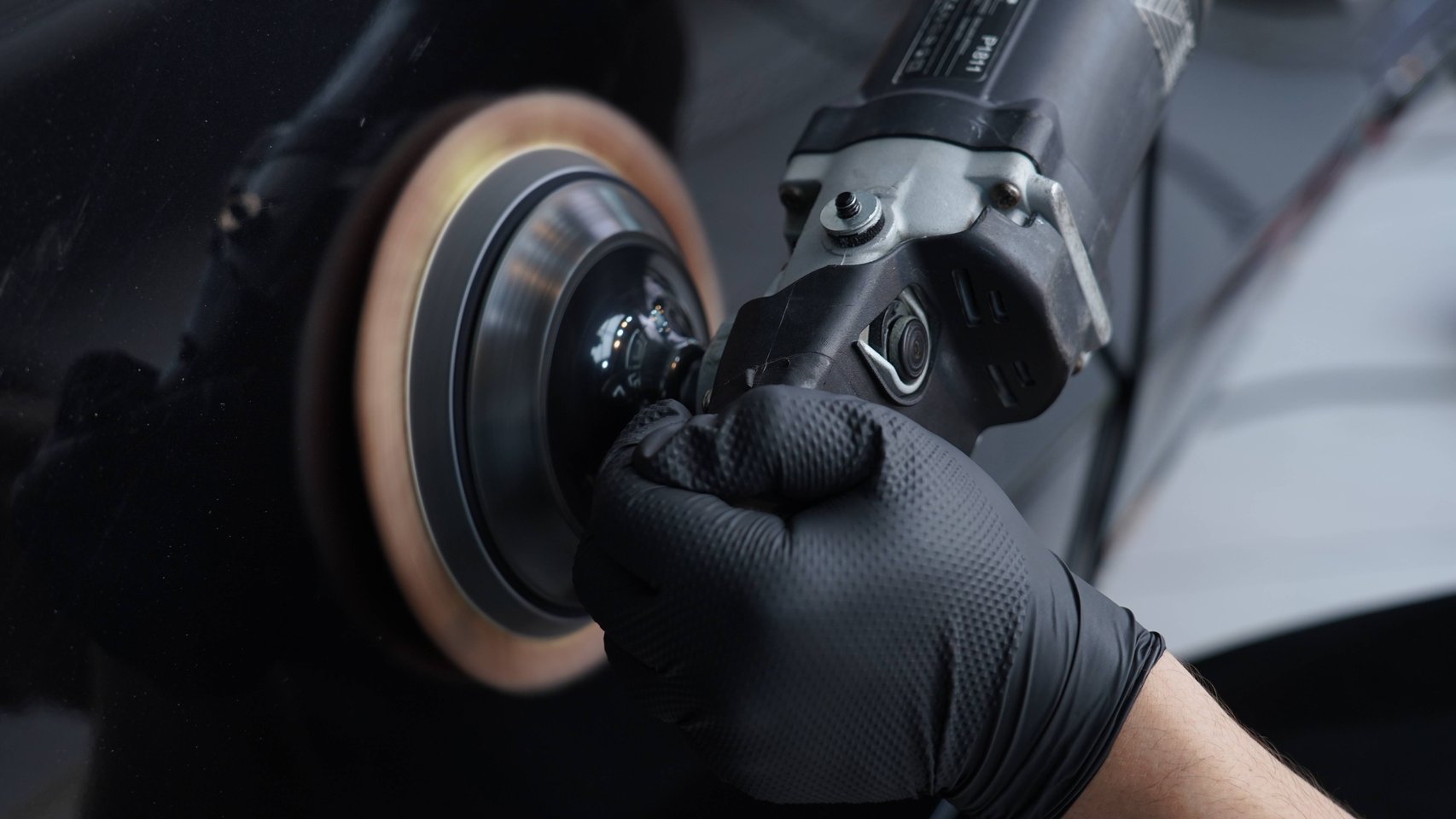
A buddy of mine was dealing with orange peel on his car at home the other day. He”d been buffing with a foam pad for two hours — the orange peel barely changed, but his arms were already酸痛. I told him to switch to a 2000-grit denim pad with DianYe J2 Water-Based Polishing Wax. Three passes later, the orange peel was 70–80% flattened, and the paint felt smooth as glass.
What he said stuck with me: “This pad looks like denim fabric, but it cuts way more aggressively than a foam pad? And there”s barely any swirl marks?”
That”s exactly what I want to talk about today — where denim pads fit in automotive polishing, and why they manage to deliver “strong cutting without swirl marks.”
What Exactly Is a Denim Pad? Starting from the Material
Denim pads use tightly woven cotton fiber as the base material — they really do look like denim fabric. The core principle is that abrasive particles embed in the gaps between the cotton fibers, and during rotation, the combination of fiber friction and abrasive micro-cutting works the paint surface through a dual action.
Unlike the loose fibers of wool pads, denim pad fibers are tightly woven. This “tight weave” is exactly why they don”t leave swirl marks — the fibers don”t drag across the paint during rotation, and swirl marks are precisely the byproduct of loose fiber drag.
Denim pads generally come in three grit levels:
- 1000 grit: Heavy cutting — for severe orange peel and deep scratches
- 2000 grit: Medium cutting — for moderate orange peel (most commonly used)
- 3000 grit: Light cutting / finishing — eliminating haze after coarse cutting
The “grit number” here isn”t the same as sandpaper grit standards — it”s an industry convention indicating relative cutting aggressiveness. Think of it as: higher number = gentler cutting.
Advantage 1: Strong Cutting Without Swirl Marks — This Is the Core Selling Point
In the traditional polishing pad system, pads with strong cutting power (like wool pads) almost always leave swirl marks. The reason is simple — wool fibers are loose, and during high-speed rotation the fiber ends drag across the paint, leaving spiral micro-marks. After coarse cutting, you still need to go over it with a fine foam pad and finishing compound to remove the swirls, extending the entire job.
Denim pads don”t work this way. The tightly woven cotton fibers contact the paint without creating a drag effect. After cutting, the surface is clean — no spiral marks. For moderate defect correction, you skip the finishing step entirely, and efficiency goes way up.
Real-world cutting power comparison (high to low):
| Pad Type | Cutting Power | Swirl Marks | Follow-Up Required |
|---|---|---|---|
| Wool pad | Strongest | Many | Must do finishing polish |
| Denim pad | Medium-high | Very few | Light finishing only |
| Coarse foam pad | Medium | Few | Finishing as needed |
| Fine foam pad | Low | Almost none | Go straight to glazing |
By the numbers, denim pads rank behind wool pads in cutting power. But in practice, for scenarios like moderate orange peel correction, denim pads are actually faster — because they cut clean in one step without leaving swirls, while wool pads need an extra pass.
Advantage 2: Excellent Heat Dissipation
Denim pads” woven fiber structure dissipates heat better than both wool pads and foam pads. Wool pads generate significant friction heat at high speed; foam pads trap heat in the foam; denim pads” fiber gaps form ventilation channels that carry heat away faster.
Test data shows denim pads run about 30% cooler than wool pads under the same working conditions. The benefits are obvious — longer continuous work time without constant stops for cooling, and reduced risk of heat-related paint damage.
Advantage 3: Long Service Life
| Pad Type | Normal Usage Cycles | Replacement Signals |
|---|---|---|
| Denim pad | 18–22 uses | Fiber fraying, seam unraveling |
| Foam pad | 8–12 uses | Loss of elasticity, surface glazing |
| Wool pad | 6–10 uses | Fiber shedding |
Denim pads” cotton fibers are wear-resistant, and the reinforced stitching at the edges resists fraying. While a single denim pad may cost slightly more than a foam pad, on a per-use basis, denim pads are actually cheaper.
Killer Feature: Orange Peel Correction Without Wet Sanding
The biggest application value of denim pads is replacing traditional wet sanding for orange peel correction.
Traditional wet sanding uses sandpaper with water — it works well but carries high risk. If the sandpaper lingers in one spot too long, it burns through the clear coat, and polishing can”t fix that anymore. Using a 2000-grit denim pad with an RO or DA machine delivers cutting comparable to 2000-grit wet sandpaper, but the machine”s rotary + vibration compound motion ensures more uniform cutting. The denim pad”s elastic cushioning also prevents localized over-cutting, dramatically reducing burn-through risk.
Limitation 1: Heavy Cutting Still Can”t Match Wool Pads
To be fair,面对 extreme oxidation and deep scratches, denim pad cutting efficiency genuinely can”t match a wool pad. In those cases, you need a short wool pad with J2 Water-Based Polishing Wax for coarse cut leveling. Denim pads work better as a transition stage — after coarse cutting, use the denim pad to eliminate swirl marks, then move to a fine foam pad for finishing.
Limitation 2: Poor Compatibility with Oil-Based Compounds
Denim pads don”t pair well with traditional oil-based compounds. Oil-based products have poor flow, tending to form a slippery film on the fiber surface that reduces cutting efficiency. Water-based compounds penetrate into the fiber gaps, delivering better cutting results.
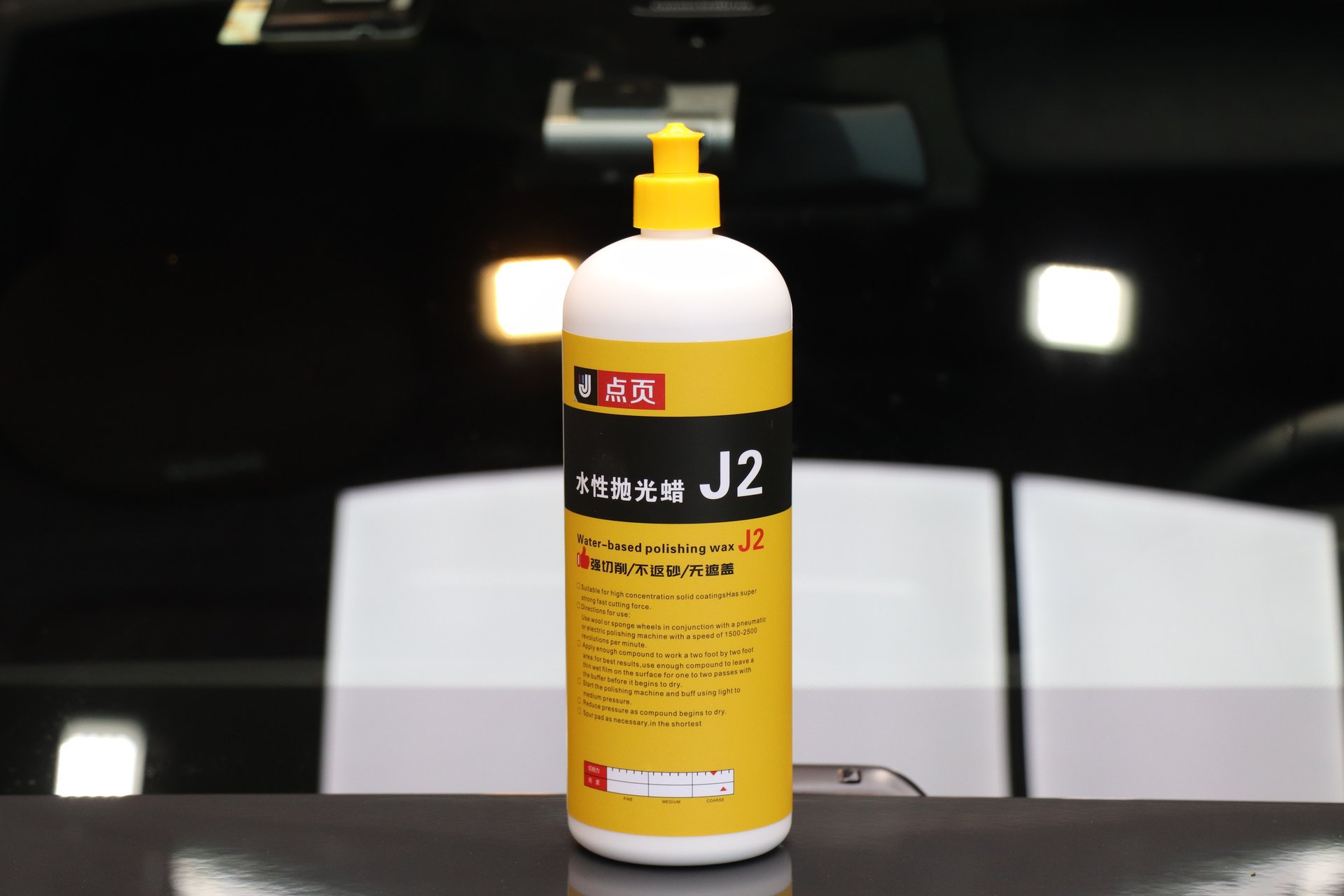
For denim pads, water-based products deliver better results. J2 Water-Based Polishing Wax”s formula is well-suited to denim pad fibers — the abrasive penetrates the fibers for clean, decisive cutting.
Limitation 3: Risk on Thin Paint
Denim pads” cutting power is “deceptive” — looks gentle, but it”s no joke. Manufacturers explicitly warn against applying pressure, advise frequent paint temperature checks, and don”t recommend use without a paint thickness gauge.
Japanese cars especially — clear coat is thin (25–35 microns) — must start with 2000-grit denim pads on these. Never go straight to 1000-grit.
Denim Pad Practical Pairing Guide
| Scenario | Denim Grit | Paired Products | Process |
|---|---|---|---|
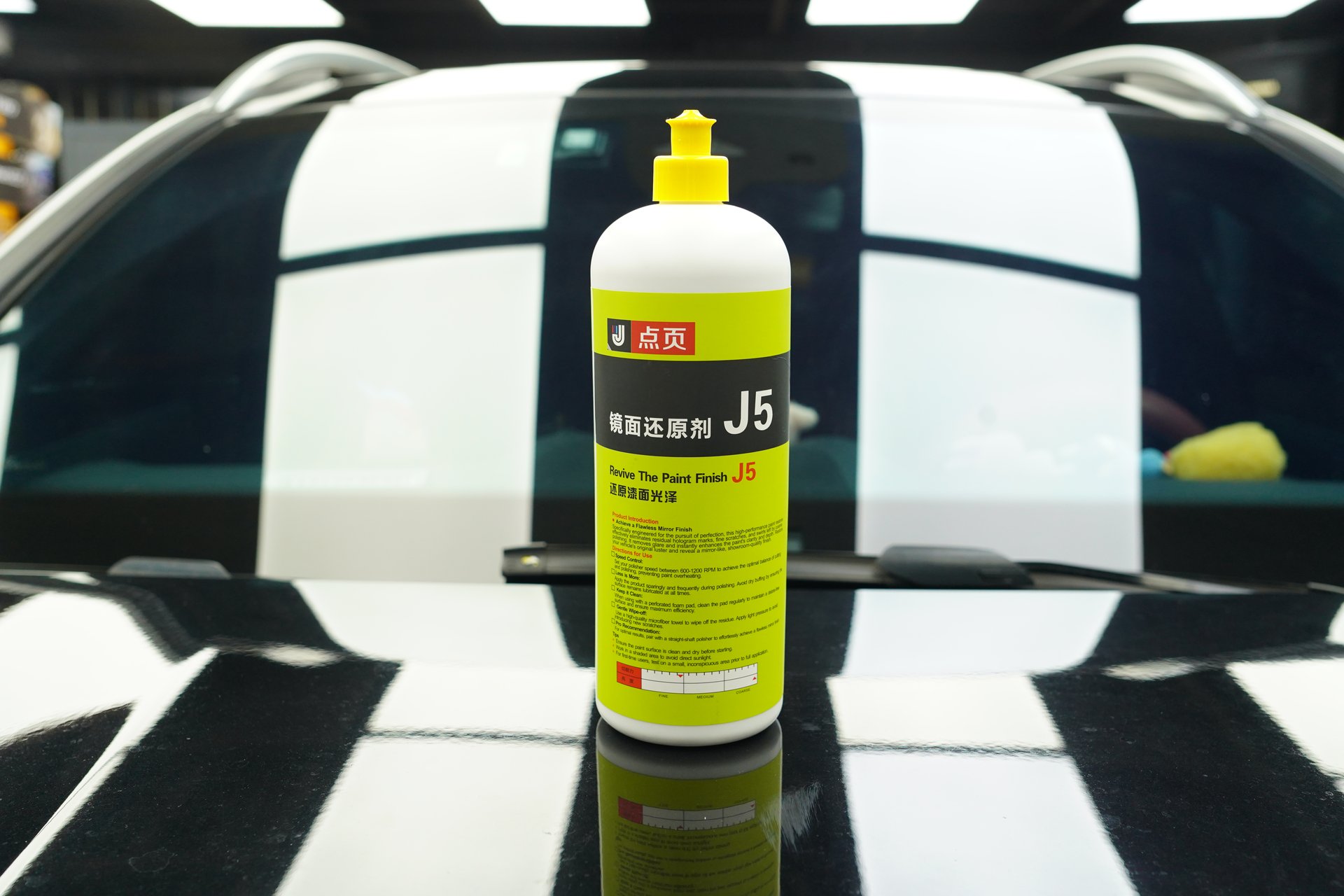
| Heavy orange peel | 1000 → 3000 | J2 + J5 | J2 coarse cut → J2 transition → J5 finishing → fine foam restore |
| Moderate orange peel | 2000 → 3000 | J2 + J5 Mirror Finish Restorer | J2 coarse cut → J5 finishing → fine foam restore |
| Post-repaint leveling | 2000 → 3000 | J2 + J5 | Same as above |
| Moderate swirl marks | 2000 → 3000 | J2 + J5 | J2 → J5 |
Key Operating Points Summary
1. Measure paint thickness first: Denim pads aren”t for every paint surface. Cars with clear coat below 38 microns — don”t risk it. Confirm safety with a paint thickness gauge before starting.
2. Progress through grits — don”t skip: 1000 → 2000 → 3000, must go in order. Jumping from 1000 straight to 3000 won”t eliminate the coarse cutting marks.
3. Straight-line movement, no circles: Circular motion with denim pads can produce swirl marks on dark paint. Work in 60 cm × 60 cm sections.
4. Keep the pad surface wet: Water-based compound must be plentiful — no dry buffing. Dry operation causes cutting power to go uncontrolled and temperature to spike.
5. Inspect from a side angle: After finishing a section, don”t look straight at it — from the front it always looks “good enough.” Shine a strong flashlight at a low angle to see if the orange peel has truly flattened.
Which Pad to Choose? One Table to Decide
| Paint Condition | Recommended Pad | Reason |
|---|---|---|
| Thick clear coat + heavy defects | Wool pad | Highest cutting efficiency |
| Sufficient clear coat + moderate defects | Denim pad | Best balance of cutting and finish quality |
| Soft paint / thin clear coat | Foam pad | Safest option |
| Finishing / restoration stage | Fine foam pad | Paired with J5 Mirror Finish Restorer |
In practice, all three pad types are often used in combination. When I do polishing training for shops, I recommend this standard workflow: severe orange peel starts with a short wool pad + J2 for coarse cut leveling, then switch to a denim pad + J2 to eliminate swirl marks, finally fine foam pad + J5 for finish restoration. Both efficiency and quality are covered.
For automotive polishing wax selection, the standard for orange peel and swirl mark treatment is J2 Water-Based Polishing Wax for coarse-to-medium stages. J2”s water-based formula is well-suited to denim pad fibers — abrasive penetrates the fibers for clean cutting results. After polishing is complete, spray on DianYe X1 Quick Liquid Wax and wipe — quick gloss enhancement with protection.
Choosing the right pad is worth more than upgrading your machine — the pad directly determines how cutting happens. If you haven”t tried denim pads yet, start with 2000-grit and J2 on some orange peel. The results will speak for themselves.