
The Root Causes of Paint Fading
As the vehicle’s first line of protection, automotive paint is constantly exposed to complex outdoor environments. Paint fading is one of the most common aging phenomena during vehicle use. Understanding the root causes is essential for developing scientific repair solutions.
Oxidation is the primary culprit: Automotive paint consists of clear coat, base coat, and primer layers. The outermost clear coat contains大量 resin components. These resin molecules slowly oxidize when exposed to oxygen in the air, gradually breaking molecular chains and causing the paint to lose its original gloss. As oxidation deepens, the paint progresses from slight gloss loss to obvious whitening and graying.
UV radiation accelerates aging: Ultraviolet light from sunlight catalyzes paint oxidation. Statistics show UV accounts for over 60% of paint aging. UV energy directly breaks the chemical bonds in resin molecules, causing rapid decomposition of the clear coat’s molecular structure. Vehicles parked outdoors age 3-5 times faster than garage-kept vehicles. This is why sun-facing panels (hood, roof) typically show fading first.
Acid rain and industrial pollutants: In modern urban environments, acid rain, industrial emissions, and road dust significantly damage paint. Acid rain (pH below 4.5) is highly corrosive, chemically reacting with paint components to form micro etch marks. These marks not only affect appearance but also break down the paint’s dense structure, allowing moisture and contaminants to penetrate deeper — a vicious cycle.
Other factors: Improper washing (alkaline detergents, rough tools), prolonged adhesion of bird droppings and tree sap, and frequent temperature fluctuations all accelerate the fading process.
Fading Severity Assessment
Repair approaches are not one-size-fits-all — they must be tailored to the fading severity. Professional paint care typically classifies fading into three levels. Accurate assessment is key to selecting the correct repair approach.
Light fading: Overall gloss reduction; under strong light, the paint lacks the depth of new car paint. Surface still feels smooth with no roughness. Typically found on 1-2 year old vehicles with good parking conditions. The clear coat structure remains intact with only surface-level mild oxidation.
Moderate fading: Obvious whitening/graying; significantly reduced gloss; differences from new paint visible even in normal lighting. Fine roughness detectable by touch, indicating thickened oxidation layer. Typically found on 3-5 year old vehicles with long-term outdoor parking. The clear coat has experienced measurable wear but is not fully depleted. Professional polishing can effectively restore it.
Severe fading: Serious whitening/yellowing, possibly with matte areas; rough, dry feel to touch. In extreme cases, the base coat may become visible. Typically found on 8+ year old vehicles with long-term neglect or severe corrosion exposure. The clear coat has extensively degraded or severely carbonized. Polishing cannot achieve satisfactory results.
Pro tip: Apply a small amount of J1 Cleaning Wax to an inconspicous area. If gloss noticeably recovers after wiping, it’s light oxidation. If improvement is limited, it may be moderate or severe fading.
Light Fading Solutions
For light fading, the core approach is cleaning surface contaminants, removing the mild oxidation layer, and restoring gloss — all through gentle care, avoiding excessive cutting.
Step 1: Deep Cleaning Use J1 Cleaning Wax for a full paint surface cleaning. J1 is specifically designed to remove various contaminants including bug splatter, tar, and industrial fallout. Apply a moderate amount to the paint, wipe in circular motions with a dedicated cloth, then remove with a clean microfiber towel. J1 cleans without additional cutting, making it ideal for light care scenarios.
After cleaning, follow up with a full-car wash using pH-neutral car wash soap to ensure no cleaner residue remains.
Step 2: Gentle Polish & Wax For the mild oxidation layer, use a professional wax containing微量 polishing agents. This type of wax removes the thinnest oxidation layer while forming a protective film. Use a DA polisher with a foam pad at 1500-2000 RPM, moderate pressure, in a cross-hatch pattern covering every panel.
For very mild oxidation, hand waxing also works. Though more time-consuming, it offers better pressure control, avoiding unnecessary clear coat removal.
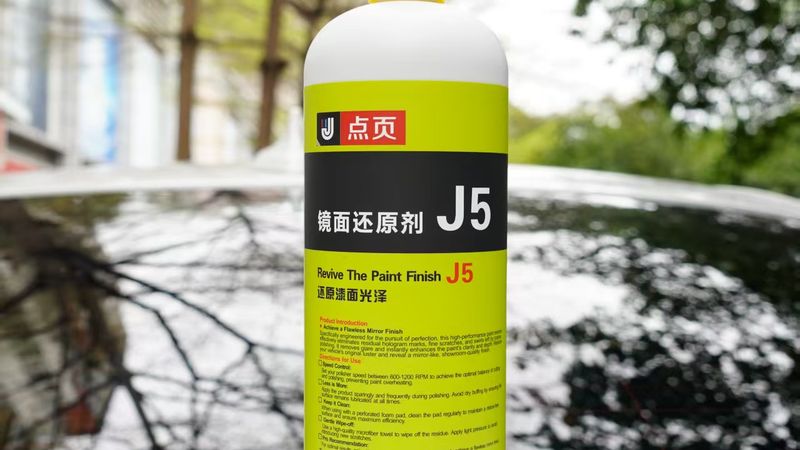
Step 3: J5 Mirror Restoration This is the finishing touch for light fading repair. J5 Mirror Glaze Restorer is a professional dust-free finishing product designed for the final step. Use J5 with a soft foam finishing pad at 1200-1500 RPM, light pressure, fast passes to perfectly eliminate any micro-scratches and hologms from the polishing process.
J5’s greatest advantage is its dust-free formula — no excessive dust during application, protecting the operator’s health and reducing post-work cleanup. After treatment, the paint displays a deep mirror-like gloss, restoring the new-car visual effect.
After the complete light restoration, apply a layer of high-quality carnauba wax or ceramic spray to extend the results.
Moderate Fading Solutions
Moderate fading means a thicker oxidation layer with measurable clear coat wear. A more aggressive repair approach is needed, following the “compound → restore → protect” three-step process.
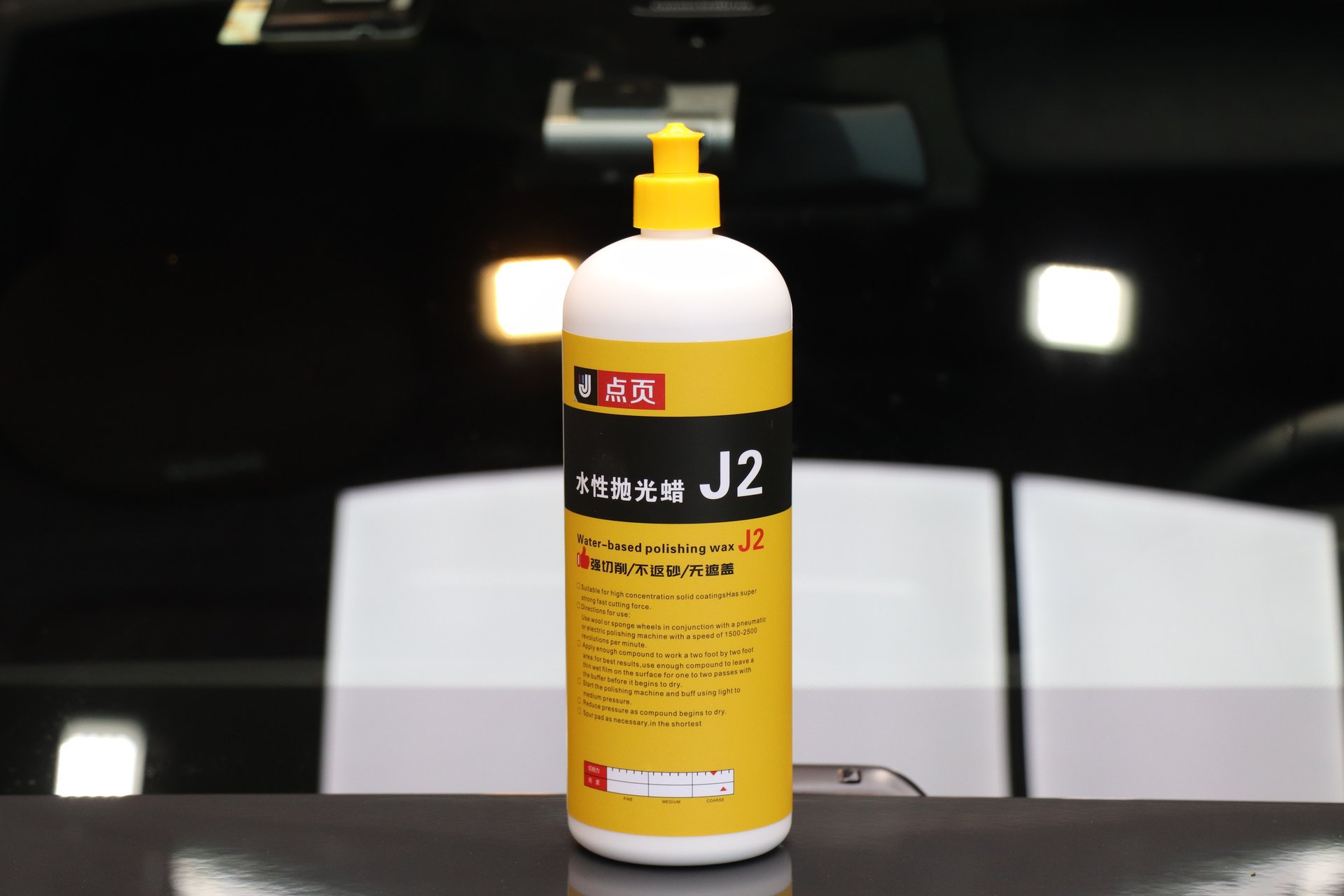
Step 1: J2 Compound to Remove Oxidation The core of moderate fading repair is using J2 Cutting Wax to remove the thick oxidation layer. J2 has powerful cutting ability, effectively removing deep oxidation, fading, and moderate scratches.
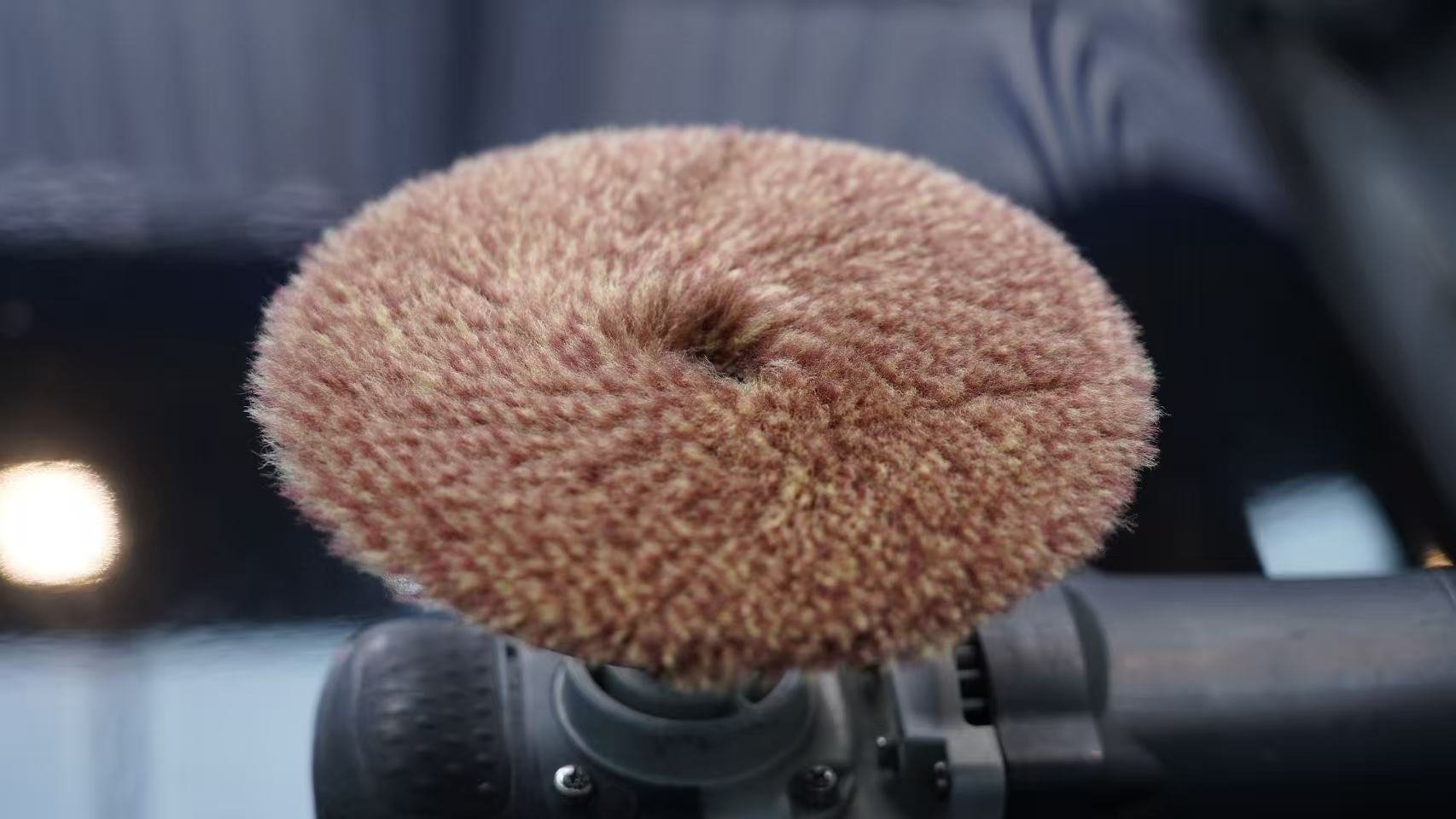
Key operating points: Use a rotary polisher with a wool pad or heavy-cut foam pad at 1800-2500 RPM with appropriate pressure. J2 produces some dust during application — this is normal and indicates the product is cutting. Work in sections no larger than 60×60cm, ensuring full product action before wiping clean.
The key to J2 compounding is “just right” — removing enough oxidation to reveal fresh paint without over-cutting and thinning the clear coat. Experienced technicians adjust pressure and passes in real time based on paint feedback.
Step 2: J5 Mirror Restoration After compounding, the oxidation is removed but micro polishing marks and hologms typically remain. J5 Mirror Glaze Restorer with a dedicated finishing pad at 1200-1800 RPM, light pressure, thoroughly eliminates all compounding marks. J5’s dust-free formula allows the technician to clearly observe the paint condition for optimal results.
After restoration, the paint should display a perfect mirror finish: no hologms in sunlight, sharp and clear reflections, rich and deep color.
Step 3: Ceramic Coating Protection The restored paint is like newborn skin — it needs strong protection to maintain results. We strongly recommend ceramic coating after moderate fading repair. The coating forms a dense silicon dioxide protective layer with hardness up to 9H, effectively resisting UV, acid rain, scratches, and other damage.
Post-coating, hydrophobic properties are dramatically improved, making daily cleaning easier. Quality ceramic coatings last 1-2 years, far superior to ordinary wax. For paint that has undergone one polishing cycle, ceramic coating protection is especially important for significantly delaying the next fading.
Severe Fading Solutions
When paint reaches severe fading, many owners still hope to restore it through polishing. However, polishing is no longer the ideal choice and may cause further damage.
Polishing limitations: Severe fading means the clear coat has extensively degraded or severely carbonized. Forced polishing may temporarily improve gloss, but at the cost of further thinning the remaining clear coat — or even burning through to the base coat. Moreover, severely oxidized paint has a loosened structure; gloss from polishing will be short-lived, often reverting within 1-2 months. This is why many owners feel “the more I polish, the faster it ages.”
The only effective solution: Repainting For severely faded paint, repainting is the only thorough solution. A professional full-car repaint includes:
- Completely sand damaged paint down to solid substrate
- Fill depressions and repair bodywork defects
- Spray epoxy primer for adhesion and corrosion protection
- Spray primer surfacer to fill micro imperfections and provide a flat base
- Apply base coat to restore the vehicle’s color
- Apply clear coat for gloss and protection
Choosing a reputable paint service is critical. Quality automotive paint should use factory-grade or equivalent paints, with a standard spray booth and regulated processes. A quality full-car repaint should last at least 5+ years with results approaching new-car standards.
Interim care suggestion: If a full repaint isn’t planned, consider using color-enhancing wax or black restoration wax for temporary improvement. These products contain pigment components that fill paint imperfections and visually improve fading, but effects last only 1-2 months without true protection.
Daily Care Habits to Prevent Fading
While repair is important, the smarter approach is preventing fading through scientific daily care. These proven preventive measures include:
Parking optimization Park in a garage or shaded area whenever possible, avoiding prolonged direct sunlight. For outdoor parking, use a quality car cover. Data shows vehicles using car covers long-term experience 70%+ slower paint aging. Choose covers with soft inner linings to avoid scratching.
Proper washing
- Use pH-neutral professional car wash soap; avoid dish soap or laundry detergent
- Use the two-bucket wash method to minimize wash-induced scratches
- Wash frequency: once per week; overly frequent washing also accelerates aging
- Wash promptly after rain to avoid acid rain residue
Regular care schedule
- Every 3 months: Use J1 Cleaning Wax for deep cleaning to remove bonded contaminants
- Every 6 months: Wax or reapply per the product’s protection cycle
- Annually: Professional paint inspection to determine if polishing is needed
- Increase frequency for vehicles driven in industrial or coastal areas
Prompt contaminant removal Bird droppings, bug splatter, and tree sap are highly corrosive — remove within 24 hours. Use a dedicated bug/tar remover; never scrape with fingernails. If limited resources are available, J1 Cleaning Wax can serve as an emergency treatment.
Early new car protection The first 3 months after taking delivery are the “golden period” for new car paint. Apply ceramic coating or PPF while the paint is in its best condition. PPF provides the most comprehensive protection, virtually isolating all external threats to factory paint — the preferred solution for premium vehicles.
Paint care is a long-term commitment. Scientific care philosophy + professional products + proper procedures = your vehicle stays beautiful and like-new for years.