
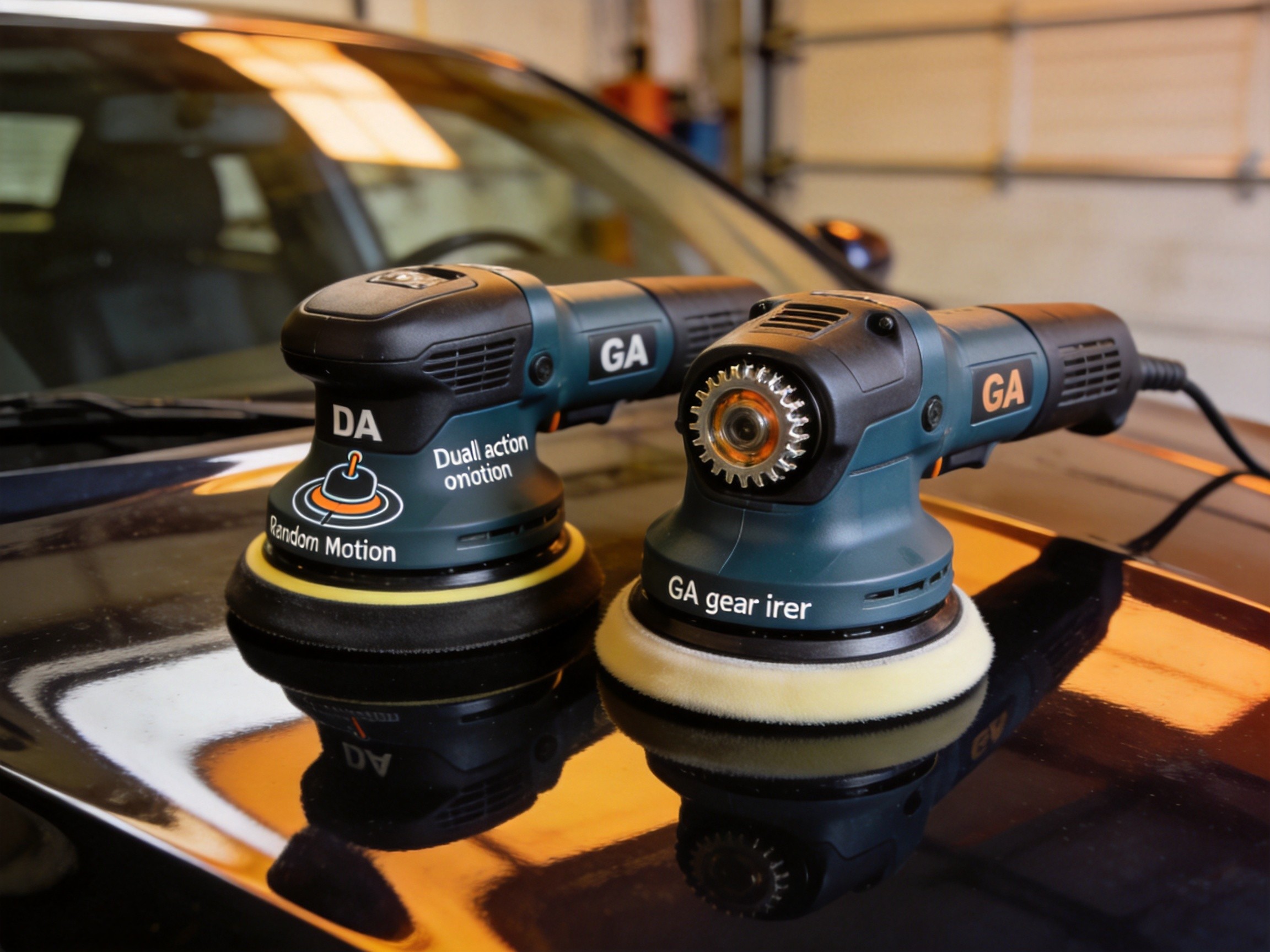
What’s the Difference Between DA and GA Polishers? Complete Guide to Dual Action Polisher Selection and Safe Operation
When it comes to auto paint polishing, choosing the right machine is even more important than choosing the right wax. Many people immediately ask “what car polishing wax gives the best results,” but if the machine type is wrong, even the best wax won’t perform.
In real-world technical service cases, we’ve encountered many situations like this: DIY enthusiasts spend good money on imported car polishing wax, only to pair it with an unsuitable polisher — either the cutting force is insufficient to remove scratches, or improper technique leaves swirl marks on dark paint. There are also new body shop technicians overwhelmed by DA, GA, and RO machines, unsure which to buy or learn first.
This article is dedicated to resolving DA vs. GA questions. Both are dual action polishers, and while the names sound similar, their working principles, safety characteristics, and ideal applications differ significantly. Understanding these differences ensures you choose the right machine, pair the right pads and wax, and achieve quality results.
1. Understanding the Concept: What Is “Dual Action”?
Whether DA or GA, the core feature is simultaneous dual motion — revolution (eccentric oscillation) and rotation (pad spinning). Think of Earth’s movement: while orbiting the sun, Earth also rotates on its axis.
When these two motions are superimposed, the pad’s path on the paint is no longer the simple concentric circles of an RO machine, but a complex trajectory composed of countless small ellipses. The greatest benefit of this complex trajectory is: abrasative particles don’t leave directional marks on the paint.
But while both DA and GA perform “dual action,” the source of rotation is completely different — and this is the fundamental distinction.
2. Core Difference: Is Rotation “Free” or “Forced”?
2.1 DA Machine: Rotation Is “Dragged” by Friction
A DA polisher (Dual Action Polisher) achieves rotation through free spin — as the eccentric shaft performs revolution motion, friction between the pad and paint surface “drives” the pad to rotate. The pad isn’t forced to spin; it’s “dragged” into spinning.
This means a critical characteristic: when the pad encounters significant resistance (such as edges, raised surfaces, or excessive pressure), rotation naturally slows or stops completely. The revolution continues, but rotation stops — cutting force drops sharply and heat buildup slows.
This is the physical basis for why DA machines are “beginner-friendly.” Even if you make an operational mistake and linger too long in one spot, the pad self-regulates by slowing down, making serious paint damage unlikely.
Motion trajectory characteristics: Random, irregular dual-orbital paths with constantly changing abrasion direction, producing virtually no holograms. This is why DA machines are used for final finishing on dark paint — they naturally avoid the “rainbow effects” that RO machines leave, visible only in direct sunlight.
2.2 GA Machine: Rotation Is “Locked” by Gears
A GA machine (Gear Action Polisher) adds a gear drive system to the DA design. While the eccentric shaft revolves, the gear mechanism forces the pad to rotate — rotation no longer depends on friction but is mechanically locked.
This means: even when encountering resistance, the gears continue forcing rotation, unlike the DA’s automatic slowdown. Cutting force is more sustained and stable, won’t “unload” with increased pressure.
But also means higher risk: The GA won’t stop due to resistance. If the operator lingers too long or applies excessive pressure in one spot, heat still accumulates rapidly. While safer than RO, the tolerance margin is clearly smaller than DA.
2.3 Core Differences at a Glance
| Comparison | DA (Free Rotation) | GA (Gear-Driven) |
|---|---|---|
| Rotation method | Friction-driven, free spinning | Gear-forced, deterministic rotation |
| Response to resistance | Rotation slows or stops | Continues forced rotation |
| Cutting force | Gentle | Medium to strong |
| Paint temperature | Lowest | Between RO and DA |
| Safety | Highest — nearly impossible for beginners to burn through | Medium — slightly higher risk than DA |
| Holograms | Virtually zero | Low, but slightly higher than DA |
| Price | Moderate | Higher |
| Market popularity | High (standard in professional shops) | Low (optional addition) |
| Representative models | RUPES LHR21, Flex XFE 7-15 | Flex XCE 8-125, Makita PO5000C |
3. Ideal Applications for DA and GA Machines
3.1 Best Use Cases for DA Polishers
The DA’s greatest advantages are safety + zero holograms, making it irreplaceable in these scenarios:
1. Beginners and DIY Enthusiasts
If you’re new to auto polishing, the DA is the only recommended choice. Simple reason: extremely high error tolerance. When skill is still developing, the DA pad auto-decelerates upon resistance, making paint burns or breakthrough nearly impossible. Paired with DianYe J3 3-in-1 Polishing Wax (medium cut) and medium foam pad for refining, or DianYe J5 Mirror Finish Restorer (fine polish) and fine foam pad for finishing — results are consistent, safe, and controllable.
2. Dark Paint Treatment
Black, dark blue, dark gray, and other dark paints are “hologram detectors” — any directional marks are fully visible in sunlight. The DA’s random trajectory naturally avoids holograms, making it ideal for dark paint polishing and finishing.
3. Final Mirror Restoration
Regardless of whether RO or GA was used for compounding and refining, the final finishing step should always be done with a DA. Because DA is the only type capable of truly “zero hologram” results. Use DA with fine foam pad and J5 Mirror Finish Restorer at 2000-2500 OPM — one pass achieves perfect mirror finish.
4. Wax Application and Sealant
DA at low speed with a microfiber pad or soft wax pad applies protection wax very evenly. After polishing, use DianYe X1 Quick Liquid Wax for a protective layer — DA at low speed provides thin, even coverage.
3.2 Best Use Cases for GA Polishers
The GA’s greatest advantages are sustained stable cutting force + dual action safety, suitable for:
1. Moderate to Severe Scratch Correction
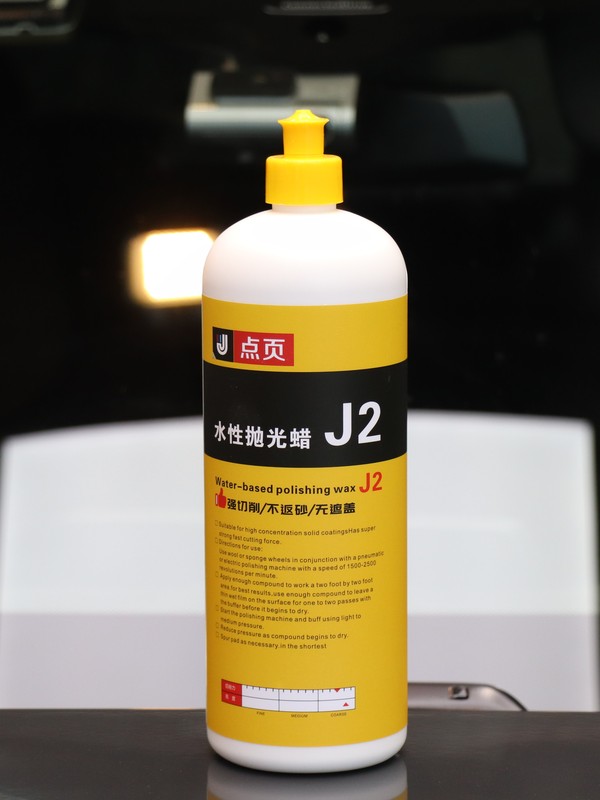
When scratches require strong cutting force but RO risk is too high, GA offers a middle ground. Higher cutting efficiency than DA, safer than RO. Paired with DianYe J2 Water-Based Polishing Wax (coarse cut) and medium-hardness foam pad, it handles moderate scratches and oxidation.
2. Large Flat Area Rapid Correction
GA’s forced-drive characteristic makes it more efficient than DA on large flat surfaces. For moderate to heavy correction on hoods, roofs, and other large areas, GA saves significant time.
3. Need Cutting Power Without RO Risk
For budget-conscious users or those unwilling to accept RO’s high risk, GA provides a relatively safe “middle path.” However, it must be acknowledged: GA cannot fully replace RO’s heavy correction capability.
3.3 Application Comparison Summary
| Scenario | DA | GA |
|---|---|---|
| Beginner practice | ⭐⭐⭐⭐⭐ | ⭐⭐⭐ |
| Dark paint | ⭐⭐⭐⭐⭐ | ⭐⭐⭐⭐ |
| Mirror finishing | ⭐⭐⭐⭐⭐ | ⭐⭐⭐ |
| Moderate scratches | ⭐⭐⭐⭐ | ⭐⭐⭐⭐⭐ |
| Large area rapid correction | ⭐⭐⭐ | ⭐⭐⭐⭐ |
| Wax/sealant application | ⭐⭐⭐⭐⭐ | ⭐⭐⭐⭐ |
| Curves/edges | ⭐⭐⭐⭐ | ⭐⭐⭐ |
4. Operating Methods for DA and GA Machines
4.1 DA Operation Key Points
Technique:
- Flat contact: Always keep the pad parallel to the paint surface, allowing the eccentric shaft to produce smooth sinusoidal motion. Tilting causes edge concentration of cutting force
- Cross-hatch pattern: One horizontal pass, one vertical pass, creating a grid pattern. Two passes’ marks cancel each other, ensuring uniform diffuse reflection
- Let the machine work: DA cutting force comes primarily from the pad-and-wax combination, not speed and pressure. Blindly increasing pressure and speed only wastes consumables
Speed Recommendations:
| Stage | Recommended Speed (OPM) | Key Points |
|---|---|---|
| Compounding | 4000-5000 OPM | Oxidation removal, paired with J2 Water-Based Polishing Wax |
| Refining | 3000-4000 OPM | Moderate scratches, paired with J3 3-in-1 Polishing Wax |
| Finishing | 2000-2500 OPM | Mirror finish, paired with J5 Mirror Finish Restorer |
Section-by-section work: Divide the hood into 6-8 zones, each approximately 50cm×50cm. 3-5 passes per zone, overlapping by half a pad width. Move slowly: compounding at 10-15cm/s, refining at 20-25cm/s. Wipe clean and inspect each zone before moving to the next.
4.2 GA Operation Key Points
GA technique is similar to DA, but with three key differences:
1. Stricter pressure control
Since the gears force rotation, GA won’t stop due to increased pressure. Excessive pressure causes over-cutting. Keep within machine weight + 10-15%; don’t intentionally press down.
2. Don’t move too slowly
GA’s sustained cutting force is stronger than DA’s. Too-slow movement causes localized over-polishing. Maintain 15-20cm/s.
3. Switch to DA for finishing
GA may leave slightly more visible micro-marks than DA. For the final finishing step, switch to a free-rotating DA machine with J5 Mirror Finish Restorer and fine foam pad to ensure zero hologram results.
5. Complementary Relationship: DA/GA vs. RO Machines
Professional shops standardly configure RO + DA, with GA as an optional addition. This isn’t coincidence — each machine has its designated role:
| Process | Recommended Machine | Reason |
|---|---|---|
| Compounding (deep scratches / heavy oxidation) | RO | Strongest cutting force, highest efficiency |
| Refining (eliminating compounding marks) | DA or GA | Safely removes RO-induced holograms |
| Finishing (mirror effect) | DA | Zero holograms, best final result |
The complementary logic is clear: RO handles “quantity” — rapidly removing large-area damage; DA handles “quality” — eliminating secondary marks left by RO, achieving perfect mirror finish. GA attempts to find a middle ground but in practice “isn’t as efficient as RO for correction, nor as refined as DA for finishing” — which is the fundamental reason for its lower market popularity.
6. Pad and Wax Pairing for DA/GA Machines
6.1 Complete Three-Step System
| Stage | Machine | Pad | Compound | Speed |
|---|---|---|---|---|
| Compounding | RO | Short wool pad | J2 Water-Based Polishing Wax (coarse cut) | 1500-1800 RPM |
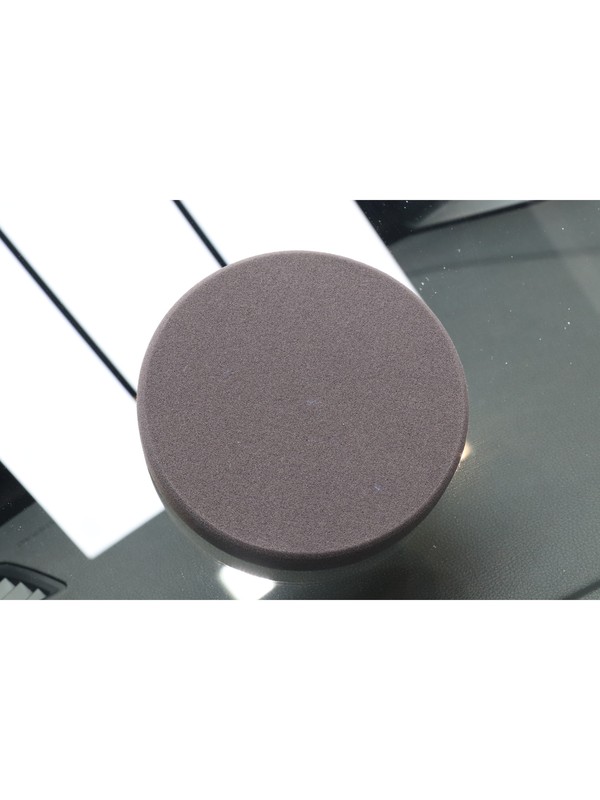
| Refining | DA | Medium foam pad | J3 3-in-1 Polishing Wax (medium cut) | 3000-4000 OPM |
| Finishing | DA | Fine foam pad | J5 Mirror Finish Restorer (fine polish) | 2000-2500 OPM |
| Protection | DA or by hand | Microfiber towel | DianYe X1 Quick Liquid Wax (protection wax) | Low speed, even coverage |
6.2 Simplified Two-Step Method (Recommended for Daily Care)
Suitable for most vehicles with light to moderate damage:
| Step | Machine | Pad | Compound | Speed |
|---|---|---|---|---|
| Step 1 | DA | Medium foam pad | J3 3-in-1 Polishing Wax | 3000-4000 OPM |
| Step 2 | DA | Fine foam pad | J5 Mirror Finish Restorer | 2000-2500 OPM |
6.3 Light Maintenance One-Step Method
| Step | Method | Product |
|---|---|---|
| Decontamination + light correction | DA at low speed or by hand | DianYe J1 Cleaning Wax 200g |
| Protective layer | DA at low speed or by hand | X1 Quick Liquid Wax 500ml |
Note: J1 Cleaning Wax application method is apply and wipe directly, no waiting required. Don’t confuse it with products that need curing time.
7. Common Mistakes and Pitfall Guide
| Mistake | Consequence | Correct Approach |
|---|---|---|
| Increasing DA pressure to boost cutting | Cutting force drops instead (pad stalls), wastes consumables | Find optimal speed range; rely on pad+wax combination |
| Not switching to DA for GA finishing | May leave micro-marks, visible on dark paint | Switch to DA + fine foam pad + J5 for final finishing |
| Using DA for heavy correction | Extremely low efficiency, unsatisfactory even after multiple passes | Use RO + J2 coarse cut wax for heavy correction first |
| Mixing different compounds on one pad | Coarse residue causes secondary scratching | Use separate pads for each stage, swap immediately |
| Beginners starting with RO | High risk of burning paint or polishing through | Start with DA; consider RO only after mastering technique |
| Polishing the whole car in one go | Can’t assess actual results per area | Work section by section; wipe and inspect after each zone |
8. Purchasing Advice: Should You Buy DA or GA?
Choose DA if:
- You’re a beginner or DIY enthusiast buying your first polisher
- Primarily treating light to moderate scratches, swirl marks, and oxidation
- Frequently working on dark paint
- Budget allows for only one machine
Choose GA if:
- You have polishing experience and can control pressure and speed
- Frequently treating moderate to heavy scratches
- Need large flat area rapid correction
- Already own a DA and want a more efficient supplement
Ultimate recommendation: If budget allows only one machine, choose DA. DA has broader application range, higher safety, and greater error tolerance. After your skills improve, add RO or GA based on actual needs.
Professional shop configuration order: DA first (essential) → RO next (for heavy correction) → GA optional.
Conclusion
Both DA and GA polishers are extremely useful tools in auto paint polishing, but their positioning and operating methods differ significantly. DA excels in safety and zero holograms — the first choice for beginners and final finishing; GA excels in sustained cutting force — ideal for moderate to heavy rapid correction.
Regardless of which machine you choose, pad-and-wax pairing and operating technique matter more than the machine itself. A suitable polisher paired with the correct car polishing wax and proper technique yields far better results than a high-end machine paired with the wrong approach.
If you’re just starting paint polishing, begin with DA + J3 medium cut wax + J5 finishing agent — this combination handles most daily care needs. Expand equipment and technique gradually as you gain experience.
Search “DianYe Auto Technology” for more professional paint polishing knowledge and operation guides.