

Mirror Finish Only Lasts a Few Days After Polishing? One Trick to Verify If It’s Real
Have you ever experienced this:
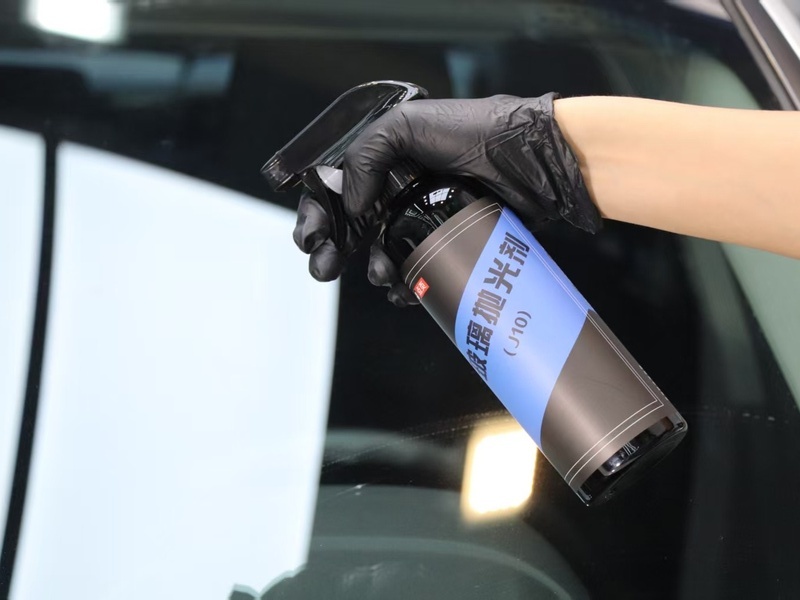
You spent two or three hours carefully polishing. When finished, the paint was like a mirror — you could see clear reflections when light hit it. You parked the car, fully satisfied, feeling the money and effort were well spent.
Then three to five days later, you look again — the mirror finish is gone. The paint has gone gray and dull, almost as if it was never polished.
What happened? Was the polishing technique flawed? Or does polishing naturally only last a few days?
In this article, I’ll teach you a verification method to determine if your polish is “genuinely bright” or “falsely bright.” This method is used frequently in DianYe’s customer consultations. Understand this, and whether you do the work yourself or go to a shop, you’ll always know what’s going on.
1. First, Clarify: What Is a True Mirror Finish?
Before discussing verification methods, we need to align on one thing: what qualifies as a “mirror finish”?
Many people think “the paint looks very shiny” equals mirror finish. This isn’t accurate enough.
A true mirror polish result isn’t about “brightness” — it’s about clarity.
Consider the analogy:
- Ordinary gloss: Like looking at a light through frosted glass — you know the light is there, but can’t see details
- Mirror finish: Like looking in a mirror — clearly reflects surrounding object outlines with no light scattering
The difference lies in the microscopic flatness of the paint surface. When the paint is sufficiently flat, light reflects directionally like a mirror; when the paint has micro-imperfections, light scatters, appearing “bright but not clear.”
So, the essence of mirror polish is ultimate paint flatness, not achieved through any “shine-boosting formula.”
Understanding this, you can see why some “mirror finishes” don’t last — because they were never true mirrors to begin with.
2. Why Does Your “Mirror Finish” Disappear in Days?
Rapid mirror finish degradation usually stems from these causes:
Cause 1: “False Brightness” from Wax or Silicone Oil Coverage
This is the most common cause.
Some polishing products, chasing “instant results,” add大量 wax or silicone oil to their formulas. During polishing, these components fill the paint’s micro-pores and fine纹路, forming a smooth overlay.
Right after application, the paint does look very shiny — but this isn’t a mirror finish from the paint’s own flatness. It’s an illusion created by wax filling.
This wax or silicone oil layer has weak adhesion and can’t survive multiple washes or日常 wiping. Once this overlay is worn or washed away, the paint’s true condition is exposed — still the original scratched, oxidized, uneven surface.
This is why your “mirror finish” only lasted a few days.
Cause 2: Incomplete Polishing Process — Skipping the Finishing Step
As mentioned earlier, a complete polish should have three stages: compounding to level, refining to brighten, finishing to restore.
If you skip the final finishing step, the paint may look “bright enough,” but micro-marks from refining remain. These aren’t obvious right after completion, but over time — with paint oxidation and contaminant buildup — problems emerge.
Paint without the finishing step has an unstable mirror finish that degrades quickly.
Cause 3: No Post-Polish Protection
Even with excellent polishing technique, if follow-up protection is neglected, the mirror finish will fade quickly.
After polishing, the paint is “naked” — clean, smooth, but vulnerable. Without promptly applying a protective layer, airborne contaminants, UV rays, and water spots from routine washing rapidly attack the paint.
Polishing determines the paint’s potential; protection determines how long that potential lasts.
Cause 4: Environmental Factors Accelerate Degradation
If you frequently drive in these conditions, mirror finish degrades faster:
- Outdoor parking with长期 sun exposure
- Near industrial areas with high air pollution
- Excessive washing frequency or improper washing methods
- Frequent highway driving with sand/gravel impact on paint
All these factors accelerate oxidation and micro-scratch formation, making the mirror finish hard to maintain.
3. One Trick to Verify: The Degreasing Test
Given all these causes, how do you determine if your polish is “genuinely bright” or “falsely bright”?
Here’s a verification method used by professional detailing shops: the degreasing verification method.
The principle is simple: use isopropyl alcohol degreaser to completely remove wax, silicone oil, and all overlay substances from the paint, revealing the “bare paint’s” true state. If the paint still has gloss and clarity after degreasing, the polishing was thorough. If the paint immediately goes dull after degreasing, the previous “brightness” was fake.
Materials Needed
- Isopropyl alcohol (IPA): Available at chemical supply stores or online; 70%+ concentration is sufficient
- Two clean microfiber towels
- Spray bottle (optional)
Isopropyl alcohol is a common degreaser with strong volatility and minimal residue — widely used in the auto detailing industry for inspection. If IPA isn’t available, a dedicated paint degreaser can substitute.
Procedure
Step 1: Normal Car Wash
Wash the car first to remove surface dust and dirt. This basic cleaning ensures the degreaser acts directly on the paint.
Step 2: Prepare Degreasing Solution
Dilute isopropyl alcohol and water 1:1 in a spray bottle. If using 70% concentration IPA directly, no further dilution needed.
Note: IPA has a somewhat irritating odor. Wear a mask and ensure ventilation during use.
Step 3: Sectional Test
Choose a paint section (e.g., half the hood). Spray the degreasing solution on the towel, then vigorously wipe the paint. Apply slight pressure to ensure the degreaser fully contacts the paint.
After 10-15 back-and-forth wipes, flip to a clean towel section and wipe again to ensure all dissolved wax is fully removed.
Step 4: Compare and Observe
Compare the treated area with the adjacent untreated area:
- If the treated area still has obvious gloss and you can see clear reflections under light, your polishing was thorough and the paint’s flatness is sound.
- If the treated area immediately goes dull, creating a stark contrast with the untreated area, the previous “mirror finish” was a wax-filling illusion — the polishing didn’t truly flatten the paint.
Result Interpretation
| Post-Degreasing Result | Meaning | Follow-Up Recommendation |
|---|---|---|
| Still glossy and clear | Genuine polishing skill | Just apply proper protection |
| Immediately dull and gray | Polishing was an illusion | Must re-polish; ensure complete process |
| Slight gloss reduction but not obvious | Polishing mostly complete with minor wax residue | Within normal range; apply protection |
The value of this method: It distinguishes “skill work” from “material work.”
A true mirror finish is achieved through correct polishing technique, not dependent on any “instant shine” additives. The degreasing test strips away these additives, revealing the paint’s true condition.
4. How to Make the Mirror Finish Truly Last?
After verifying polishing quality, the next question is: how to make it last longer?
1. Ensure Complete Polishing Process
As discussed, a complete polish is: compound to level → refine to brighten → finish to restore. Not a single step can be skipped.
Especially the final finishing step — it’s the key to achieving a true mirror finish. Using ultra-fine finishing compound, it completely eliminates micro-marks from the first two steps, bringing the paint to ultimate flatness.
Recommended pairings:
- Compounding: DianYe J2 Water-Based Polishing Wax (J2 for short) + short/long wool coarse pad
- Refining: DianYe J3 3-in-1 Polishing Wax (J3 for short) + fine foam / long wool fine pad
- Finishing: DianYe J5 Mirror Finish Restorer (J5 for short) + fine foam pad
2. Apply Protection Promptly After Polishing
Polishing “adds value” — improving the paint; protection “preserves gains” — keeping that good state longer.
After polishing, immediately apply a wax or coating:
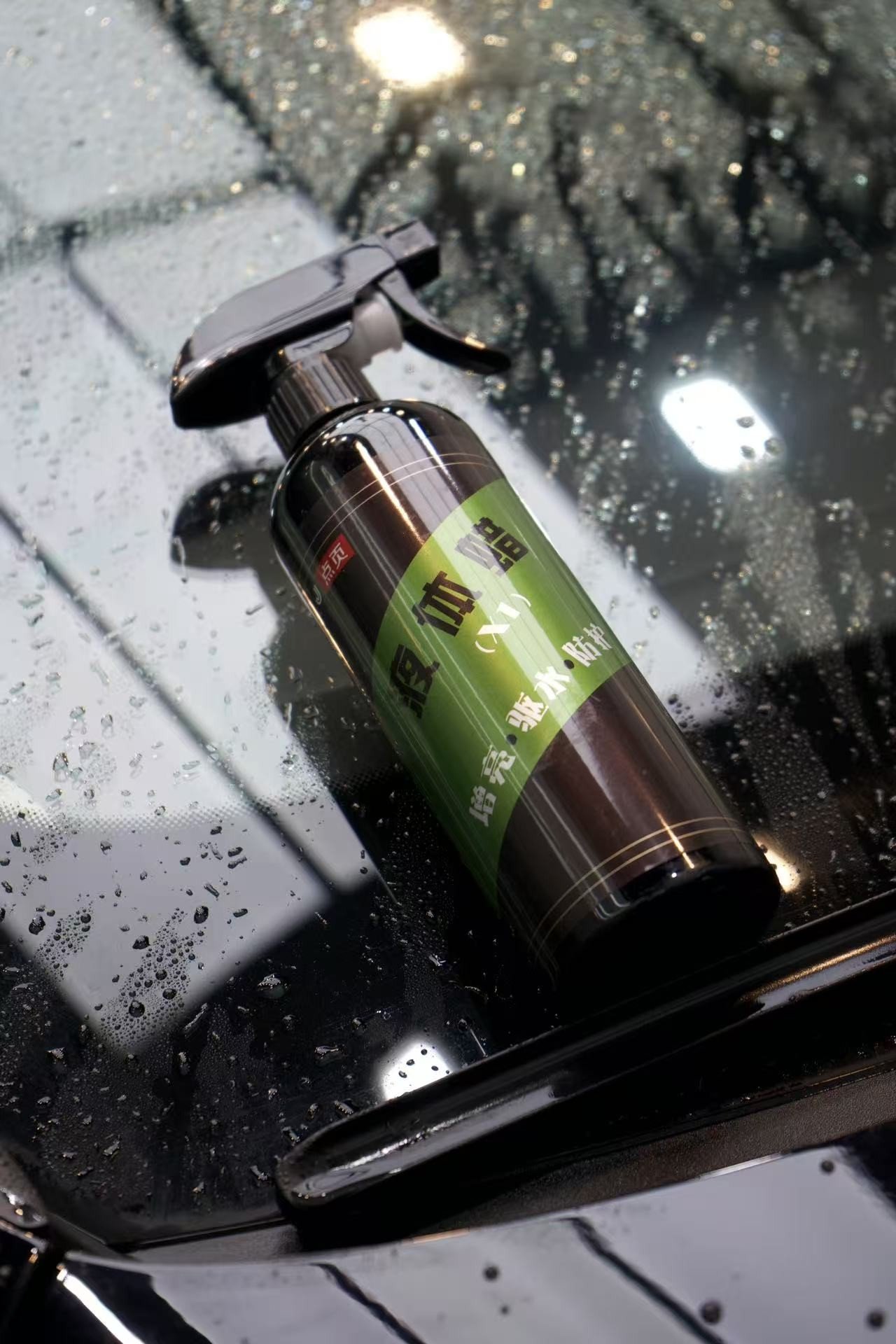
- Waxing: The most basic protection — simple operation, low cost. Recommended: DianYe X1 Quick Liquid Wax (X1 for short) — easy application, fast drying, forms a shiny protective film on the paint.
- Sealant/coating: Longer-lasting protection, but more complex application and higher cost.
Regardless of which protection method you choose, the key is to apply it promptly after polishing — don’t let the paint stay “naked” for long.
3. Maintain Proper Daily Care
How long the mirror finish lasts depends largely on daily care:
- Washing frequency: Recommend every 1-2 weeks — not too frequent. Use soft sponges or wash gloves; avoid stiff brushes.
- Car wash soap: Use pH-neutral car wash soap; avoid strong alkaline cleaners that accelerate wax breakdown.
- Drying method: After washing, use a clean microfiber towel to blot dry — don’t rub vigorously back and forth.
- Regular wax replenishment: Rewax every 1-2 months to maintain the protective layer.
4. Optimize Parking Environment When Possible
If conditions allow, park in an underground garage or covered area. Prolonged sun exposure is the number one enemy of paint oxidation, accelerating mirror finish degradation.
5. Common Questions Q&A
Q: Will the degreasing test damage the paint?
A: No. Isopropyl alcohol is a volatile solvent that evaporates quickly after wiping, leaving no residue on the paint. It doesn’t corrode the clear coat — it only dissolves surface wax and oils. Many professional detailing shops use this method for paint preparation before ceramic coating and PPF installation.
Q: If I don’t have IPA, what can I use instead?
A: You can purchase a dedicated automotive paint degreaser with similar effectiveness to IPA. Don’t substitute with ethanol (alcohol) — ethanol’s degreasing ability is inferior to IPA and may contain water or other additives.
Q: How long does a mirror finish normally last after polishing?
A: It depends on polishing quality, protection method, and driving environment. With proper polishing technique, good protection, and appropriate daily care, a mirror finish can last 3-6 months or longer. But if it’s just “false brightness,” it may disappear in days to a couple weeks.
Q: Do I need to do the degreasing test after every polish?
A: No. The degreasing test is mainly used in two situations: verifying newly completed polishing quality; and investigating “why did the mirror finish fade so quickly.” It’s not needed for routine maintenance.
Q: The paint looks terrible after degreasing — do I need to re-polish?
A: Yes. If the paint is noticeably dull and lacks gloss after degreasing, the previous polishing genuinely wasn’t adequate — the paint’s flatness is insufficient. You need to re-polish following the correct three-step process, not simply cover it with wax.
6. Summary
When a mirror finish only lasts a few days after polishing, it’s usually not that “polishing results are naturally like this” — rather, the polishing quality has issues or protection was neglected.
The degreasing verification method is a simple, effective inspection technique to distinguish “genuine brightness” from “false brightness.” If the paint goes immediately dull after degreasing, your polishing likely relied on wax filling and needs to be redone.
To make the mirror finish truly last, remember three key points:
- Complete process: Compound → Refine → Finish — not a single step can be skipped
- Prompt protection: Apply wax or coating as soon as possible after polishing
- Daily care: Proper washing, regular wax replenishment, avoid sun exposure
Get these right, and maintaining a mirror finish for months is entirely achievable.
Product pairing recommendation: For compounding, use DianYe J2 Water-Based Polishing Wax (J2 for short); for refining, use DianYe J3 3-in-1 Polishing Wax (J3 for short); for finishing, use DianYe J5 Mirror Finish Restorer (J5 for short); for post-polish protection, recommend DianYe X1 Quick Liquid Wax (X1 for short). For more product information, visit the DianYe official store.