
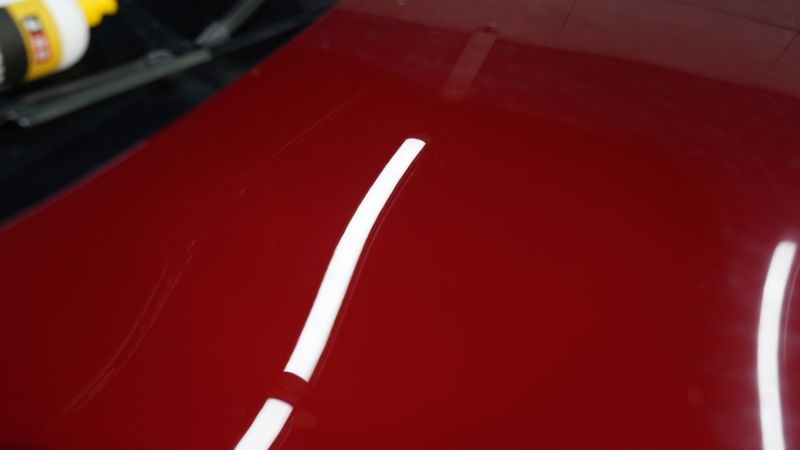
After washing your car, does the paint always look dull, gray, and lifeless? Does it feel rough and chalky to the touch, with some areas starting to turn yellow?
This isn’t because you didn’t wash it well enough — it’s because an oxidation layer has formed on the paint surface.
The oxidation layer is the first step in paint aging. Unlike scratches, it’s not immediately visible, but it makes the entire car look “ten years older.” The good news: different levels of oxidation require completely different treatment approaches — light to moderate oxidation can be handled at home without visiting a detailing shop and wasting money.
What Exactly Is the Oxidation Layer?
To treat the oxidation layer, you first need to understand where it comes from.
The outermost layer of automotive paint is a transparent clear coat (also called the topcoat), which protects the color coat and provides gloss. When the clear coat is exposed to air over time — UV radiation, acid rain, high-temperature sun exposure — the surface undergoes oxidative degradation.
The direct consequence of oxidative degradation is: the polymer resin structure on the clear coat surface is destroyed, and what was once a dense, smooth surface becomes rough, porous, and loses its refractive index.
Light hitting an oxidized surface no longer undergoes regular mirror reflection but scatters in all directions — this is the optical principle behind the “dull” and “lifeless” appearance.
The rough feel is because the microscopic structure of the oxidized surface is no longer flat. If oxidation continues, the clear coat will begin to yellow — this is a sign of moderate oxidation. If it worsens further, the paint will chalk and discolor noticeably; rubbing your finger across it may even pick up white powder — this is severe oxidation.
Three Levels of Oxidation: Which One Is Your Car?
Light Oxidation — Dull, Rough to Touch, No Gloss
Assessment Criteria:
- Paint surface is overall dull with no mirror-like quality
- Running the back of your hand lightly across the paint, you feel noticeable resistance (roughness)
- Under strong light, reflections from the paint surface appear blurry and unclear
- No obvious color change (no yellowing or discoloration)
- Common in vehicles 1-3 years old, parked outdoors daily but without regular maintenance
Light oxidation is the optimal time for treatment. The oxidative degradation only affects the extremely thin outermost layer of the clear coat and can be removed by hand application.
Moderate Oxidation — Yellowing, Dulling, Rough Texture
Assessment Criteria:
- Paint is visibly yellowed to the naked eye, especially on white and silver cars
- Gloss has significantly decreased — even after a fresh wash, it still looks “dusty”
- Finger touch reveals obvious roughness — no longer smooth
- Under strong light, paint reflections are severely distorted
- Common in vehicles 3-5 years old, parked outdoors long-term without ever being polished
Moderate oxidation means the oxidation layer has gained some thickness — a light wipe is not enough; more intensive, repeated treatment is needed for complete removal.
Severe Oxidation — Severe Discoloration, Chalking, Powder Transfer
Assessment Criteria:
- Paint color has changed noticeably (white cars turn yellow/gray, red cars turn pinkish, black cars turn whitish)
- Rubbing the paint firmly with your finger transfers powdery residue
- Paint has completely lost all gloss, appearing matte
- May be accompanied by fine cracking
- Common in vehicles over 5 years old, exposed to extreme environments long-term (construction sites, coastal areas, high-temperature regions)
Severe oxidation requires machine polishing — hand treatment alone cannot resolve it.
Light Oxidation Treatment: J1 Cleaning Wax Hand Application
Light oxidation is the easiest level to treat. You don’t need any machine equipment — a can of DianYe J1 Cleaning Wax (200g) and a few microfiber towels will do the job.
J1 Cleaning Wax is specifically designed to handle paint contamination and oxidation layers — it contains fine abrasive cleaning particles that remove the oxidized degradation layer without damaging the healthy clear coat.
Procedure
Step 1: Wash the Car
First, wash the entire vehicle thoroughly with car wash soap to remove surface dust and dirt. Dry completely before proceeding. The paint must be clean; otherwise, dust particles will cause new scratches during wiping.
Step 2: Apply J1 Cleaning Wax
Using a foam pad or soft towel, apply a thin, even layer of DianYe J1 Cleaning Wax to an area approximately 50cm × 50cm. No need for a thick coat — just enough to cover the paint.
Step 3: Wipe to Remove Oxidation
Using a clean microfiber towel, repeatedly wipe the treated area in small circles. Use moderate pressure — no need to press hard. During wiping, you’ll see gray or yellowish residue on the towel — that’s the oxidation layer being removed.
Step 4: Inspect the Result
Use another clean towel to wipe away residual wax and observe the paint. If gloss has returned and the surface no longer feels rough, that section is complete. If dullness or roughness persists, repeat Steps 2-3.
Typically, light oxidation requires only 1-2 passes to fully restore gloss.
Tips
- Start with the hood — large, flat area, easy to develop a feel for the technique
- Complete one section before moving to the adjacent area to avoid missing spots
- Full car light oxidation treatment takes approximately 1-2 hours
- 200g of J1 Cleaning Wax is more than sufficient for a full sedan
Moderate Oxidation Treatment: Repeated J1 Application or Light Machine Polishing
Moderate oxidation has a thicker, more deeply adhered oxidation layer and requires more patience and effort. But the core tool remains the same — J1 Cleaning Wax.
Option A: Pure Hand Application (Repeated)
Without a polishing machine, you can still treat moderate oxidation by hand — it just takes more time and effort.
Key Points:
- Follow the same steps as light oxidation, but each section needs significantly longer wiping time — at least 3-5 minutes per section
- Use a cross-hatch wiping pattern: wipe horizontally first, then vertically, ensuring full contact between J1 and the oxidation layer
- Inspect after each pass; if one pass isn’t enough, reapply and process again
- Moderate oxidation typically requires 2-3 rounds for complete removal
Hand treatment of moderate oxidation is physically demanding. Consider splitting the work across sections or days — for example, upper body today, lower body tomorrow.
Option B: J1 Cleaning Wax with DA Machine Light Polishing
If you have a DA polisher (dual-action polishing machine), efficiency improves dramatically.
Procedure:
- Apply J1 Cleaning Wax evenly to the paint (about 50cm × 50cm per section)
- Use the DA polisher with a soft or medium-soft foam pad (note: do not use coarse cutting pads or wool pads), speed set at 2000-3000 RPM
- Move the machine slowly and evenly, allowing the J1 to fully work the oxidation layer
- Make 2-3 passes per section until the oxidation layer is removed
- Wipe clean with a microfiber towel and inspect
The advantage of machine application: the uniform motion ensures consistent treatment across every point, producing more even and thorough results than hand application alone.
Critical Step After Moderate Oxidation Treatment
Whether using Option A or B, after moderate oxidation treatment, the paint has regained its gloss, but the clear coat’s micro-pores are still “open” — the fresh clear coat surface is directly exposed to air, and without protection, it will quickly begin oxidizing again.
Therefore, protection treatment must be applied immediately after oxidation removal.
Recommended: DianYe X1 Quick-Action Liquid Wax for protection. X1 is a water-based liquid wax with extremely simple application: spread evenly on the paint, wait 1-2 minutes, then wipe with a clean towel until glossy. It forms a transparent protective film on the paint, blocking air and UV to delay the next oxidation cycle.
One application of X1 typically lasts 2-3 months. Reapply as needed afterward.
Severe Oxidation Treatment: Three-Step Machine Polishing
Severe oxidation is beyond the capability of J1 Cleaning Wax and requires a three-step machine polishing process:
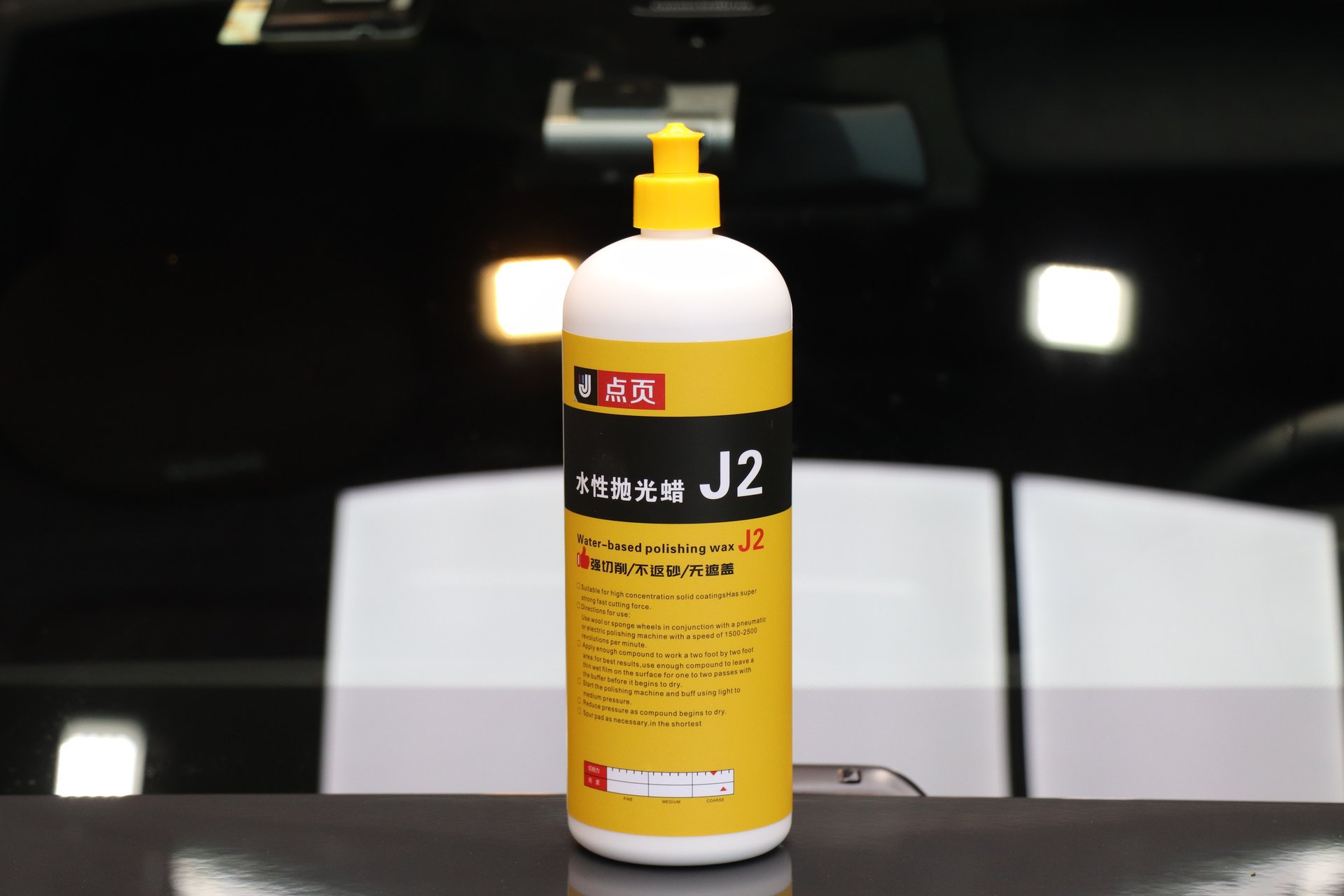
Step 1: Coarse Compounding — J2 Water-Based Polishing Wax
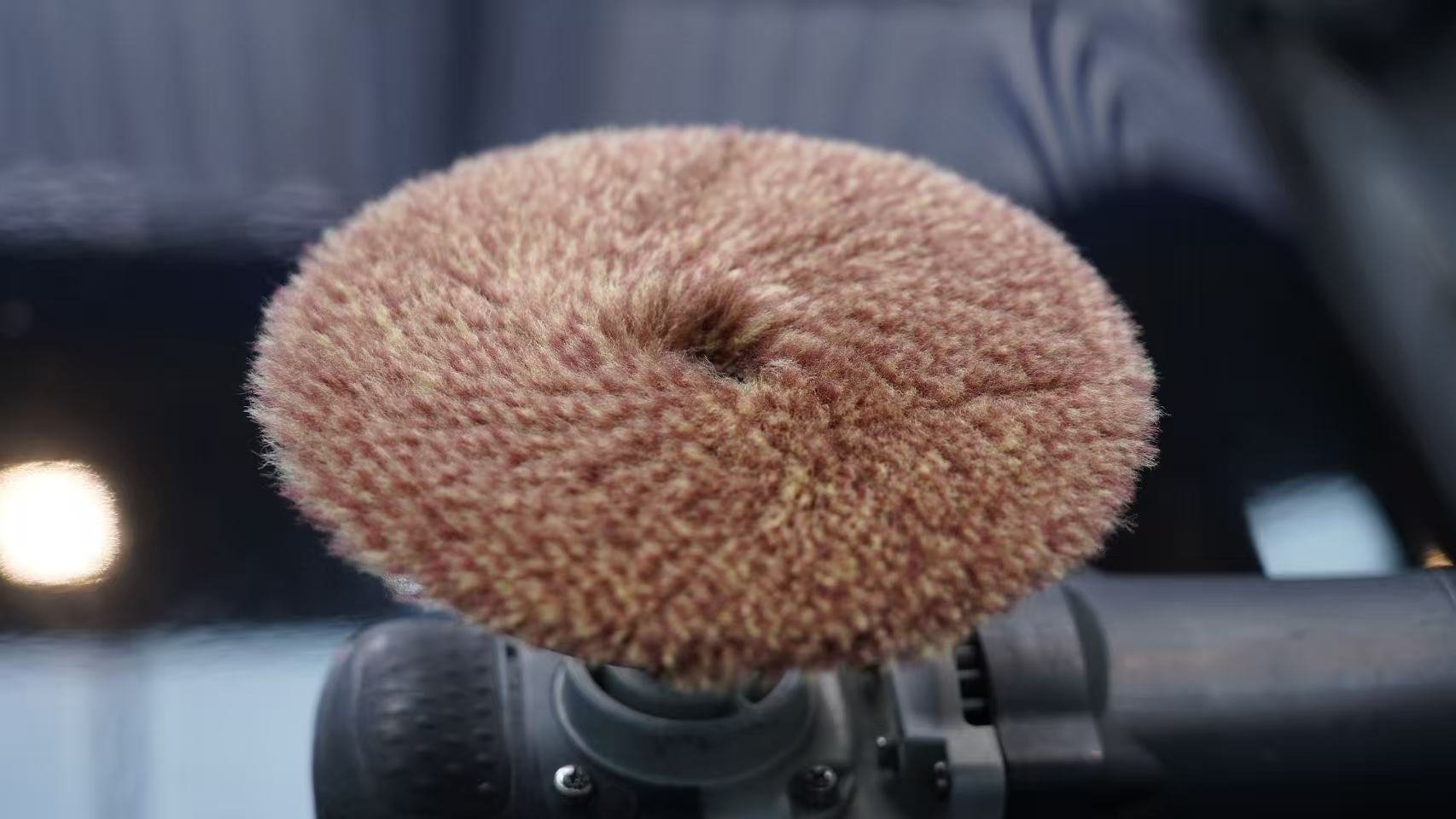
Using DianYe J2 Water-Based Polishing Wax (coarse compound) with a short wool pad or medium-hard foam pad on a DA or RO machine at 3000-4000 RPM. The purpose of coarse compounding is to cut away the severely oxidized and degraded clear coat surface, finding a flat base. This is the coarsest step in the automotive polishing wax system.
Coarse compounding is the critical step. The compound on the paint transitions from cloudy to transparent as it works — when the compound becomes transparent, that section is done.
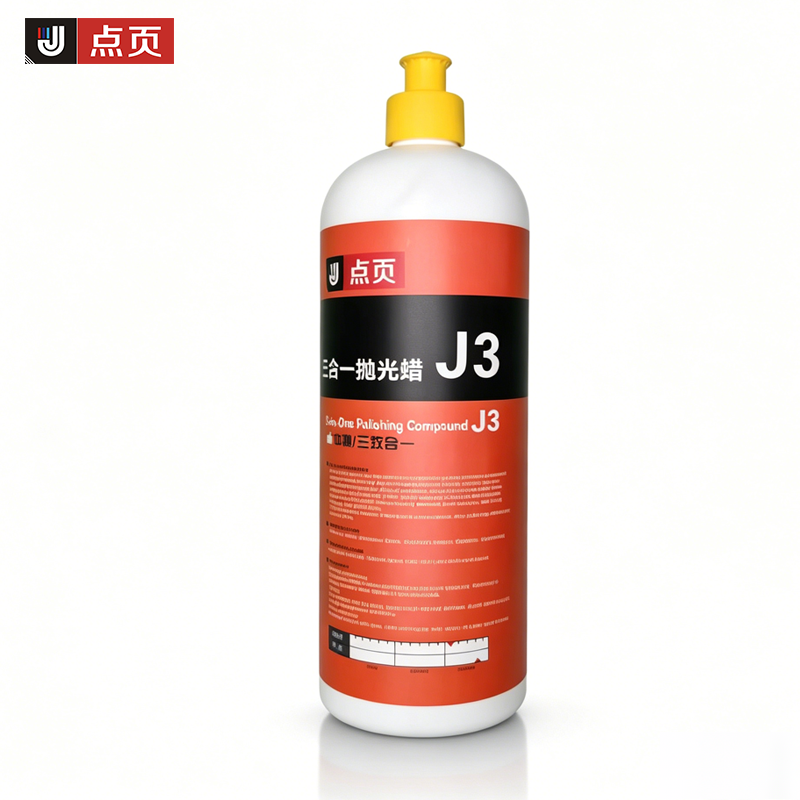
Step 2: Medium Polishing — J3 3-in-1 Polishing Wax
After coarse compounding, the paint is flat but has fine grinding marks and a hazy appearance. Using DianYe J3 3-in-1 Polishing Wax (medium compound) with a medium-hardness foam pad at 2500-3500 RPM eliminates coarse compound marks and restores gloss.
Step 3: Fine Finishing — J5 Mirror Finishing Agent
Finally, use DianYe J5 Mirror Finishing Agent with a soft foam pad at 2000-2500 RPM for mirror finishing. This step achieves maximum clarity and mirror effect.
After all three steps, apply X1 Quick-Action Liquid Wax for protection.
Why Is J1 Cleaning Wax the Top Choice for Light/Moderate Oxidation?
The core logic of treating oxidation is: use gentle abrasive action to remove the degraded clear coat surface, exposing the healthy clear coat beneath.
J1 Cleaning Wax is designed precisely for this — it contains uniform, fine cleaning particles with enough cutting power to remove the oxidation layer without damaging the healthy clear coat. It’s also a wax-based formula, so it doesn’t cause additional drying or degreasing during oxidation removal.
For the vast majority of car owners facing light to moderate oxidation, J1 Cleaning Wax is the most targeted solution — no machine needed, no polishing skills required, just hand application.
This reflects DianYe Auto Technology’s consistent design philosophy: diagnose the problem first, then choose the right tool. Not all paint issues require a machine — light to moderate oxidation is handled perfectly by J1 Cleaning Wax.
Summary
- Light oxidation (dull, rough to touch): J1 Cleaning Wax hand application, 1-2 passes
- Moderate oxidation (yellowing, dulling): Repeated J1 treatment or J1 with DA machine light polishing
- Severe oxidation (discoloration, chalking): J2 coarse → J3 medium → J5 fine, three-step process
- Protection is mandatory after treatment: Regardless of severity, apply X1 Quick-Action Liquid Wax after oxidation removal
Paint oxidation isn’t scary — what’s scary is ignoring it. Let the oxidation layer progress unchecked, and you’ll eventually need aggressive polishing to salvage it, and each polishing session consumes clear coat thickness.
Detect early, treat early, and protect after treatment — this is the correct logic for paint care.