
Why Is Japanese Car Paint So Soft? The Complete Guide to Polishing Wax Selection and Technique for Toyota and Honda
Last month a regular customer brought in a ninth-gen Toyota Camry. Around the door handle bowl, there was a ring of fine scratches — glaring under sunlight. He said he”d tried wiping it with a towel and even had a quick polish done at a roadside shop. Neither worked — the swirls were still there, and now there were extra haze marks beside them.
I pulled out my paint thickness gauge. The clear coat read 28μm. What does that mean? German cars typically run 40–60μm clear coat. His Camry”s clear coat was less than half that. Using the roadside shop”s “standard settings” on that paint was asking for trouble.
Everyone in automotive polishing knows Toyota, Honda, Nissan, Mazda — Japanese brands have soft paint. But what “soft” actually means in practice, and how you should adjust your polishing approach accordingly, is something many people haven”t really figured out. Today I”m walking through Japanese soft paint from theory to technique, start to finish.
1. Where Exactly Is Japanese Car Paint “Soft”? Three Key Data Points
Japanese car paint being soft isn”t a subjective feeling — it”s a fact backed by hard numbers.
First data point: Pencil hardness. Japanese clear coats typically measure 3H–4H on the pencil hardness scale, with some older JDM models falling below 2H. German cars usually sit at 4H–5H, and ultra-premium brands like Porsche can exceed 5H. A difference of 1H means a full order of magnitude less scratch resistance.
Second data point: Clear coat thickness. Japanese clear coats are 25–35μm thick — roughly half the diameter of a human hair. German clear coats run 40–60μm, nearly double. Thinner clear coat means less material to safely remove during polishing — each proper pass removes 2–5μm, so Japanese soft paint has far less margin for error than German hard paint.
Third data point: Glass transition temperature (Tg). Japanese soft paint has a lower Tg than German hard paint — meaning it starts to soften and deform at a lower temperature. The friction heat generated during polishing affects soft paint much more than hard paint.
Stack those three data points together and you get the three “mores” of Japanese car paint: more easily scratched (lower hardness), more easily burned through (thinner clear coat), more easily heat-damaged (lower Tg).
2. Four Common Problems with Japanese Soft Paint
After polishing plenty of Japanese cars, I”ve found the problems with soft paint almost always fall into these four categories.
1. Swirl Marks and Fine Scratches Are Everywhere
This is the most common complaint from Japanese car owners. The molecular structure of soft paint is relatively loose — a towel during a routine wash, the brushes at an automatic car wash, or even pressing your finger hard enough can leave visible fine scratches.
A Honda Breeze owner once told me that after the automatic car wash, he looked at his hood from the side and it was covered in swirl marks. He took it to a detailer, who polished it with standard settings. The swirls were gone — but there were extra halo marks and new fine scratches beside them. The operator hadn”t adjusted the parameters for soft paint. Pointless polish job.
2. Oxidation and Yellowing Come Faster
Same usage conditions, same age — Japanese car paint oxidizes noticeably faster than German. The reason is straightforward: thinner clear coat means UV rays and pollutants penetrate faster. Many Toyota owners report that after three or four years, the paint gloss has clearly dropped and white paint has started to yellow — issues that typically appear a year or two later on German cars.
3. Polishing Depth Is Hard to Control
Using the same medium-cut compound on a scratch, soft paint might lose twice as much material as hard paint in a single pass. You think you”ve only removed a thin layer of clear coat, but you”ve actually taken off far more than expected. Without good frequency control, the clear coat gets dangerously thin without you realizing it — eventually burning through to the base coat or primer.
4. Looks “Scratched” Again Days After Polishing
This is what drives Japanese car owners crazy. Polishing removes the old scratches, but the newly exposed surface is still soft paint — same hardness, same molecular structure. Without timely protection, routine washing, towel drying, even airborne dust particles can put new fine scratches right back. The polish was pointless.
That”s why polishing Japanese cars isn”t just about “polishing” — it”s a “polish + protect” combination.
3. How to Choose Polishing Wax for Japanese Soft Paint
Choosing automotive polishing wax for Japanese soft paint requires special care. The core principle is simple: enough cutting power, but not too much.
Many detail shops treat Japanese cars with a “universal” setup — cutting compound grit too coarse, RPM too high, pressure too heavy. That works on hard paint. On soft paint, it”s an instant disaster.
Recommended Setup
| Stage | Machine | Pad | Compound | RPM (DA) |
|---|---|---|---|---|
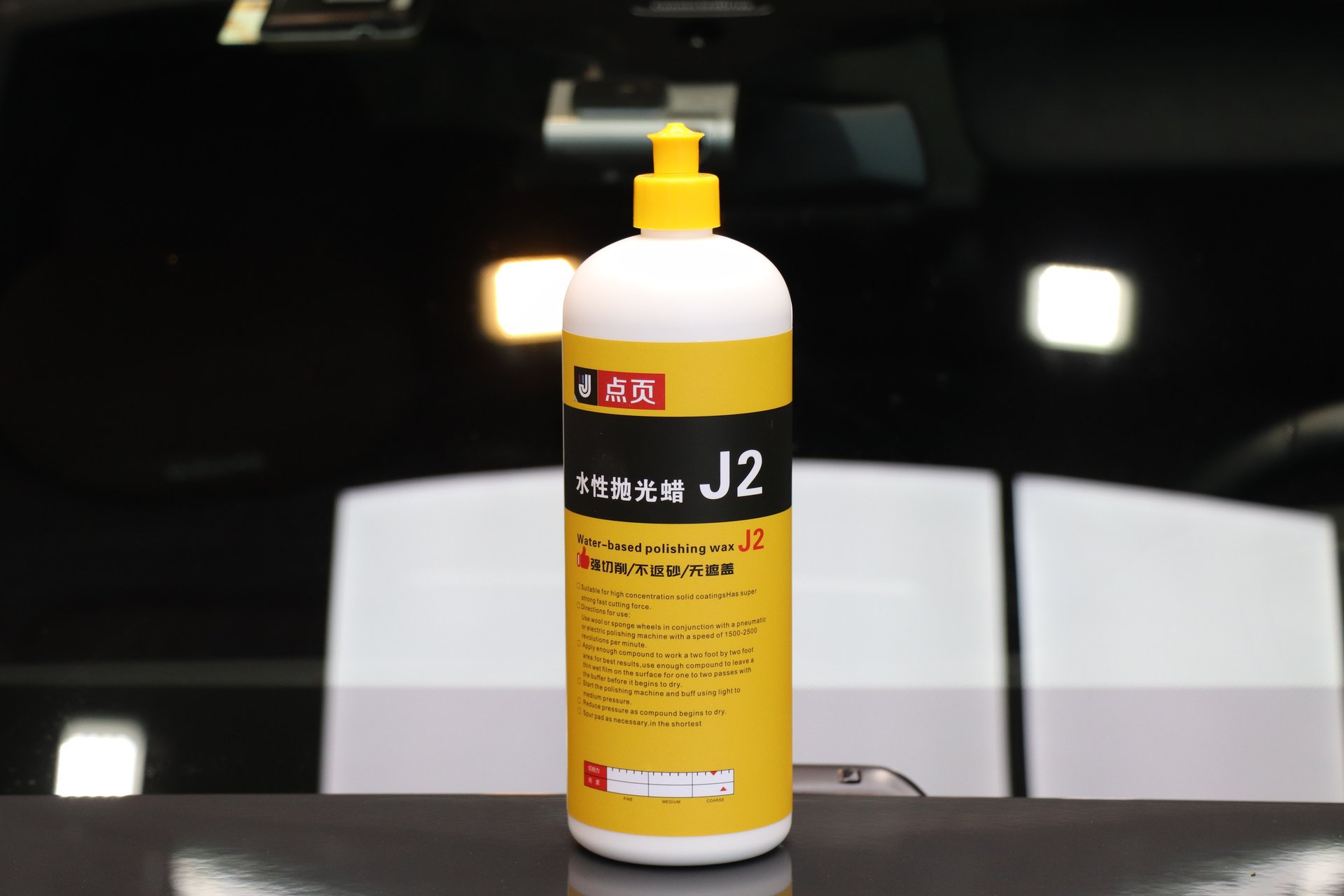
| Initial correction | DA dual-action | Soft foam pad (medium-low density) | J2 water-based cutting compound | Level 4–5 (4000–5000 OPM) |
| Mid-polish refining | DA dual-action | Fine foam pad | J3 3-in-1 polishing compound | Level 3–4 (3000–4000 OPM) |
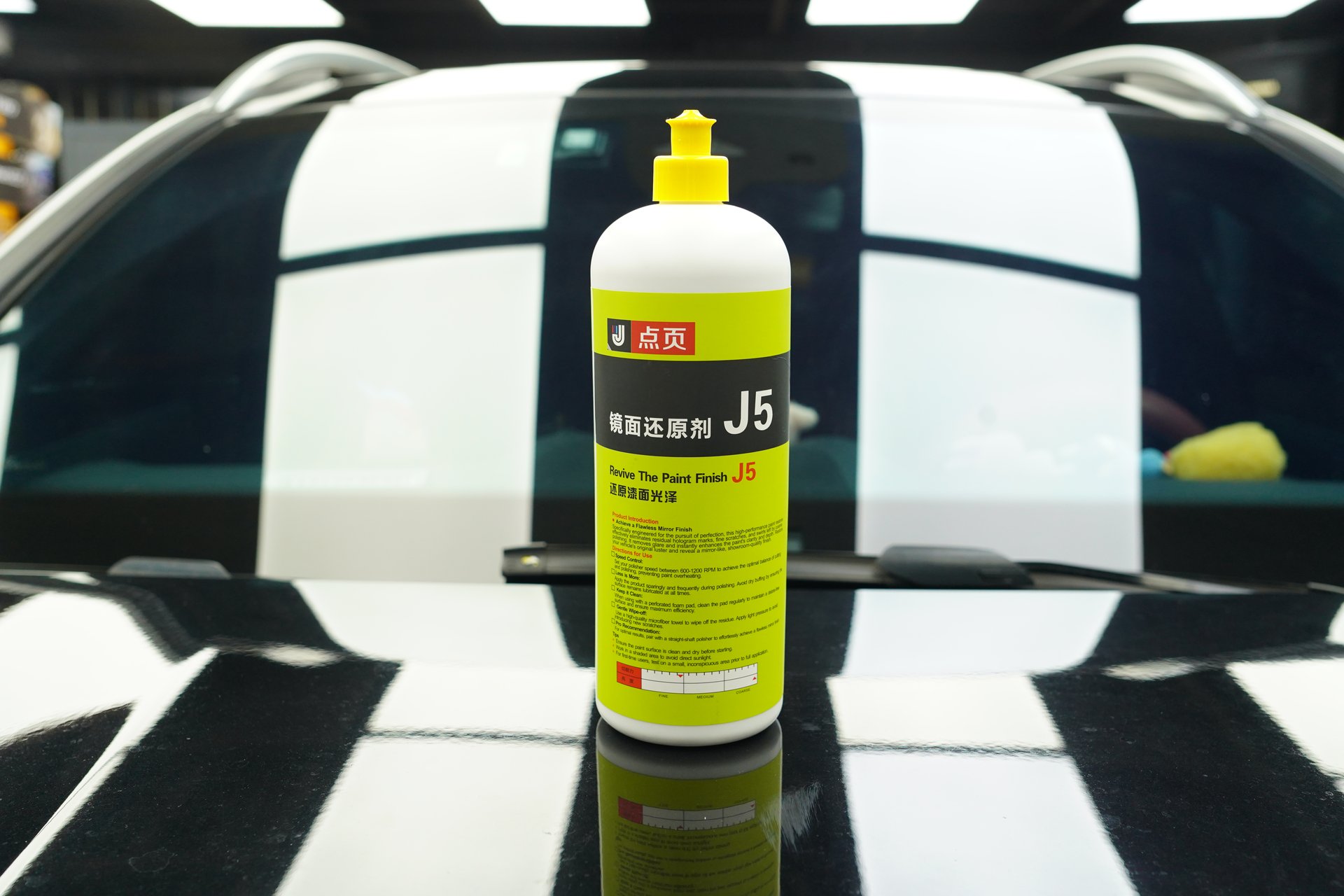
| Final finishing | DA dual-action | Ultra-soft foam pad | J5 mirror finish restorer | Level 2–3 (2000–3000 OPM) |
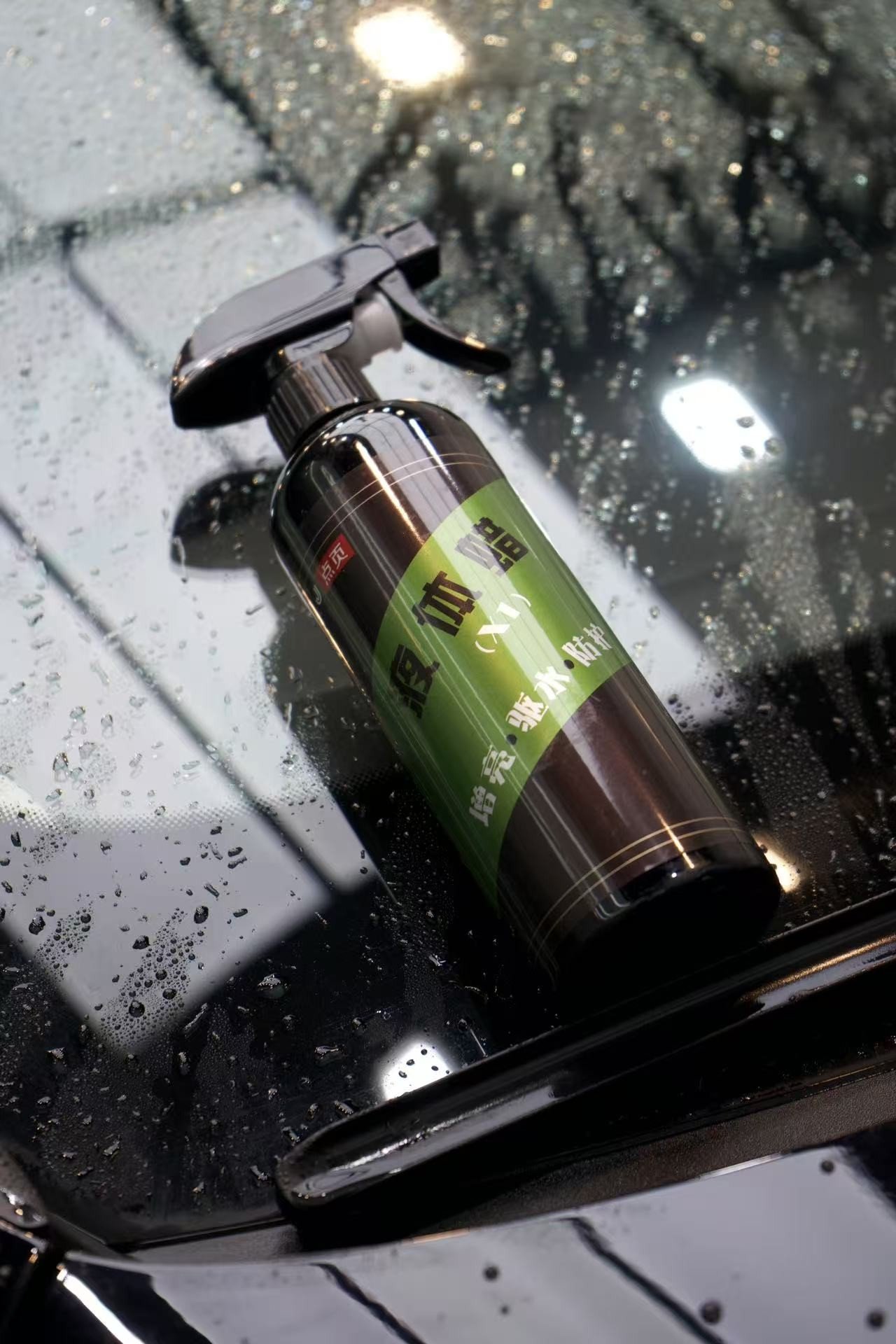
| Quick daily maintenance | By hand | Foam wax applicator | X1 quick detail liquid wax | — |
Key Selection Logic
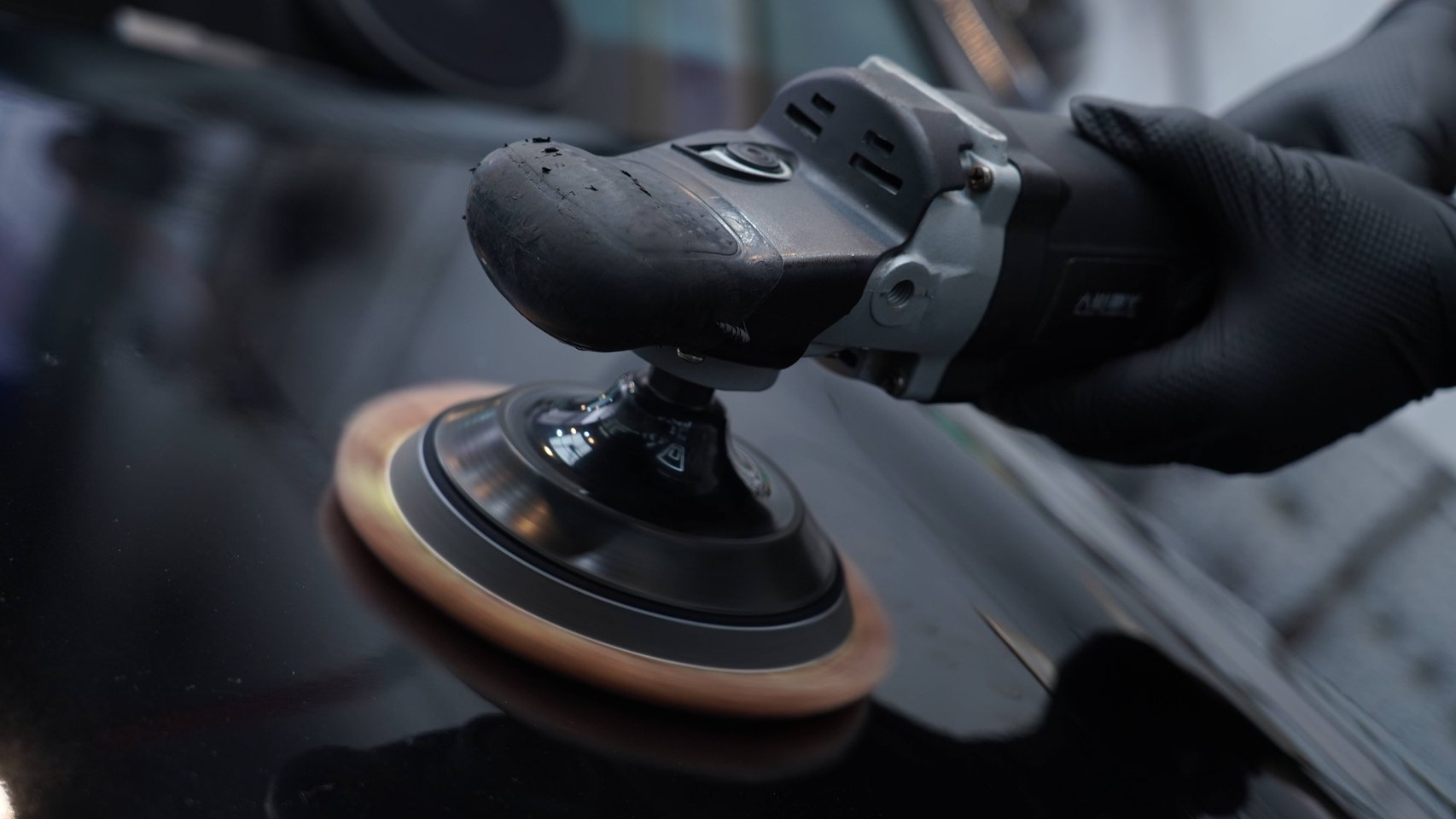
DA polisher only — no rotary machines. DA dual-action polishers have a random orbit pattern that virtually eliminates directional swirl marks. Rotary polishers cut aggressively but follow a fixed path — if you linger even a moment too long on soft paint, you risk burning the finish. Japanese soft paint doesn”t need that level of cutting power. A DA is more than sufficient.
Foam pads only — wool pads prohibited. Wool pads have high fiber density and aggressive cutting action. On soft paint, that”s like using a sledgehammer to crack an egg. Soft paint needs foam pads — their elastic deformation distributes grinding pressure evenly across a large contact area. Lower cutting efficiency, but far safer.
Prefer water-based formulas. Water-based compounds cut honestly — what you remove is what you remove, no grease fill masking the result. J2 water-based cutting compound, J3 3-in-1 polishing compound, and J5 mirror finish restorer are all water-based formulas, giving you predictable, controllable results on soft paint.
Machine weight only for pressure. A DA polisher weighs about 1.5–2.5 kg. Just rest your palm lightly on the handle to guide direction — no extra force. If the machine vibrates lightly and smoothly, your pressure is right. If the vibration turns dull and heavy, you”re pressing too hard.
4. Japanese vs. German — How Different Are the Polishing Parameters?
Here”s the direct comparison.
| Parameter | Japanese Soft Paint | German Hard Paint |
|---|---|---|
| Cutting RPM | 1200–1500 | 1500–1800 |
| Mid-polish RPM | 1000–1200 | 1200–1500 |
| Finishing RPM | 600–800 | 800–1000 |
| Pressure | Machine weight only | Can apply additional pressure |
| Dwell time per spot | ≤30 seconds | ≤45 seconds |
| Starting pad | Soft foam pad | Wool pad if needed |
Japanese soft paint runs 200–300 RPM lower across every stage compared to German hard paint. That”s not being overly cautious — it”s mandatory. Soft paint has a low Tg; once the temperature climbs, the paint softens and deforms. Then it”s not about whether the scratches will come out — it”s about whether you”ve burned the paint.
A practical temperature check: hold the back of your hand 5 cm from the paint surface. If you feel distinct heat, stop immediately. Move to another section or wait for the temperature to drop.
Working environment matters too. Japanese soft paint should be polished indoors, away from direct sunlight. Don”t touch the hood while the engine is still warm — the hood is one of the thinnest painted areas on a Japanese car, and engine heat叠加 makes it especially risky.
5. Temperature — The Number One Variable in Japanese Soft Paint Polishing
We covered the low Tg earlier. Here”s how to manage temperature in practice.
My habit when working on Japanese cars: before starting, I measure paint thickness on every panel — five measurement points per panel. Panels where the clear coat is below 25μm get a special note, and I drop the RPM another 100–200 when working on them.
Per-section time control is the key to temperature management. Only work on a 40×40 cm section at a time. After one pass, move to the adjacent section, giving the polished area time to cool. Thirty seconds is the maximum — beyond that, the soft paint surface temperature spikes.
Ambient temperature matters too. 15–25°C is ideal working temperature. In summer, don”t polish Japanese cars outdoors above 35°C — the paint surface is already hot, and adding friction heat on top is a recipe for disaster. An underground garage or indoor bay is the best choice.
A real case: A Honda Civic owner tried polishing swirl marks on his driveway at home. Midday sun, the hood was hot to the touch. He fired up the polisher at 1500 RPM and got a hazy cloud spot on the paint — the clear coat had locally burned. I spent a long time slowly fixing it with J5 mirror finish restorer at low speed and light pressure. The haze faded 70–80%, but you can still see it if you look closely.
6. High-Risk Edge Areas — Where Japanese Cars Are Most Likely to Burn Through
Japanese car clear coats are already thin. In certain areas, they”re even thinner:
- Bumper edges: Paint application is uneven at the edges during spraying — clear coat might be just over 20μm
- Door handle bowl: Daily fingernail scraping from opening/closing + thin paint = double vulnerability
- Fender lip edges: Sand and gravel impact + thin paint
- Hood leading edge: The area hit hardest by oncoming debris
On Japanese cars, drop all these areas to 800–1000 RPM. Use a small foam tip or hand-polish them. If there”s oxidation or dirt on the edges, use DianYe J1 cleaning wax — J1 is for cleaning, not cutting. Apply it, wipe it off. No abrasive particles, no further reduction of the already thin clear coat.
7. Post-Polish Protection — Japanese Soft Paint Without Protection Is a Pointless Polish
This point cannot be overstated for Japanese cars.
Polishing removes old scratches on soft paint, but the newly exposed surface is still soft. Without protection, routine washing, towel drying, and even airborne dust can put new fine scratches right back. You might as well not have bothered.
Standard post-polish procedure:
DianYe X1 quick detail liquid wax is ideal for post-polish protection. Spray it on the paint, spread evenly with a foam wax applicator, wait 1–2 minutes, then wipe clean with a fresh microfiber towel. X1 forms a thin, even protective layer that doesn”t dull the gloss while sealing out air, moisture, and UV rays.
Japanese car maintenance schedule:
- After polish + X1 protection, do an X1 quick maintenance every 2–3 months
- Full polish + protection every six months
- Park in an underground garage or shaded area whenever possible
- Use a soft wash mitt for washing — no stiff brushes or rough towels
8. Japanese Soft Paint Has an Advantage Too — The Mirror Finish Is Stunning
After all that talk about how “high-maintenance” soft paint is, here”s some good news.
Soft paint can be a pain, but if you maintain it properly and polish it correctly, the final mirror finish is often more stunning than hard paint. The clear coat on soft paint has a finer, more uniform texture. Light penetrates and refracts into a deeper, more translucent gloss. In the trade, we call it “wet-looking” — like there”s always a film of water on the paint.
That”s why many professional detailers actually enjoy working on Japanese cars — when you get it right, the results are spectacular. The前提 is: correct method, correct products, enough patience.
Frequently Asked Questions
Q: Can I DIY polish my Toyota/Honda at home?
Yes, but you need the right tools and settings. DA dual-action polisher + soft foam pad + water-based automotive polishing wax (like J2/J3/J5), RPM no higher than 1500, machine weight pressure only. Start with a hidden area like inside the door jamb or a corner of the trunk to test your technique. If you”re unsure, leave it to a professional shop.
Q: How often should Japanese cars be polished?
If you maintain it well (regular waxing, avoiding sun exposure), light swirl marks can wait 2–3 years between polishes. Every polish removes clear coat — polish as little as possible. For daily maintenance, X1 quick detail liquid wax is enough.
Q: Can a roadside detail shop handle scratches on Japanese cars?
Depends on the shop”s experience. The key question: do they know to drop the parameters for soft paint — RPM, pressure, pad type all need adjusting. If they start with a wool pad at high RPM and a one-size-fits-all process regardless of paint type, find another shop.
Japanese car paint being soft is a fact, but it doesn”t mean it can”t be polished. Know the hardness data, drop the parameters, and lock in the protection — Toyota and Honda paint can deliver a stunning mirror finish too.
Same as always: it”s not that the wax doesn”t work — it”s that your method is wrong. Use the right water-based polishing wax, control temperature and pressure, and protect after polishing. Japanese soft paint isn”t that hard to handle.