
Is EV Paint More “Delicate”? Polishing and Care Requires a Different Approach
Drive an EV and noticed this? Your car is barely two years old and swirl marks are already appearing, every light touch leaves a mark, after washing the car the sun reveals a web of fine scratches, and everything looks dull and gray?
Ask the dealership — they say “normal phenomenon.” Ask a detailing shop — they recommend a full-car polish. But you’re wondering: is EV polishing the same as for gas cars?
The answer is: No, it’s genuinely different.
And not just “switch to a different wax” different — the entire approach needs to change at a fundamental level. Let’s break it down completely.
I. How Exactly Is EV Paint Different?
In one sentence: the clear coat is thinner, softer, and more “delicate.”
The reason comes down to body materials. EVs universally use water-based paint (to meet environmental regulations on VOC emissions), and water-based paint film thickness is typically only 40%-60% of traditional oil-based paint.
What does that mean? Traditional oil-based clear coat is generally 100-150μm thick; EV water-based clear coat is only about 60-90μm. Nearly half as thin.
Moreover, water-based clear coat has lower hardness — more easily scratched by stones, branches, or even improper washing. Additionally, water-based paint’s molecular structure is more hydrophilic, making it more prone to gloss loss and aging from prolonged UV, acid rain, and bird dropping exposure.
This is why many EV owners report “the paint doesn’t look as good” — it’s not that the paint quality is poor, it’s that the paint structure itself is different.
II. What Does Thinner Paint Mean for Polishing?
First, understand this: polishing fundamentally uses abrasive particles to grind away an extremely thin layer of clear coat, “leveling” scratches and irregularities. Each polish removes some clear coat.
Traditional ICE cars have 100-150μm clear coat — one coarse pass removes 5-15μm, leaving room for over a dozen more polishes. EVs with only 60-90μm? The number of possible polishes is cut in half.
So EVs can’t not be polished — rather:
- Lower speeds — National standard GB/T 44286-2025 specifies polishing speed not exceeding 2200 RPM; for EVs, be more conservative: 1200-1500 RPM for coarse work, 600-800 RPM for finishing
- Finer abrasives — If you can start with medium, don’t start with coarse
- Streamlined steps — If two steps suffice, don’t do three
III. How to Choose Automotive Polishing Compound? Match Particles to Paint Condition
Whether for EVs or ICE vehicles, the core logic of choosing automotive polishing compound is the same: progress from coarse to fine abrasives step by step — don’t skip steps. Just like sandpaper ranges from coarse to fine, you can’t start polishing furniture with 80-grit.
By abrasive particle coarseness, polishing stages are divided into four levels:
| Paint Condition | Abrasive Particle | Stage | Recommended Product |
|---|---|---|---|
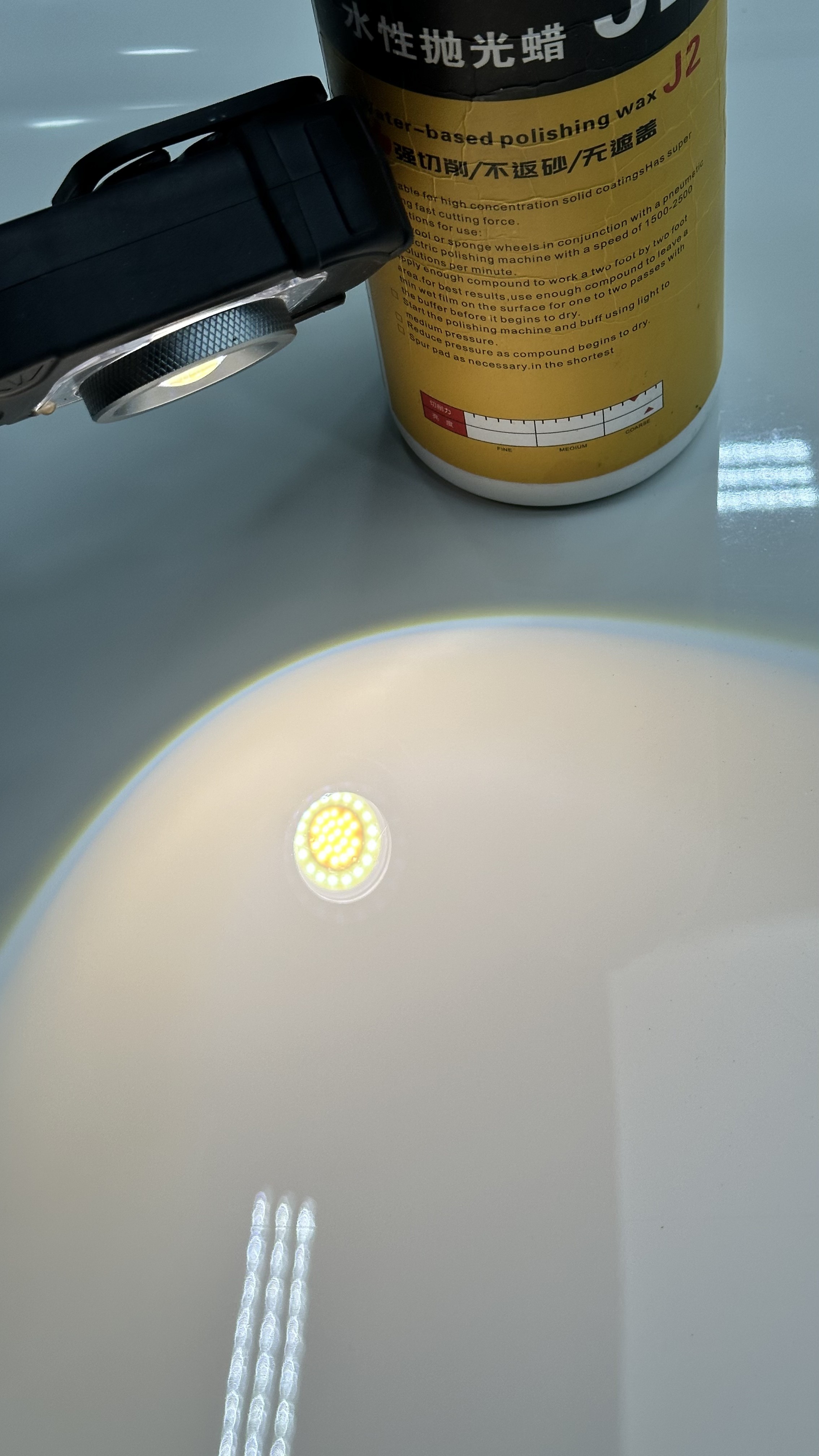
| Bird dropping corrosion / deep scratches | >10μm | Coarse compounding (leveling) | DianYe J2 Water-Based Polishing Wax (J2 Coarse) |
| Swirl marks / oxidation / dullness | 3-10μm | Medium polishing (brightening) | DianYe J3 3-in-1 Polishing Wax (J3 Medium) |
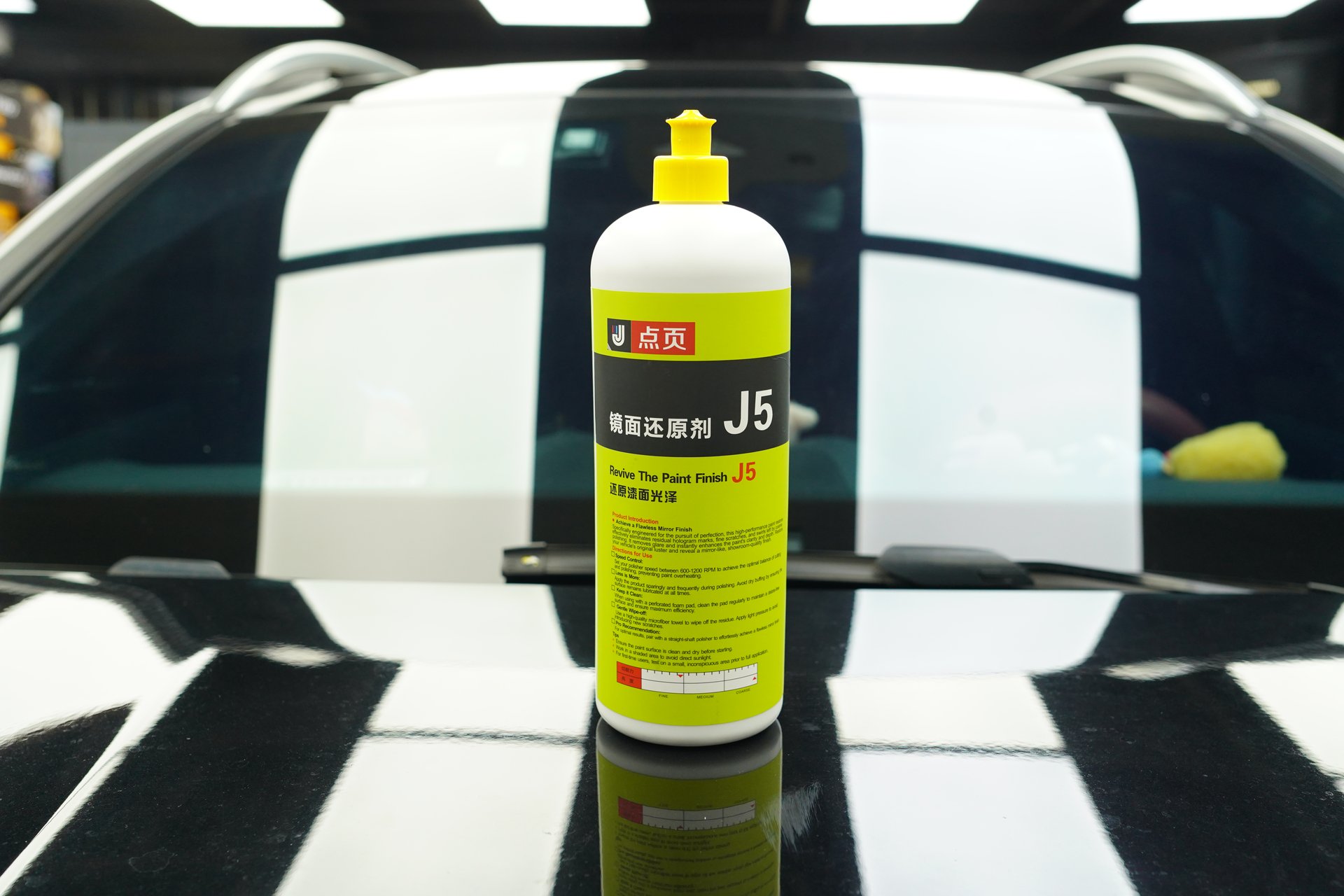
| Fine marks / mirror finish needed | <3μm | Fine finishing (restoration) | DianYe J5 Mirror Finishing Agent (J5 Fine) |
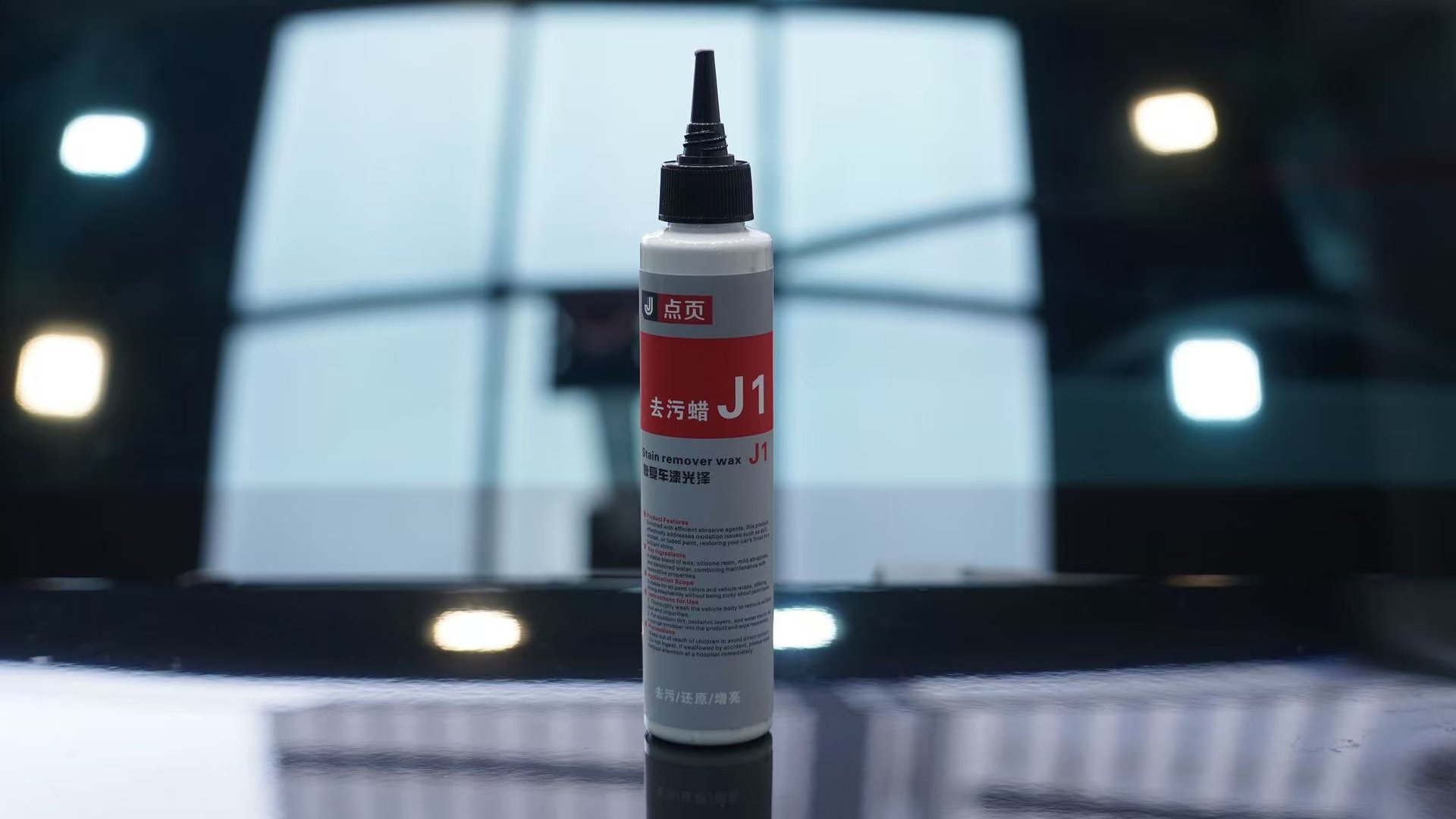
| Post-polish protection | No abrasives | Protection & gloss | DianYe X1 Quick-Action Liquid Wax (X1 Protection) |
Good news: Most EVs don’t need to start from coarse compounding. EV factory paint quality is generally good, and with typically newer vehicles, paint condition is usually not bad.
Key assessment: Fingernail cross-scratch test first. Run your fingernail across (perpendicular to) the scratch direction — note: across, not along the scratch — and feel if your nail “catches”:
- Nail catches clearly: Scratch has penetrated the clear coat, possibly reaching primer — start with coarse, do all three steps
- Nail catches slightly: Scratch is within the clear coat — recommend full coarse → medium → fine process
- Nail doesn’t catch but visible to eye: Swirl marks, oxidation layer — start with medium, two steps suffice
- Barely visible, paint looks gray: Light dullness — fine + protection is enough
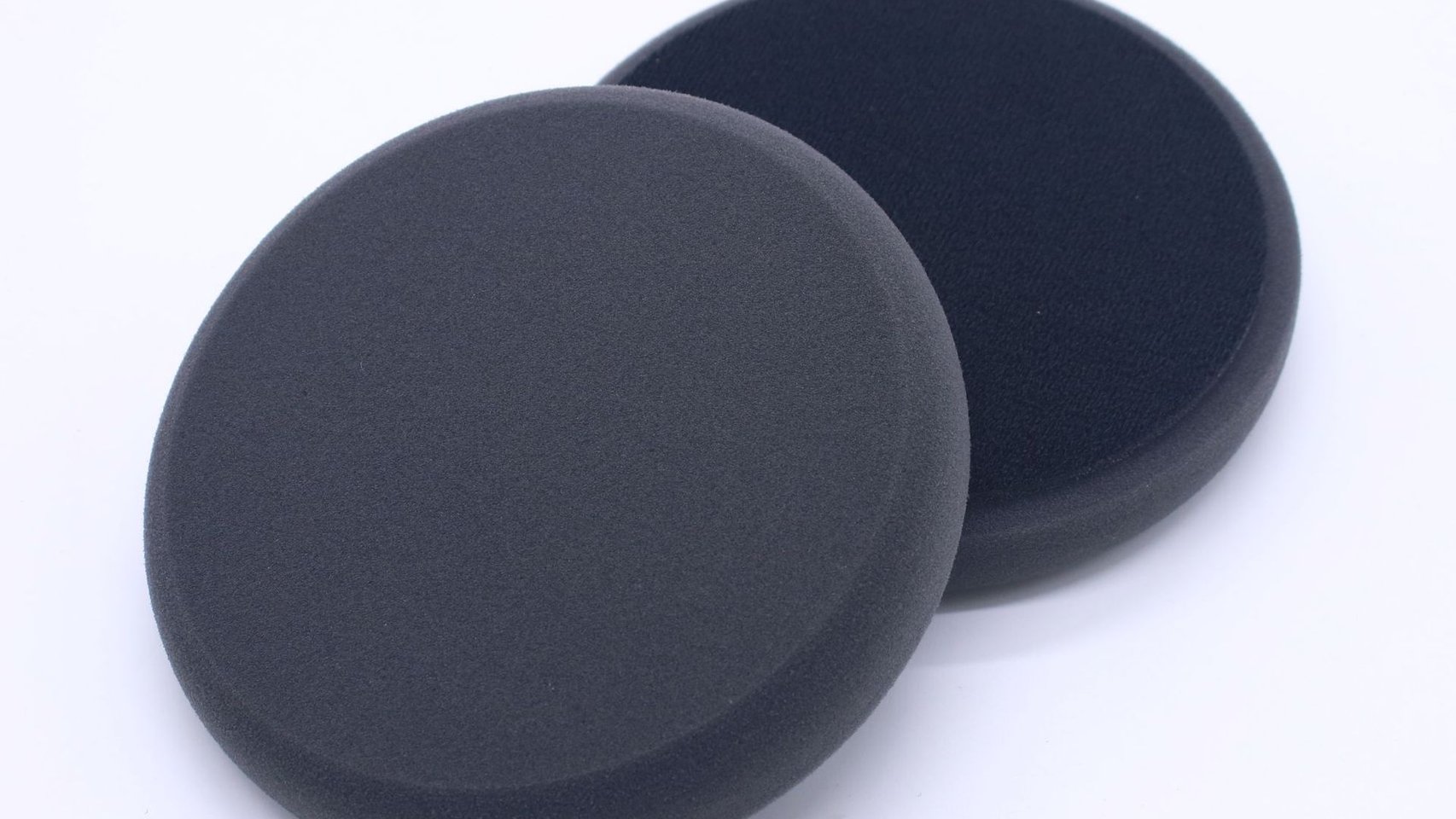
Example: A two-year-old EV with swirl marks and light oxidation, but fingernail test shows no catching. In this case, skip coarse entirely — use J3 Water-Based Polishing Wax (DianYe J3 3-in-1 Polishing Wax) with a fine foam pad for two passes, then finish with J5 Mirror Finishing Agent (DianYe J5 Mirror Finishing Agent) for one pass, and the paint will be crystal clear.
If you started from coarse? You’d needlessly remove another layer of clear coat, and on the softer EV paint, you might even leave deeper pad marks — counterproductive.
IV. Why Should EVs Use Water-Based Formulas?
Most automotive polishing compounds on the market are still oil-based. But from 2026, the wax industry faces mandatory VOC limits of ≤50g/L, with 15 cities including Beijing, Shanghai, and Guangzhou already implementing product registration requirements.
J2 Water-Based Polishing Wax is inherently water-based, with VOCs well below the standard threshold.
Water-based vs. oil-based offers two special benefits for EVs:
1. True cutting results. The oil in oil-based wax temporarily fills scratches — looks super bright right after polishing, but wash a few times and the fillers are washed away, scratches reappear — it’s an illusion. Water-based wax has no such issue — what you see after polishing is what you get.
2. Gentler approach. Water-based formulas don’t over-penetrate like oil-based ones. For EVs with thinner clear coats, gentler is actually safer.
V. EV Polishing and Care Process Summary
Here’s a complete process for EV owners to follow:
- Vehicle assessment: Inspect paint condition by section, use fingernail test to judge scratch depth
- Develop plan: Deep scratch areas go coarse → medium → fine; light oxidation areas go medium → fine
- Coarse compounding (if needed): J2 Water-Based Polishing Wax + coarse wool pad, speed ≤1500 RPM
- Medium polishing: J3 3-in-1 Polishing Wax + fine foam pad
- Fine finishing: J5 Mirror Finishing Agent + fine foam pad, speed 600-800 RPM
- Degrease and inspect: Wipe paint with IPA degreaser to confirm true gloss, not fill illusion
- Wax protection: Apply DianYe X1 Quick-Action Liquid Wax across the entire car, locking in the polishing results
Core four-character motto: Light pressure, slow passes. Let the abrasive do the work — don’t rely on pressure for cutting.
Polishing fundamentally consumes clear coat — each pass removes a layer. For EVs, this “protective coat” is already thin. Therefore: gentler parameters, finer abrasives, and more thorough protection are all the more critical.
Choose the right products, use the right methods, apply proper protection, and your paint will stay in its best condition.