
How to Keep Chrome Trim Shiny After Polishing? Maintenance Cycles and Product Recommendations — Using the Right Automotive Polishing Wax Saves Thousands in Re-Plating Costs
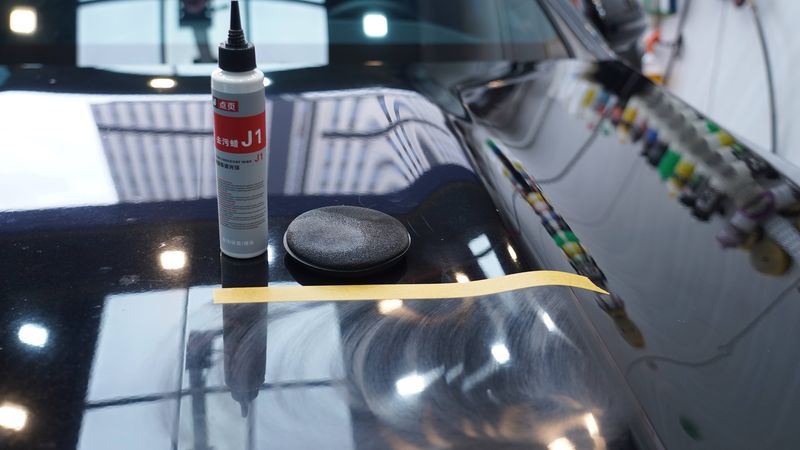 Skipping protection after polishing chrome trim is like washing your face and skipping moisturizer — it won”t last two weeks
Last month I helped a friend redo the chrome trim on his Buick GL8. The front grille, roof rails, door handle trim strips — all oxidized and turned white. I spent an entire afternoon hand-polishing everything back to a mirror finish using DianYe J1 cleaning wax. He was thrilled at the time, convinced it “would last for years.”
Three months later, he sent me a message: the chrome strips were fogging up again.
It wasn”t that J1 didn”t work — it was that he did absolutely nothing to protect the surface after polishing. Bare, freshly exposed chrome sitting in open air, taking hit after hit from acid rain, UV rays, and bird droppings. Three months and it oxidized right back.
This is something I”ve had to explain to customers over and over — polishing chrome trim is only half the job. The protection you apply after polishing is what determines how long it lasts. Today I”m going to break down chrome trim maintenance completely — maintenance cycles, product selection, and daily do”s and don”ts, all laid out clearly.
1. Why You Must Apply Protection Within 24 Hours of Polishing Chrome Trim
A lot of people don”t understand: isn”t chromium the hardest metal? How can it oxidize?
The issue is the thickness of the chrome layer. Decorative automotive chrome plating is only 0.5 to 5 micrometers thick — your fingernail is 100 micrometers. More importantly, at the microscopic level the chrome layer isn”t completely dense — it naturally has countless micropores and micro-cracks.
When you polish, you grind off the oxidized layer and expose fresh, clean chrome. But that also means — all the micropores are wide open, and the passivation film hasn”t fully rebuilt yet. At this point, moisture, oxygen, and acidic pollutants in the air can pass straight through those micropores and reach the nickel layer underneath, triggering electrochemical corrosion.
Without any protection, freshly polished chrome in a humid environment will start fogging within 2 to 4 weeks — even faster in areas with frequent acid rain.
It”s like derusting a piece of iron without applying any rust inhibitor — the question isn”t whether you got the rust off, it”s how long the bare metal will last.
2. Three Protection Options — Choose by Budget and Durability
After polishing, you have three mainstream paths for protection. It”s not about “the more expensive the better” — it depends on your car, your environment, and how much effort you”re willing to invest.
Option 1: Carnauba Wax Protection (Basic)
Carnauba wax is the most traditional protection method. The principle is simple — the wax layer forms a physical barrier on the chrome surface, blocking moisture and air.
Pros: Easy to apply, low cost, warm and natural gloss Cons: Moderate durability — in warm climates, it wears out in 2 to 3 months
Who is this for? DIY enthusiasts working at home, cars not parked outdoors full-time, people willing to spend 10 minutes every two months reapplying wax.
After hand-polishing a client”s chrome trim, I typically recommend DianYe X1 Quick Liquid Wax for protection. X1 is a liquid wax, which spreads much more evenly than paste wax on chrome — just spray it on and wipe with a clean microfiber towel, no curing time needed. For small, complex-shaped areas like chrome trim, liquid wax is significantly easier to work with than paste wax.
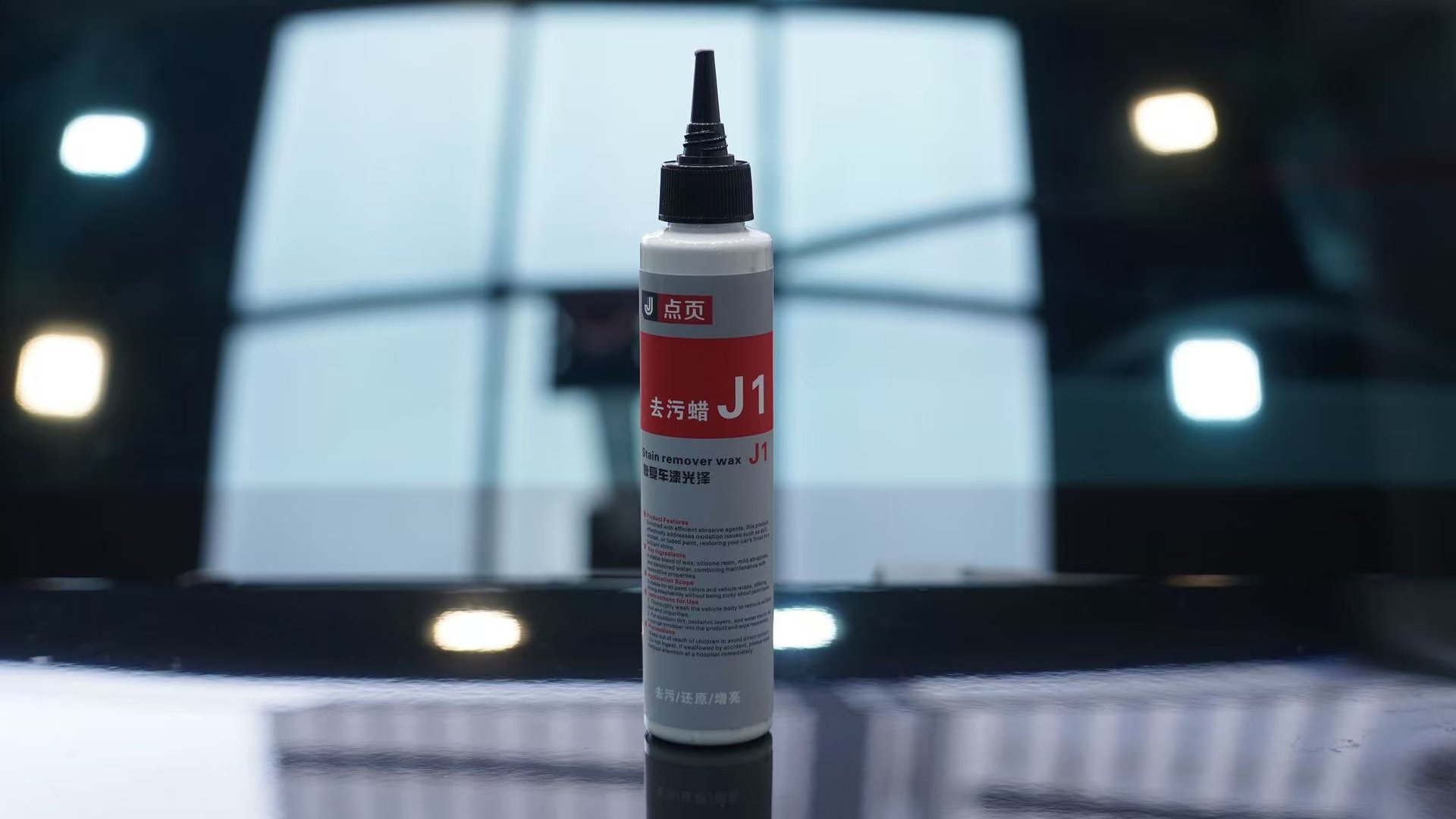 DianYe J1 Cleaning Wax 200g — the cleaning workhorse for the chrome polishing stage
Option 2: Synthetic Polymer Sealant (Intermediate)
Synthetic sealants work differently from carnauba wax. Polymer molecules form chemical bonds with the chrome surface, giving much stronger adhesion and higher density than a wax layer.
Pros: Lasts 4 to 6 months, stronger UV resistance than natural wax Cons: Slightly more demanding application — the chrome surface must be absolutely clean for proper bonding
For car owners in coastal cities or industrial areas, sealant is the best value option. Salt spray and industrial fallout are the two biggest killers of chrome trim — regular wax can”t handle those, but sealant can.
Option 3: Ceramic Coating / Glass Coating (Ultimate)
SiO₂-based ceramic coatings or chrome-specific coatings form an inorganic protective layer directly on the chrome surface. High hardness, chemically stable, and theoretically lasts 6 to 12 months.
Pros: Longest-lasting protection, strongest protective capability Cons: High cost, difficult application — usually requires a professional shop
If you have a high-end vehicle with extensive chrome trim and re-plating would cost hundreds of dollars per piece (a front grille re-plate runs $70 to $110), a ceramic coating is absolutely worth the investment.
3. Maintenance Schedule by Environment
This is what everyone wants to know: how often should I maintain the protection?
There”s no single answer — climate and usage environment vary dramatically. Here”s the schedule I”ve developed over years of experience, broken down by environment:
| Climate/Environment | Wash Frequency | Wax/Sealant Frequency | Special Notes |
|---|---|---|---|
| Mild inland cities (low rainfall) | Once weekly | Every 3 months | Standard maintenance is sufficient |
| Coastal/high-humidity areas | Twice weekly | Every 2 months | Salt spray is the #1 enemy — wash after every rain |
| Winter de-icing salt regions | Once weekly | Every 1-2 months | Rinse chrome trim after every snowfall |
| Arid/desert regions | Every two weeks | Every 4-5 months | Strong UV + sand abrasion wears the protective layer |
| Industrial/high-pollution areas | Once weekly | Every 2 months | Double the frequency of iron fallout removal |
A simple test: Sprinkle a few drops of water on the chrome surface. If the beads stand up tall (high contact angle), the protective layer is still effective. If the water spreads flat and doesn”t bead, the protection has worn off — time to reapply.
4. Five Iron Rules for Daily Cleaning
Maintenance isn”t just about periodic waxing — your daily cleaning habits directly determine how long the protective layer lasts.
1. Use only pH-neutral car wash soap
Car wash soap with a pH between 6.5 and 7.5 causes zero damage to chrome. Bug removers with pH below 5 or heavy-duty degreasers with pH above 9 — every use tears a hole in your chrome”s protective layer.
2. Dry chrome surfaces immediately after washing
Letting water spots air-dry? The minerals in the water deposit on the chrome surface, and over time they form white scale spots that are even harder to deal with than regular oxidation. After every wash, use a clean microfiber towel to dry all chrome trim — make it a habit.
3. Wash the car the same day after rain
Acid rain can have a pH as low as 3 to 4. Left on chrome for more than 24 hours, it causes irreversible damage. If you live in an area with frequent acid rain, keep a microfiber towel in the car — after rain, at least wipe down all chrome trim.
4. Remove bird droppings and bug splatter immediately
Bird droppings contain phosphoric acid and uric acid, with a pH of about 3 to 4 — highly corrosive to chrome. Bug splatter from highway driving in summer is also acidic. These substances left on chrome for even a few hours can leave permanent etch marks.
5. Stay away from automatic car wash rotary brushes
Stiff bristles leave countless micro-scratches on the chrome protective layer and grind through the wax or sealant layer in one pass. One trip through an automatic brush wash undoes last month”s entire maintenance effort.
5. High-Risk Areas Need Extra Attention
Different chrome trim locations on a car corrode at very different rates. These are the trouble spots — give them extra attention during maintenance:
- Roof rails: Horizontal surface — water pooling + pollutant settling, oxidizes fastest
- Door handle trim: Repeated touching + salt from hand sweat, protective layer wears fastest
- Front grille: Facing the wind — stone impacts + direct bug splatter
- Exhaust tip: High temperature + carbon deposits + alternating acid-base exposure
- Plastic-substrate chrome parts (emblems, interior door handles): Thinner total plating, inherently more fragile than metal-substrate parts
When I do chrome trim restoration, door handles and roof rails are always the most difficult — because the corrosion is deepest, polishing takes longest, and they re-oxidize fastest. So during maintenance, I recommend applying an extra layer of protection to these two areas.
6. Product Recommendation List
Here”s a practical chrome trim maintenance product checklist by stage:
| Stage | Recommended Product | Purpose | Frequency |
|---|---|---|---|
| Polishing & Cleaning | DianYe J1 Cleaning Wax (J1 Cleaning Wax 200g) | Hand-remove oxidation, restore mirror finish | As needed when oxidized |
| Daily Protection | DianYe X1 Quick Liquid Wax (X1 Quick Liquid Wax 500ml) | Spray and wipe for quick shine and protection | Once monthly |
| Advanced Protection | Synthetic polymer sealant | Long-lasting waterproofing and salt spray resistance | Once quarterly |
| Deep Cleaning | pH-neutral iron fallout remover | Remove iron particles and stubborn stains | Once every 6 months |
A combination plan: Use J1 Cleaning Wax for oxidation repair and cleaning → X1 Quick Liquid Wax for daily protection → reapply synthetic sealant every quarter. With this combination, your chrome trim will stay mirror-finish for a full year with no problems.
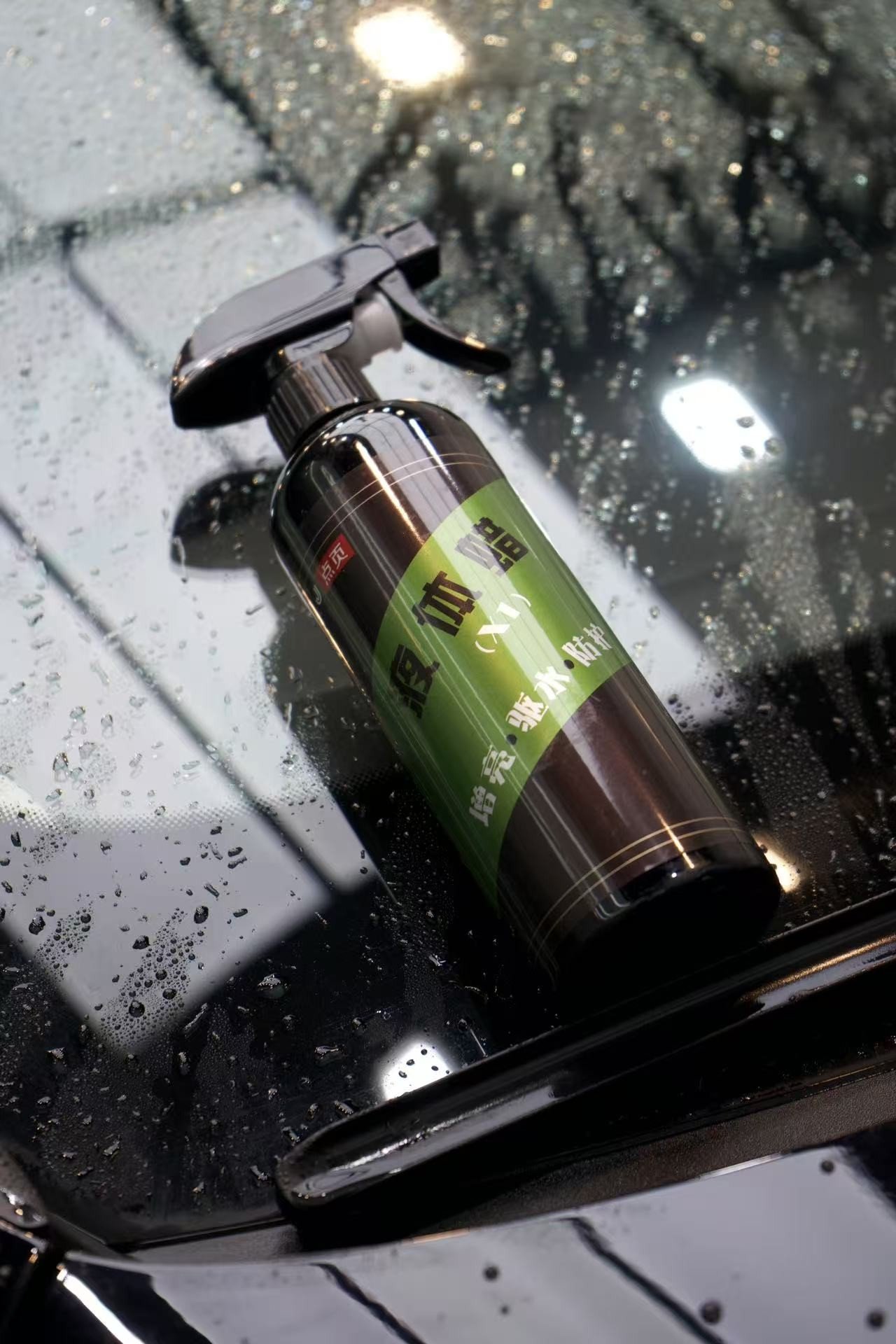 DianYe X1 Quick Liquid Wax 500ml — the hassle-free choice for daily chrome trim protection
7. A Cautionary Tale: Saved $30 on Maintenance, Spent $110 on Re-Plating
Last year a client”s Toyota Camry had chrome grille trim that oxidized and turned white. I quoted him $30 for restoration. He thought it was too expensive, bought a can of “chrome repair spray” and sprayed it himself. Looked okay at first.
Six months later, the chrome started blistering and peeling. By the time he came back, it couldn”t be polished — the chrome layer had corroded through completely. Full re-plating needed. One grille piece — $110.
If he”d spent $30 on restoration plus protection at the time, then 10 minutes a month applying wax, that chrome trim would have easily lasted another three to five years.
The ROI on chrome trim maintenance is outstanding. One polishing restoration plus protection costs $30 to $70; one re-plating job costs $50 to $110 per piece. You do the math.
Summary: Three Keywords for Chrome Trim Maintenance
- Timely: Protection must be applied within 24 hours of polishing
- Regular: Reapply protective layer every 2 to 6 months depending on your environment
- Gentle: Use only pH-neutral products for daily cleaning — keep acids and alkalis away
The chrome layer on your trim is thin as a cicada”s wing. The core logic of chrome maintenance comes down to one sentence: Don”t wait until it oxidizes to fix it — prevent oxidation before it starts.
If your chrome trim is already showing signs of oxidation, follow the polishing process first, then apply protection. For the restoration method, refer to my earlier article “Chrome Trim Oxidized and Dull? Full Hand-Polishing Guide with Automotive Polishing Wax.” Once restoration is done, remember to apply that protective layer the same day — don”t end up like my friend with the GL8, who did all that work for nothing.